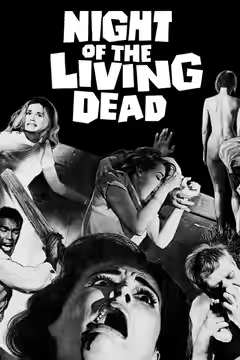
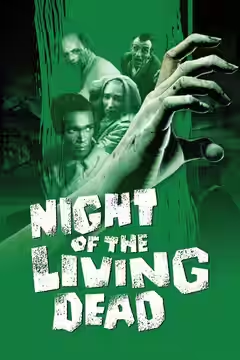
George A. Romero makes ordinary rooms and bad decisions frightening. Uneven acting and the treatment of women are real weaknesses, but this rough, relentless horror still has the power to make us feel unsafe.
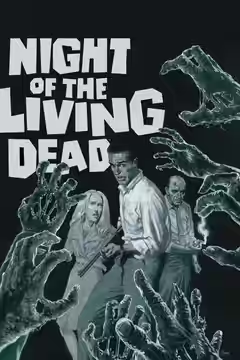
Night of the Living Dead remains a frightening film, and we recommend it without asking anyone to make allowances for its age. George A. Romero builds the danger around a practical question: can these people agree on what to do before the dead reach them? Finding someone capable does not settle the matter. Written by George A. Romero and John A. Russo, the film gives fear enough time to become an argument over who is in charge.
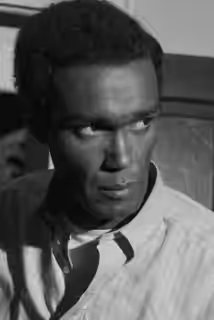
Duane Jones makes Ben’s competence persuasive without making him seem invulnerable. He has work to do, and the performance keeps returning to that work: securing the house, assessing the danger, trying to get a useful answer from someone else. Karl Hardman gives Harry Cooper an obstructive certainty that becomes exhausting in just the right way. The dispute over the cellar is frightening because both men can offer a reason for their position, and neither can guarantee that he is right.
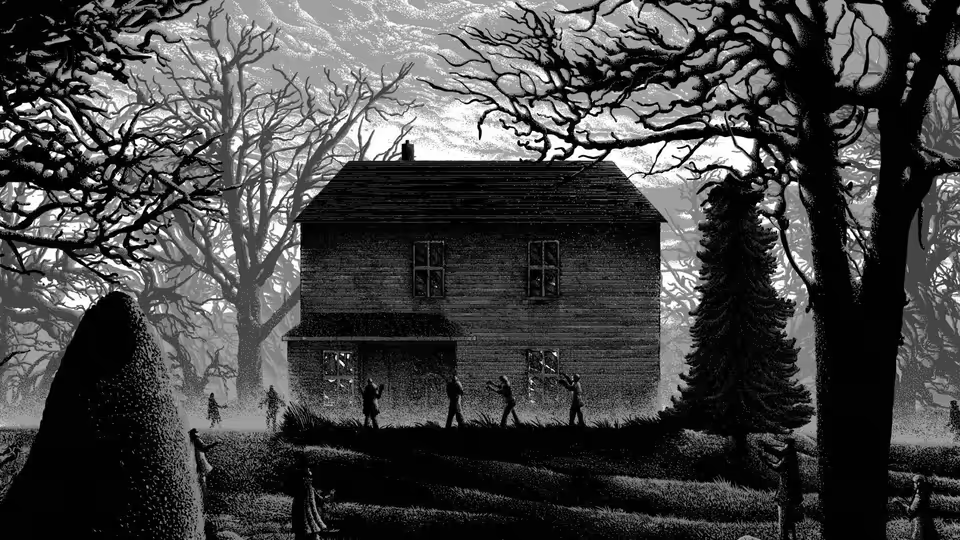
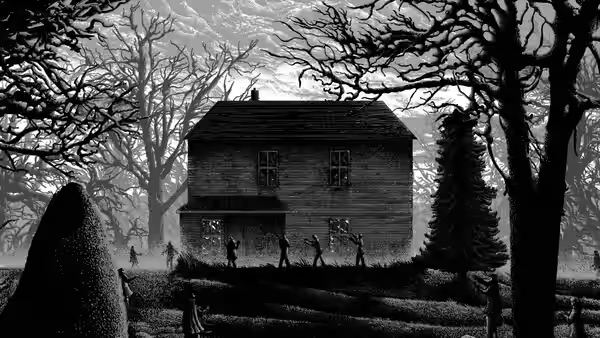
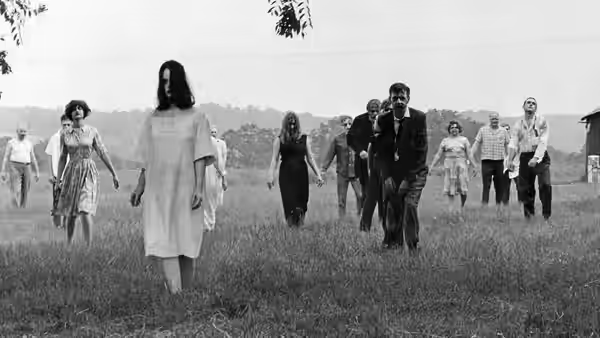
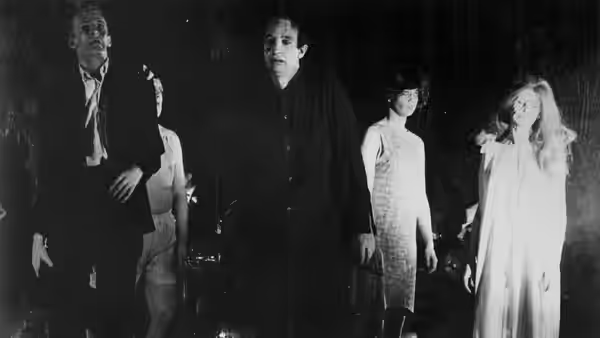
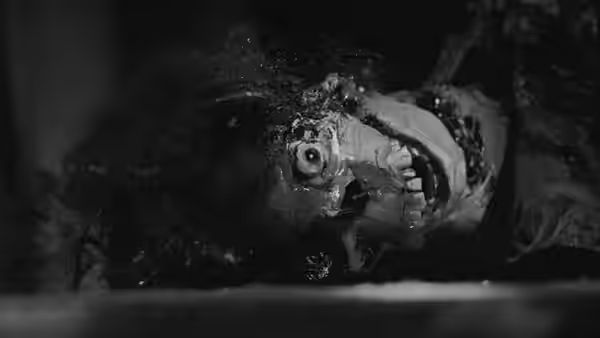
George A. Romero’s black-and-white cinematography makes the house feel insufficient protection. The rough image and deep shadows keep familiar rooms from looking reassuring, while the figures outside retain an unpleasant physical ordinariness. We were horrified by the bluntness of the gore; against such plain surroundings, damaged flesh is difficult to put at a comfortable distance. The photography does not need to flatter the performers or make the violence attractive, and the film is stronger for that.
The editing, credited to George A. Romero and Hugh C. Daly, allows the quarrels to become uncomfortable. A few exchanges repeat their point, and the dialogue occasionally sounds like a rehearsal in which everyone is waiting to speak. Yet the pressure holds because we understand the decisions being disputed and want someone to get on with making them. The familiar interiors matter here too: this is somewhere people might expect to be safe, and the photography keeps testing that expectation.
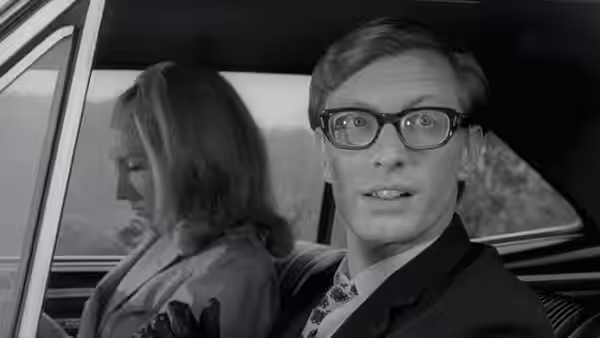
The treatment of the women is a larger weakness. Judith O’Dea makes Barbra’s shock legible, but the screenplay leaves her with too little opportunity to do more than suffer while the men claim the decisions. That imbalance limits a film otherwise so alert to the ways people dismiss one another. There is also uneven acting around the edges, and not every raised voice convinces; the force of Duane Jones’s performance makes those lapses easier to hear.
The familiar complaint is that later horror has borrowed so much from this film that its shocks have become predictable. We recognise the problem, but the human behaviour still unsettles us more than the prospect of another attack. Ben’s authority gives the disputes a racial significance that the film does not have to explain in a speech. Giving him an urgent, practical task keeps that significance attached to what people do, including their willingness to listen when he speaks.
At 96 minutes, it asks for little patience, though a taste for polished performances will make some stretches harder going. Its influence is worth knowing about, but approaching it as required homework would be a miserable way to spend an evening. Watch the black-and-white version, and allow it to be frightening before deciding where it belongs in film history.