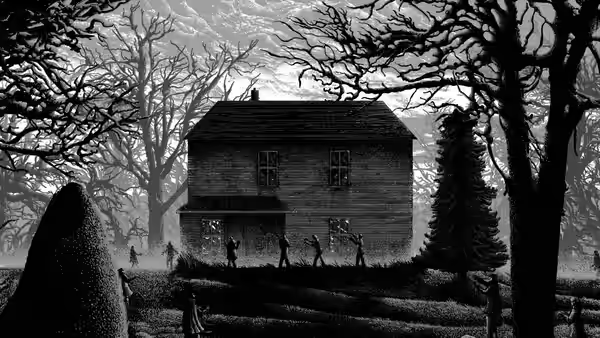
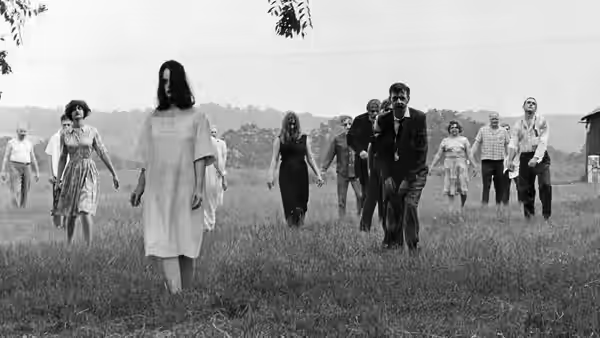
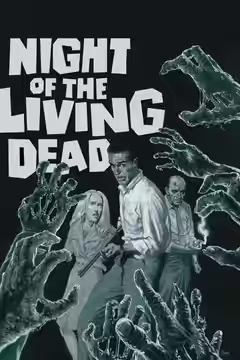
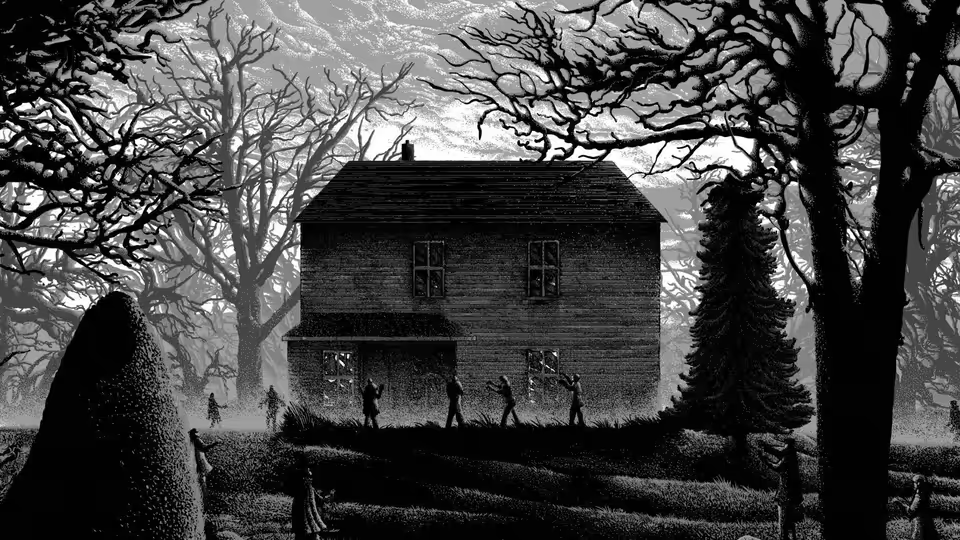
Several figures approach a farmhouse through a leafless, tree-lined yard
Film review

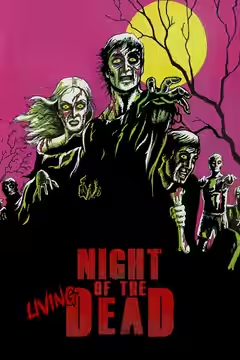
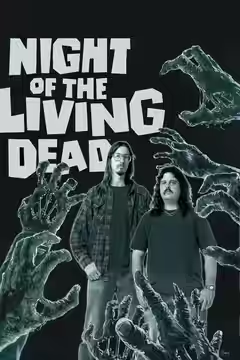
Night of the Living Dead

1968 · Directed by George A. Romero · 1h 36m · LSF 17+

In a sentenceThe dead are outside, and the living are still arguing about the cellar

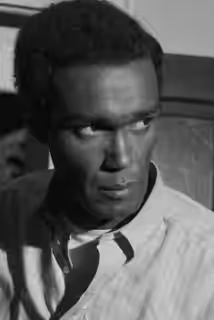
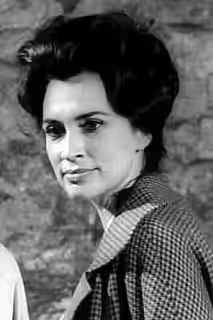
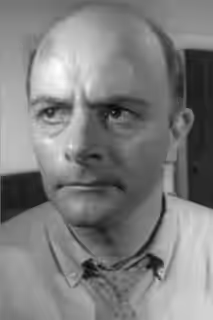
An attack in a rural cemetery sends Barbra (Judith O’Dea) running to an isolated farmhouse. Ben (Duane Jones) arrives there too and starts securing the doors and windows against the figures gathering outside. Barbra is barely able to explain what has happened, and the house offers no settled plan for escape. Harry Cooper (Karl Hardman), sheltering in the cellar with his family, argues that everyone should stay below ground. Ben wants to defend the rooms upstairs, where they can still see what is approaching. As reports of attacks reach them by radio, the survivors struggle to agree on where they are safest.

Plays from YouTube when you press play; nothing loads from them until then.

Fi1m review

George A. Romero makes ordinary rooms and bad decisions frightening. Uneven acting and the treatment of women are real weaknesses, but this rough, relentless horror still has the power to make us feel unsafe.

Night of the Living Dead remains a frightening film, and we recommend it without asking anyone to make allowances for its age. George A. Romero builds the danger around a practical question: can these people agree on what to do before the dead reach them? Finding someone capable does not settle the matter. Written by George A. Romero and John A. Russo, the film gives fear enough time to become an argument over who is in charge.

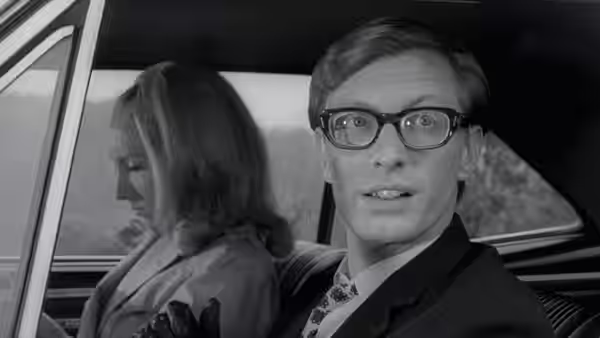
Duane Jones makes Ben’s competence persuasive without making him seem invulnerable. He has work to do, and the performance keeps returning to that work: securing the house, assessing the danger, trying to get a useful answer from someone else. Karl Hardman gives Harry Cooper an obstructive certainty that becomes exhausting in just the right way. The dispute over the cellar is frightening because both men can offer a reason for their position, and neither can guarantee that he is right.

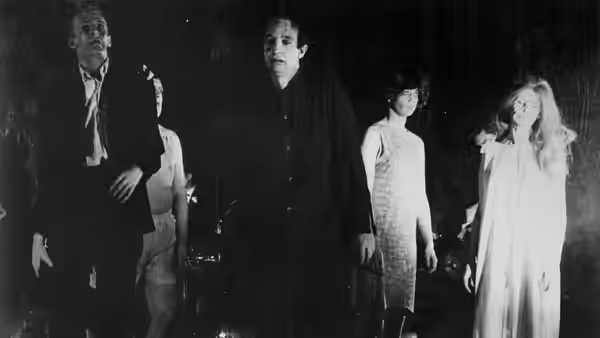
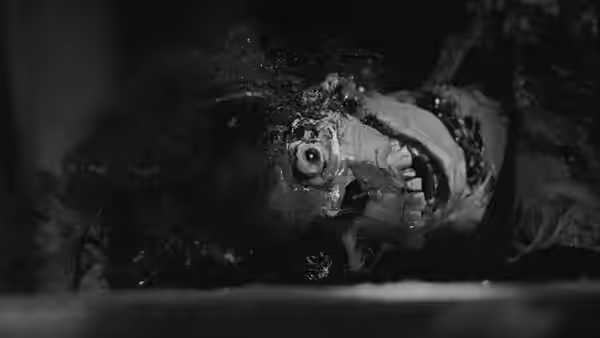
George A. Romero’s black-and-white cinematography makes the house feel insufficient protection. The rough image and deep shadows keep familiar rooms from looking reassuring, while the figures outside retain an unpleasant physical ordinariness. We were horrified by the bluntness of the gore; against such plain surroundings, damaged flesh is difficult to put at a comfortable distance. The photography does not need to flatter the performers or make the violence attractive, and the film is stronger for that.

The editing, credited to George A. Romero and Hugh C. Daly, allows the quarrels to become uncomfortable. A few exchanges repeat their point, and the dialogue occasionally sounds like a rehearsal in which everyone is waiting to speak. Yet the pressure holds because we understand the decisions being disputed and want someone to get on with making them. The familiar interiors matter here too: this is somewhere people might expect to be safe, and the photography keeps testing that expectation.

The treatment of the women is a larger weakness. Judith O’Dea makes Barbra’s shock legible, but the screenplay leaves her with too little opportunity to do more than suffer while the men claim the decisions. That imbalance limits a film otherwise so alert to the ways people dismiss one another. There is also uneven acting around the edges, and not every raised voice convinces; the force of Duane Jones’s performance makes those lapses easier to hear.

The familiar complaint is that later horror has borrowed so much from this film that its shocks have become predictable. We recognise the problem, but the human behaviour still unsettles us more than the prospect of another attack. Ben’s authority gives the disputes a racial significance that the film does not have to explain in a speech. Giving him an urgent, practical task keeps that significance attached to what people do, including their willingness to listen when he speaks.

At 96 minutes, it asks for little patience, though a taste for polished performances will make some stretches harder going. Its influence is worth knowing about, but approaching it as required homework would be a miserable way to spend an evening. Watch the black-and-white version, and allow it to be frightening before deciding where it belongs in film history.

Critical consensus AI synthesised

78
Positive
8
Mixed
1
Negative
1

Most critics regard Night of the Living Dead as an influential horror film that retains its capacity to unsettle. Praise centres on Romero’s relentless atmosphere and the rough, documentary-like black-and-white images, which make the terror feel immediate rather than polished. Several reviews also value its treatment of human error, prejudice and social division. Its bleakness is widely understood as purposeful, challenging reassuring horror conventions rather than merely supplying shocks.

The reservations range from scares dulled by imitation to dated gender politics and scrappy production, both noted by The Guardian. Den of Geek’s qualified response chiefly concerns a colour presentation that weakens the original shadows and menace. The spread is wide, but the strongest dissent comes from Variety’s 1968 review, which condemns the sadism and faults nearly every craft department. What most critics find convincing in the film’s roughness, that review regards as amateurism.

Radio Times
★★★★★ · Alan Jones
100

Jones calls the film a seminal horror classic, though its scares have been dulled by imitation. He praises Romero’s relentless, documentary-like black-and-white atmosphere.

Read the full review →
Slant Magazine
27 May 2008 · ★★★★/4 · Jeremiah Kipp
100

Kipp finds the film remains a powerful, unrelenting parable of dread. He singles out its painfully plain depiction of human error and the ending’s lasting emotional force.

Read the full review →
Empire
6 October 2006 · Kim Newman
90*

Newman presents the film as a landmark horror movie that remains compelling despite the many works that followed it. He praises its grimy, semi-amateur look for giving the horror a convincing sense of dread.

Read the full review →
The Guardian
24 October 2018 · Steve Rose
85*

Rose finds the film still vital and unsettling, despite dated gender politics and scrappy production. He praises its cryptic, subversive ending and the radical impact of Ben’s character.

Read the full review →
Time Out
· NF
80*

The review presents Romero’s film as a radical and influential reworking of horror. It praises how the film overturns the genre’s convention that good triumphs over evil.

Read the full review →
The New York Times
19 October 1990
65*

The page could not be read, so its verdict is unavailable. No specific praise or criticism can be confirmed.

Read the full review →

Straight answers AI written, from our review

Is Night of the Living Dead worth watching?
Night of the Living Dead is worth watching for horror viewers who want sustained fear and recognisable human conflict; we score it 88 out of 100. We recommend it for the pressure Romero builds inside ordinary rooms and Duane Jones’s persuasive performance, though uneven acting and women given too little to do are substantial weaknesses.
How long is Night of the Living Dead, and what is it rated?
Night of the Living Dead runs 1h 36m and is rated 17+ by the LSF in Indonesia. It is a horror and thriller film.
Where can I watch Night of the Living Dead in Indonesia?
Night of the Living Dead is streaming on MUBI in Indonesia. It leaves MUBI on 30 September. Availability is checked daily; the links above go straight to each service.
How violent or frightening is Night of the Living Dead, and is it suitable for children?
Night of the Living Dead carries a UK 15 certificate and contains blunt gore and sustained threat, making it unsuitable for children under 15. We find the damaged flesh especially disturbing against the plain black-and-white surroundings; older teenagers comfortable with horror may appreciate it, but its age is no reassurance for squeamish viewers.
How does Night of the Living Dead compare to The Exterminating Angel?
Night of the Living Dead is the better choice for direct fear, while The Exterminating Angel suits viewers after cruel comedy and unexplained behaviour. Both show a gathering falling apart under pressure, but we recommend Romero for practical disputes about survival and Buñuel for the discomfort of watching wealthy people’s manners fail them.
What should I watch after Night of the Living Dead?
After Night of the Living Dead, try The Exterminating Angel (1962, Fi1m 87): A gathering falls apart under pressure, with social manners proving little protection. Then The Thing (1982, Fi1m 88): A confined group makes fear worse by failing to agree whom to trust; and Train to Busan (2016, Fi1m 84): Faster undead, another enclosed refuge, and equally dangerous arguments about who matters.

Cast

If you liked this, try…

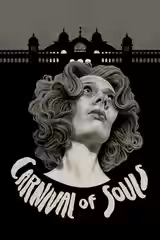
  1. Carnival of Souls (1962) · not on Fi1m yetAnother unsettling black-and-white nightmare that makes ordinary places feel quietly wrong.

  2. The Exterminating Angel (1962, Fi1m 87)A gathering falls apart under pressure, with social manners proving little protection.

  3. The Thing (1982, Fi1m 88)A confined group makes fear worse by failing to agree whom to trust.

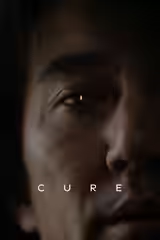
  4. Cure (1997) · not on Fi1m yetFor the same sickening suspicion that everyday behaviour can conceal terrible violence.

  5. Train to Busan (2016, Fi1m 84)Faster undead, another enclosed refuge, and equally dangerous arguments about who matters.