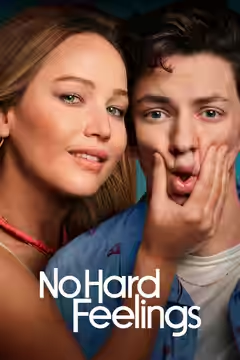
Jennifer Lawrence throws herself at a raunchy premise the script keeps flinching from. She and Andrew Barth Feldman make a likeable pair, and two scenes are worth the evening, but the film is tamer than its trailer and softer than it means to be.
Maddie Barker was born in Montauk and is being priced out of it by the people who come for the summer. She drives for Uber, she is broke, and a wealthy couple hire her to seduce their shy teenage son. Maddie takes the job. No Hard Feelings is sold as the kind of filthy studio comedy nobody makes any more, and for a few minutes at a time it is one. The rest of the time it is a gentle film about a stuck woman and a sheltered boy, and it never decides which it would rather be.
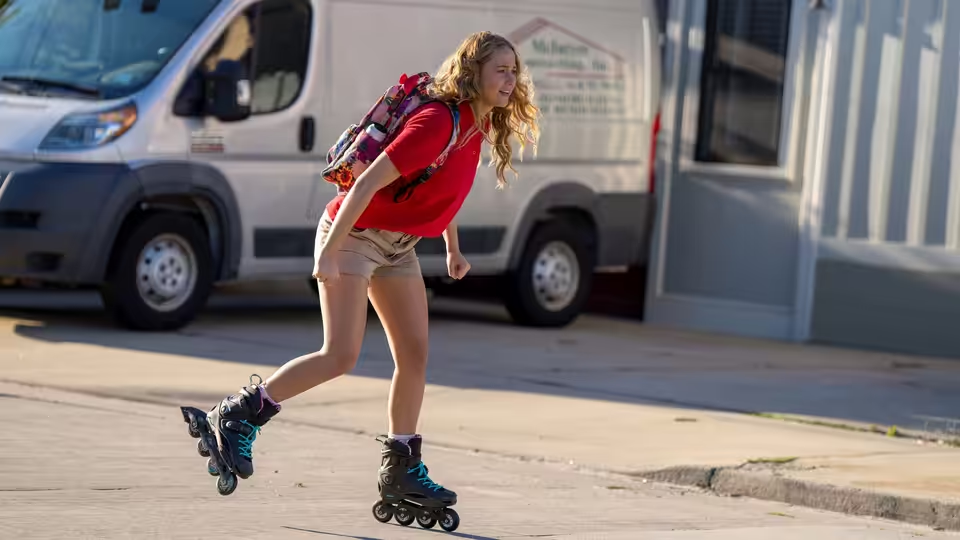
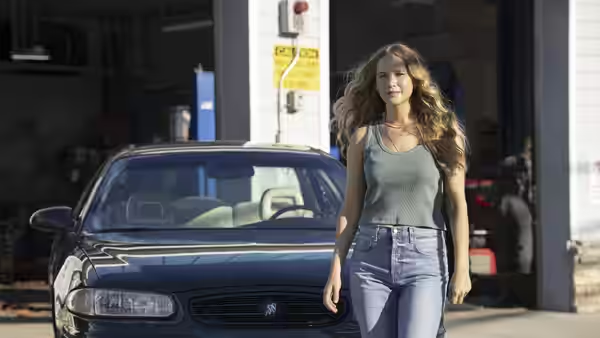
Lawrence is the reason to see it. She has always been a physical actor and here she is allowed to be a clumsy one: she goes at Percy on their first meeting like a rugby forward, and she spends much of the film falling, being dragged or being thrown. Her Maddie is loud, broke and angry, and Lawrence plays the anger as the true part and the seduction as an act Maddie is bad at, which is the right way round. When the script hands her a line it has not earned, she says it as though she means it.
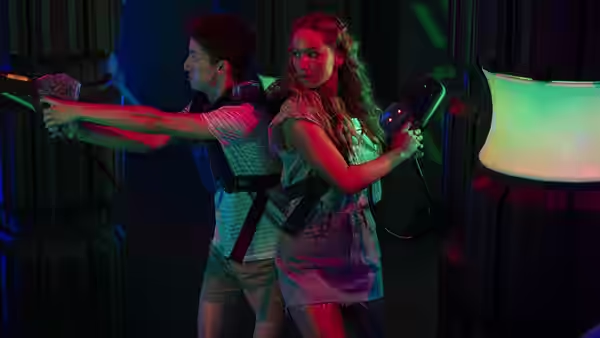
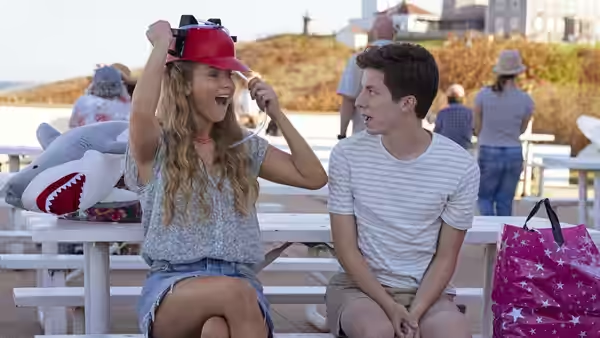
Feldman does something quieter. Percy is not a nerd in the old comedy sense but a boy kept so safe he has no appetite for anything, and Feldman plays the fear as ordinary rather than adorable. Benanti and Broderick, as the parents, hover at the edge of every room. Broderick in particular is drily good as a man who has never had to be interesting and has not noticed.
The beach scene deserves its reputation. Maddie faces down a gang of bullies on the beach, naked, in a long wide take. We laughed until it hurt, because Lawrence plays the fight as rage with no dignity left to protect, and because Eigil Bryld keeps the camera level and at a distance, so it plays as slapstick rather than a peep show. It is the one sequence in which the film is rude and kind at the same time.
Bryld shoots Montauk in bright, flat summer light, and Russell Barnes gives the two houses the film’s whole case: the Beckers’ place is white, glass and empty; Maddie’s is small, crowded and hers. Kirston Mann keeps Maddie in the same cut-offs and vest for most of the film, a woman who has stopped buying clothes, and puts Percy in layers his mother chose. Mychael Danna and Jessica Rose Weiss score it lightly and keep clear of the jokes. Brent White cuts the set pieces at pace and the last half hour slowly, and the slowing is where the film goes soft.
The script, by Stupnitsky and John Phillips, is the problem. It sets up its premise, a grown woman paid to seduce a teenager, and then spends the film reassuring us that this is not really what is happening. Maddie’s town being bought out from under her gets three lines about tax bills and summer people and then a car chase. Natalie Morales and Scott MacArthur, as her friends, exist to tell her what she is doing wrong. Ebon Moss-Bachrach, as Gary, is the funniest person in the supporting cast and gets about four minutes.
Then, roughly two-thirds in, there is a quiet scene between the two of them that caught us off guard; we were more moved than a film with this poster has any right to make us. It is also the moment the film decides it would rather be sweet than rude, and the last half hour, which we will not describe, follows that decision all the way, with lessons learned and then said aloud.
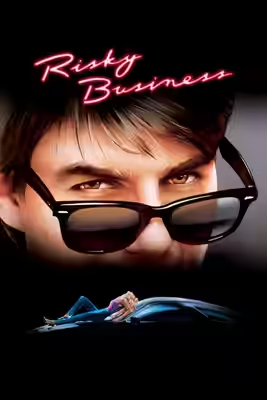
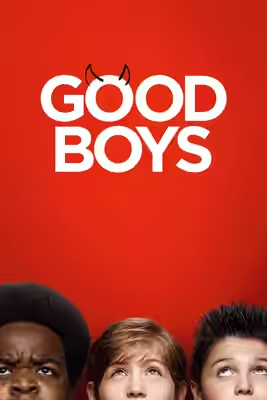
Stupnitsky’s Good Boys (2019) ran on one gap, between innocent faces and filthy dialogue, and never apologised for it. The gap here is between the poster and the film. The comedies it is imitating, Risky Business (1983) among them, did not look over their shoulders before each joke; this one does, and the laugh is smaller every time. Worth an evening, with a drink and company who will enjoy watching Jennifer Lawrence fall off things. It runs 103 minutes and carries a 15 certificate.