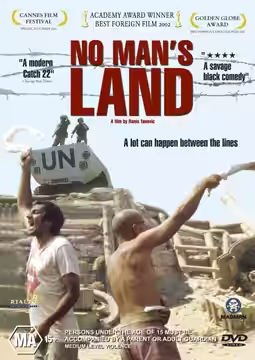
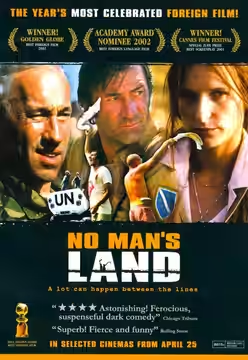
Danis Tanović’s war satire is tense, bitterly funny and compassionate towards its soldiers. Its treatment of the media and international intervention is broader and less persuasive, but the humour never makes the suffering seem small.
No Man’s Land is a good war satire with an occasional weakness for stating the obvious. Danis Tanović, who writes and directs, makes the comedy uncomfortable without treating laughter as a lapse in seriousness. The jokes belong alongside the danger: people can be ridiculous while their circumstances remain frightening. We recommend it for that difficult combination, with reservations about how readily its criticism of institutions becomes caricature.
The writing is strongest when it trusts the immediate predicament to hold our attention. Tanović understands how an argument can be funny, exhausting and dangerous within the same exchange, and how little encouragement people need to resume it. There is suspense here, but also the miserable recognition that having something urgent to do does not necessarily make anyone more reasonable. Some of the dialogue sounds familiar, particularly when the film presses its case against war, yet the humour usually gives it sufficient bite.
We flinched at the sudden gunfire and explosions. Their abruptness interrupts the comfortable distance that a satire can establish between its audience and the people being mocked. That matters because the comedy sometimes invites us to feel cleverer than the characters, and the sound quickly makes that position unpleasant. Tanović also supplies the music, though the sharp interruption of weapons makes the stronger impression: the film does not need much assistance in making danger felt.
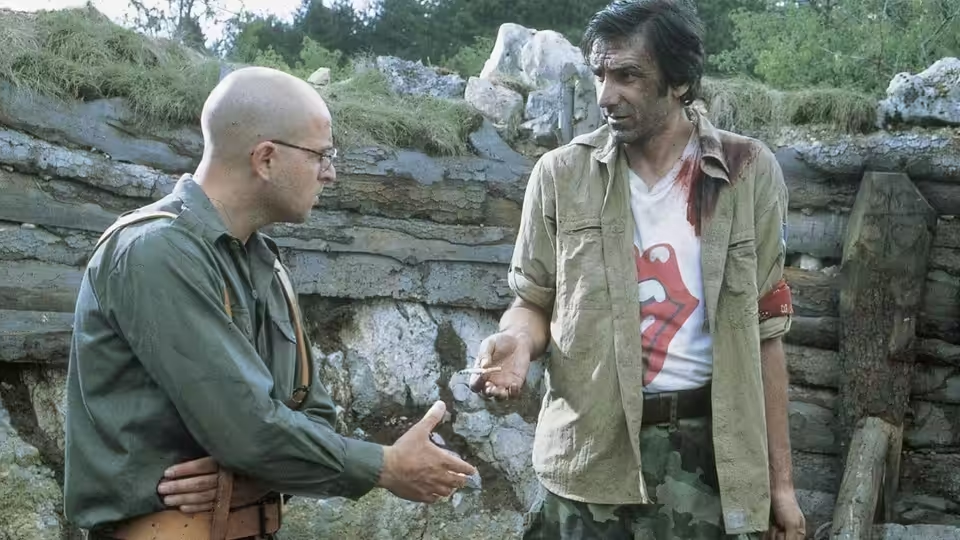
Branko Đurić, Rene Bitorajac and Filip Šovagović play Ciki, Nino and Cera, and the performances give the film more human variety than its broadest arguments allow. The cast can accommodate the shifts between absurdity and distress without making them feel like separate assignments. Francesca Calvelli’s editing is important to that control of tone; the suspense survives the humour, rather than having to restart after every joke. At 98 minutes, the film gives its central situation room to become uncomfortable without turning concision into haste.
Walther van den Ende is the cinematographer and Dušan Milavec the production designer. Their contributions serve a film whose strongest attraction is the pressure placed on its characters, rather than any invitation to admire warfare as spectacle. The physical danger remains more compelling than the explanations surrounding it. That emphasis works, although the film becomes less convincing whenever people seem to have been included chiefly to demonstrate a professional or institutional failing.
The treatment of the media and the UN is the principal weakness. Tanović’s anger is understandable, but these passages offer fewer surprises than the soldiers’ exchanges, and their targets can feel conveniently arranged. Nor does the film provide enough historical explanation to carry every political conclusion that might be drawn from it. Against the standards of anti-war satire, however, it earns its place through suspense, gallows humour and an unwillingness to let human suffering become merely illustrative. Watch it for the people caught in the conflict; expect less from those appointed to explain or manage it.