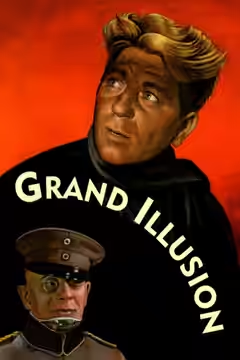
Jean Renoir’s film about French officers in a German prison camp is the gentlest war film we know and one of the wisest. Funny, generous and exactly played, it has a soft final stretch and not one false note in its cast.
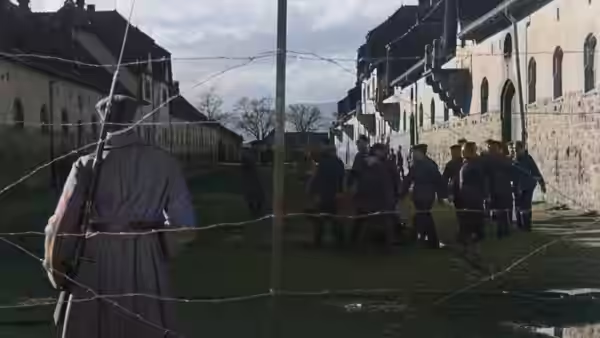
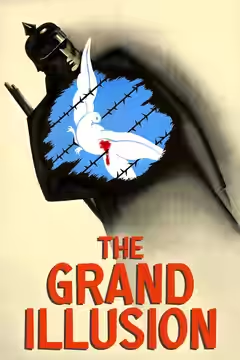
Jean Renoir’s Grand Illusion is a prisoner-of-war film that could hardly care less about the escape. Men dig a tunnel, but the film is looking at who shares the bread, who speaks which language, and which enemy has more in common with the man opposite than the man beside him. Our verdict first: we would tell a stranger to see it. It runs 114 minutes and most of them earn their place.
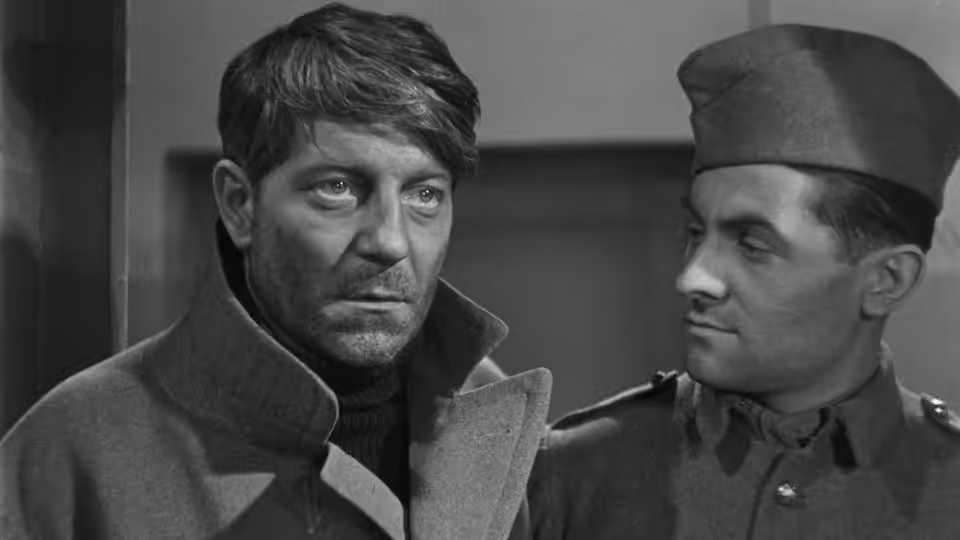
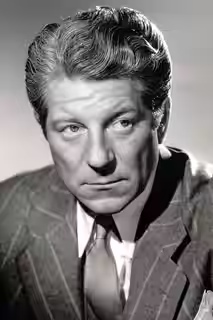
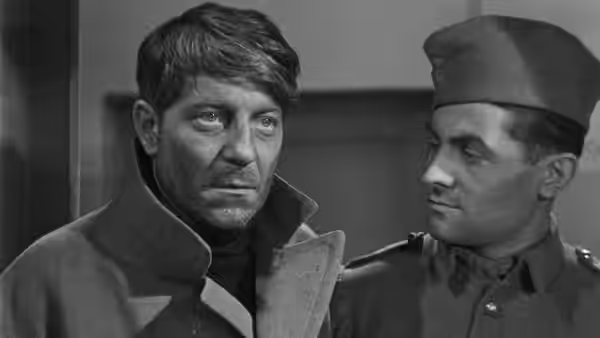
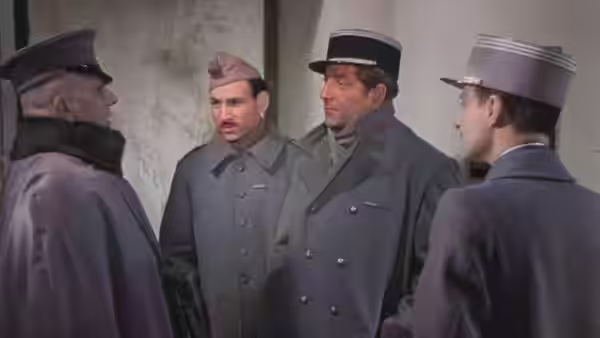
Lieutenant Maréchal is a mechanic who ended up flying. Jean Gabin plays him with his hands in his pockets and his cap pushed back, a man who says what he thinks because it has never cost him anything. Pierre Fresnay’s Captain de Boëldieu wears a monocle and white gloves and speaks to his men as if reading from a card. The two do not like each other. Marcel Dalio’s Lieutenant Rosenthal, the rich man’s son whose parcels feed the whole hut, is so openly hospitable that the others keep having to check themselves for resentment.
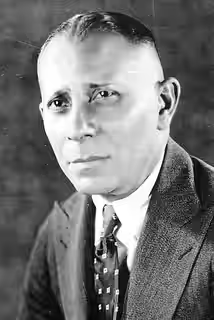
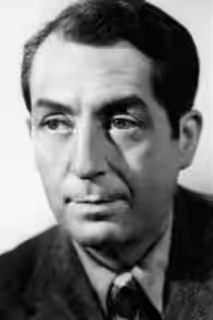
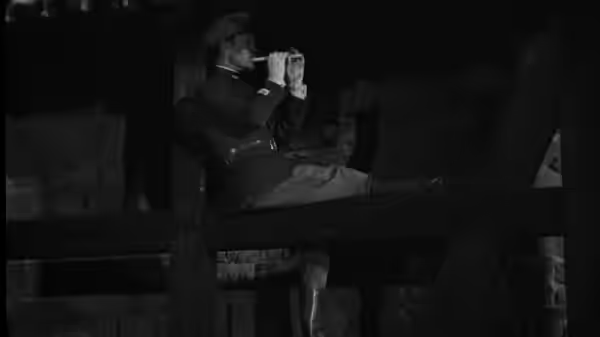
Erich von Stroheim arrives early, as the German ace who shoots the two Frenchmen down and invites them to lunch, and returns later in a neck brace and a corset, commanding a fortress he regards as a demotion. He and de Boëldieu talk in English about horses, restaurants and women they both knew before the war. The man is absurd and grieving at once, and the script, by Renoir and Charles Spaak, lets him keep his dignity while showing that the world he is defending has already gone.
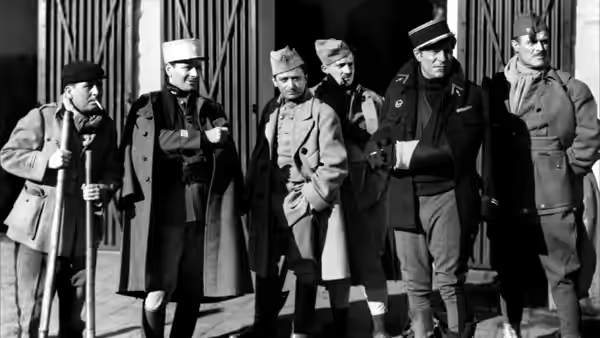
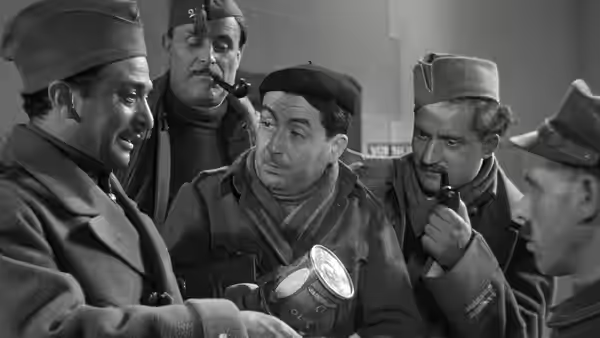
The scene that got us was one we knew was coming. The prisoners are putting on a revue, and a crate of women’s clothes arrives from Paris. The men joke and grab at the frocks until the youngest comes back in a dress, a wig and stockings, and the hut goes quiet. Renoir holds on their faces. Later, mid-show, word comes that a fort at Verdun has been retaken, and the chorus line, still in wigs and false eyelashes, stands and sings the Marseillaise at its guards. It put a lump in our throat, because Renoir has spent forty minutes showing us how bored, hungry and kind these men are, so that standing up costs them something.
Christian Matras’s camera moves more than you expect for 1937. It slides past the men and keeps two or three people sharp at different depths, so a conversation in front plays against something else behind. Eugène Lourié built the barracks cramped and the fortress tall and cold, with a single geranium on a windowsill that von Rauffenstein tends like the last of something. René Decrais’s uniforms tell you each man’s class and country before he opens his mouth. Joseph Kosma’s score stays out of the way; nearly all the music is what the characters sing or put on the gramophone. Marguerite Renoir and Marthe Huguet cut late, after the joke has landed and the silence has been felt.
It is not flawless. The tunnel is dropped as if the script had better things to do. The final stretch, which we will not describe, slows and softens into something close to a different film; Dita Parlo is good in it, but the pace the camp scenes set is lost. One or two critics have called its faith in decency naive, given what came two years after it was made. The title tells you what Renoir makes of the idea that gentlemen can keep war civilised, and the film mourns the idea while taking it apart.
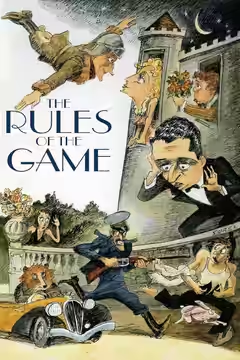
Renoir made La Règle du jeu two years later, and the two sit together: one about the ruling class in captivity, one about the ruling class at play. This is the warmer of the pair and the easier to love. Everyone speaks their own language, French, German or English, and the film is partly about how far that gets them. Watch it with someone who thinks 1930s films are stiff, and keep an eye on them during the revue.