Soderbergh’s Detroit crime story is the real thing for an hour: two hired men, a family at gunpoint, and a safe with the wrong papers in it. Then it starts explaining what the papers mean, and the explanation is less interesting than the men.
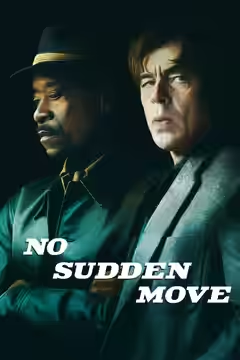
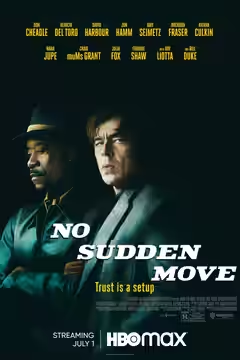
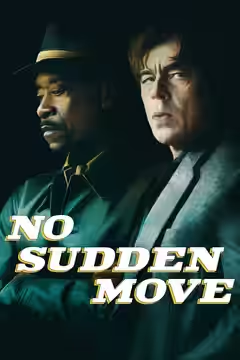
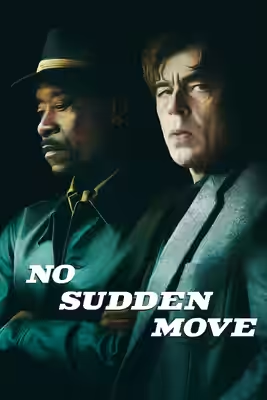
Steven Soderbergh has made a good many films about people who steal for a living, and No Sudden Move is one of the sour ones. It is Detroit in 1954. Curt Goynes (Don Cheadle) and Ronald Russo (Benicio del Toro) are hired for what they are told is a three-hour job: sit in an accountant’s kitchen with his family while he fetches a document from his boss’s safe. Ed Solomon’s screenplay spends the rest of its 115 minutes working out who lied to whom, and for most of that time it is tight, unhurried crime work. It goes wrong when it stops to tell us what the document means, and it tells us more than once.
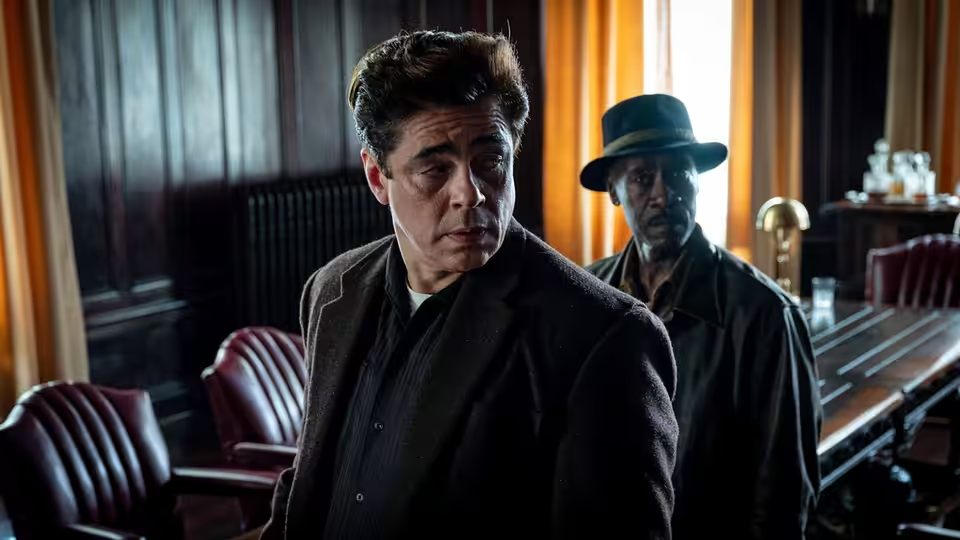
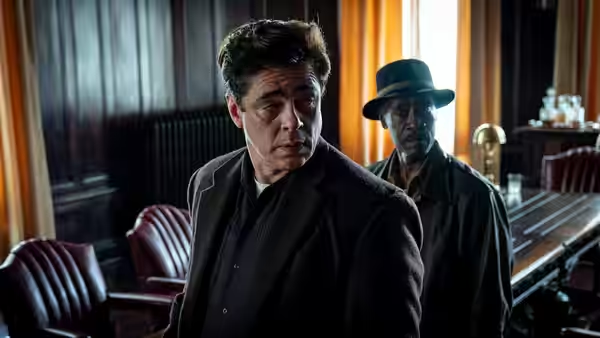
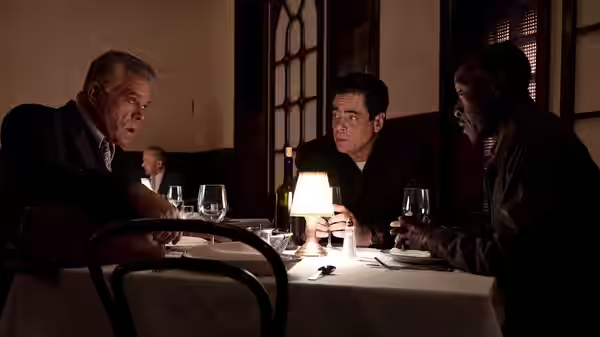
Soderbergh shoots and cuts his own films, and here he has picked lenses so wide that the edges of every room bend. Doorframes curve inwards, and a man across a table looks as if he is leaning at you. We liked it. The Wertz house feels like a place seen through a spyhole, and Detroit looks slightly wrong, a city coming apart at the sides. Hannah Beachler’s interiors are dark wood, patterned paper and low lamps, and each household has its own colour, so a cut from one to another tells you whose house you are in before anyone speaks.
It is sold as a caper, and for the first half hour it frightened us more than we had bargained for. Three men with guns sit in a kitchen with Mary Wertz (Amy Seimetz) and her children while toast is made, and Soderbergh plays it in flat morning light, school bags by the door, a boy (Noah Jupe) working out how brave he is expected to be. Nobody shouts and there is no music. We noticed we were sitting forward. Charley Barnes (Kieran Culkin) is the one to watch, because he has not decided how the morning is going to go.
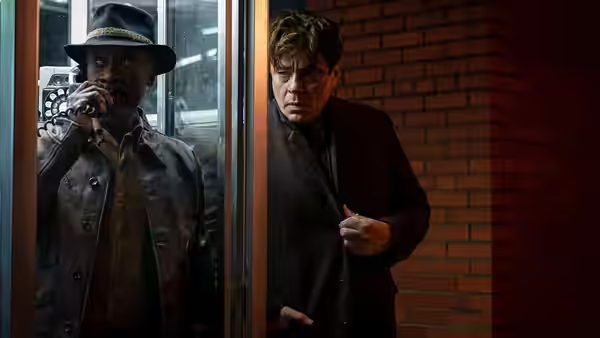
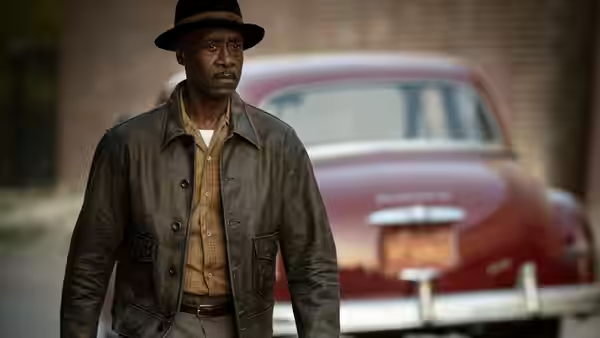
Cheadle plays Curt as a man who has counted the exits before he sits down. He hardly moves his face, and Marci Rodgers dresses him in one good coat and a hat he keeps on indoors. Del Toro’s Ronald is loose, talkative, pleased with himself, and sleeping with the wife (Julia Fox) of a gangster (Ray Liotta) who is not going to take it well. The two of them work out, mostly in cars, how far to trust each other, and that is the part of the film we would keep if we could only keep one. David Harbour sweats through his shirts as the accountant. Brendan Fraser, as the middleman Doug Jones, is heavy, soft-spoken and the most dangerous man in the first act. Bill Duke, as Aldrick Watkins, says almost nothing, and we believed all of it.
The trouble is the paper. The document concerns something the car companies would rather nobody knew, and we will leave it there. The second half keeps stopping so that men in offices can explain the stakes to each other, and each time it does the film gets smaller. Solomon has too many parties on the board: Capelli’s people, Watkins’s people, the car men, a detective (Jon Hamm), the Wertz marriage, Ronald’s affair. Each gets its scene, and Soderbergh the editor cannot make eight factions feel like a film about two men. By the third account of who owned what, we had stopped caring about the paper and were a little cross with ourselves for it. David Holmes’s jazz score idles under all this and never pushes.
The film knows what city it is in. Curt’s neighbourhood is being cleared for a motorway, the film says so early and plainly, and it is part of why he wants out. Near the end somebody says it out loud, and the film is weaker for having said it.
Ocean’s Eleven was about thieves who liked each other. Here nobody likes anybody. It is not as good as Out of Sight, which had a romance to hang its plot on; here there are only two men in a car deciding whether to shoot each other, and that is enough for about an hour. Watch it with the lights down and do not try to draw the diagram. The 15 certificate is for gunfire and language, and it is fair.