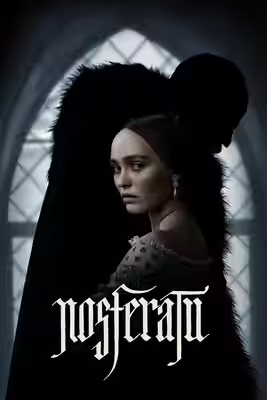
English Eggers rebuilds the 1922 vampire film with candlelight, fog and a young woman who is its real subject. It is beautifully made and frightening in stretches, and solemn to a fault in others. Lily-Rose Depp is the reason to go.
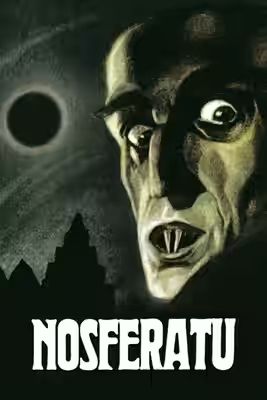
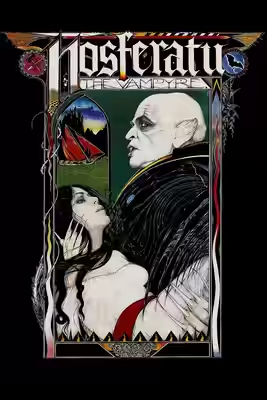
English Eggers has made his Nosferatu: a period vampire film, routed back through F.W. Murnau’s 1922 original to Bram Stoker’s novel, built with the care he brought to The Witch (2015) and The Lighthouse (2019). It runs 133 minutes and carries a 15. It is good. It is not the frightening, strange thing its first hour promises, and it has one performance in it that is better than the film around it.
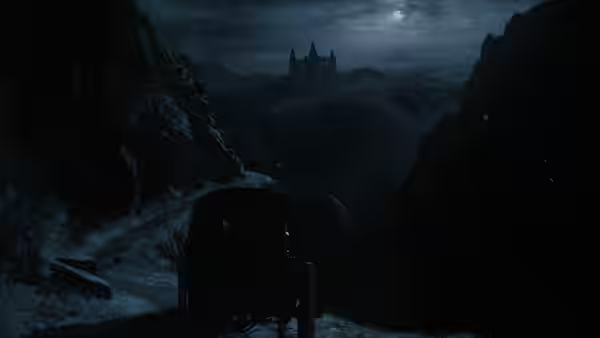
The setup is Murnau’s, with the emphasis moved. Ellen Hutter (Lily-Rose Depp) once called out in the dark for company, and something answered. Years on, her husband Thomas (Nicholas Hoult) is sent east by his employer Knock (Simon McBurney) to close a sale with a count who wants a house in their town. Ellen lodges with the Hardings, Friedrich (Aaron Taylor-Johnson) and Anna (Emma Corrin); Thomas goes up a mountain in a coach with no driver.
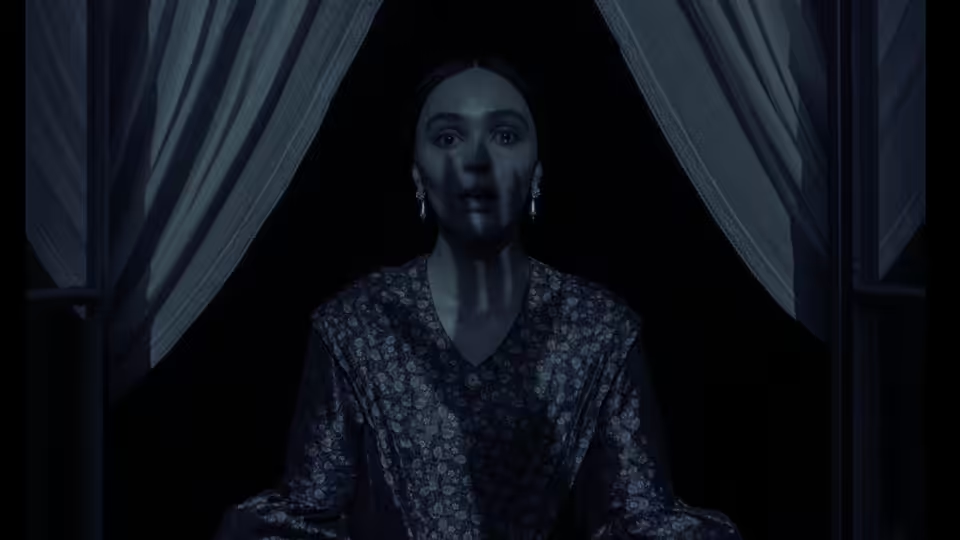
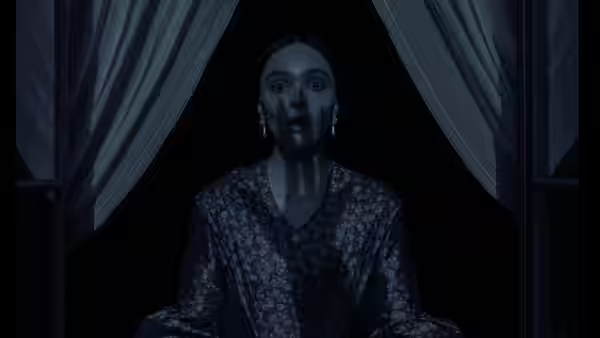
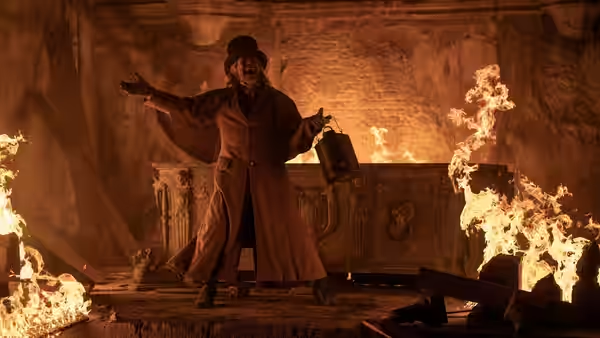
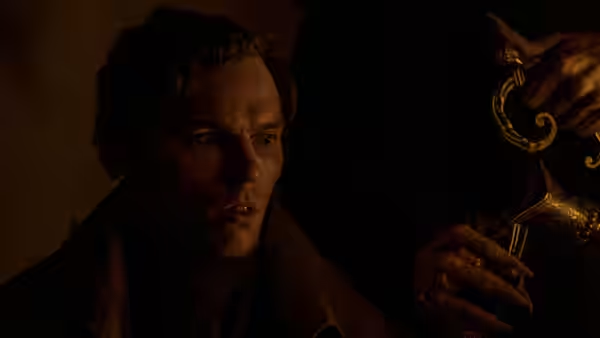
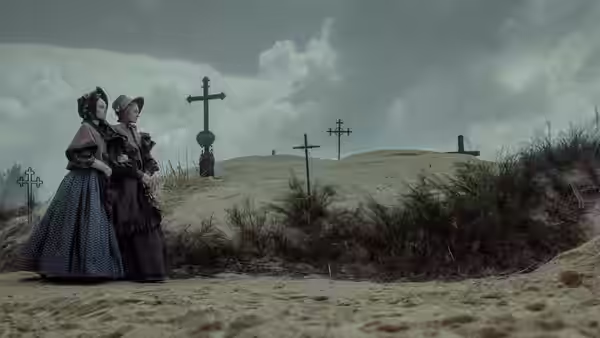
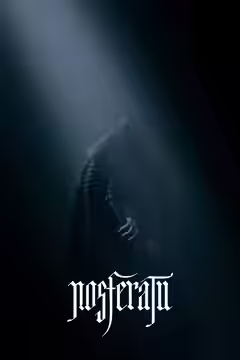
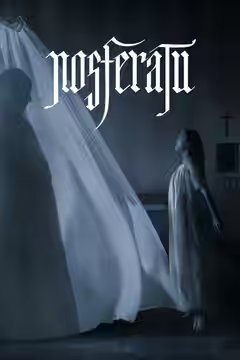
Jarin Blaschke shoots the nights in a blue so drained that whole scenes read as black and white, with the candles the only warm thing in the frame. He lets a shadow cross a whole town before we see what casts it. Craig Lathrop’s Wisborg is wet cobbles and crooked gables; his castle is a black shell whose stones seem to sweat. Linda Muir dresses Ellen in white nightdresses always too thin for the weather. Robin Carolan’s score runs low strings and brass under nearly everything, voices rising whenever the count is near, and Louise Ford cuts the first hour with patience. The journey to the castle is the film’s best stretch, and it is almost silent.
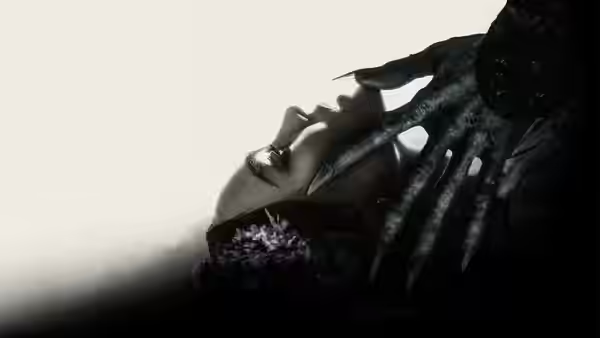
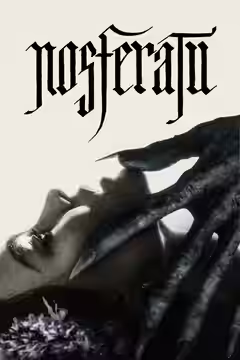
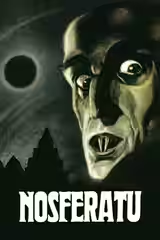
About the count. Eggers drops Murnau’s bald, rat-faced thing for a dead nobleman with a moustache, a fur-collared coat and a voice dredged from the bottom of a well, every word arriving on an exhale. Bill Skarsgård is kept in shadow for a long time, and when we do see him he is rotting. In the castle we found him revolting and properly frightening. Later, when he starts talking about covenants and terms, less so. A monster who explains his contract is a landlord.
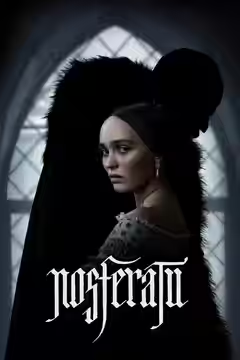
Depp is the reason to go. Eggers makes this Ellen’s story rather than Thomas’s, and Depp carries it in her body: the back arching off the bed, the jaw locking, a voice coming out of her that is not hers. The first time she goes rigid in the Harding house we were frightened in the way that makes you glance behind your own sofa, and it was not the count who did it. It was her, and the sound of her spine. She also plays Ellen’s wanting, not only her terror, and the film is honest enough not to pretend the two are separate.
The men are a mixed lot. Hoult plays Thomas as a decent man out of his depth. Willem Dafoe’s von Franz, an occultist, arrives around the halfway point and lets some air in, with a relish some will find too much; we found it a relief. Taylor-Johnson’s Harding is a man of business who believes none of it, and the script is unkind to him for that. Ralph Ineson is solid as the doctor, and McBurney gives Knock a giggling servility that is unpleasant in the right way.
The trouble is solemnity. Nobody in this film speaks quickly, laughs, or says anything that is not a declaration, and the formal period English Eggers has written for them gets heavy by the second hour. Back in Wisborg, the film settles into a story most of the audience knows beat for beat. Somewhere in that stretch we noticed we were checking how much was left. Eggers has given Murnau’s story a great deal more explanation, and the story did not need it.
Against his own films this is the largest, and the one that surprised us least. The Witch had one family and one goat; The Lighthouse had two men and a gull. Watch this one in the dark with the sound up. The count’s breathing sits under most scenes, and with the lights on and the volume low it becomes a handsome costume drama with a sick man in it.