Tomas Alfredson makes a bullied boy’s friendship with a vampire tender enough to unsettle us. The young leads and wintry photography earn our strong recommendation, though the violence is sometimes arranged too neatly.
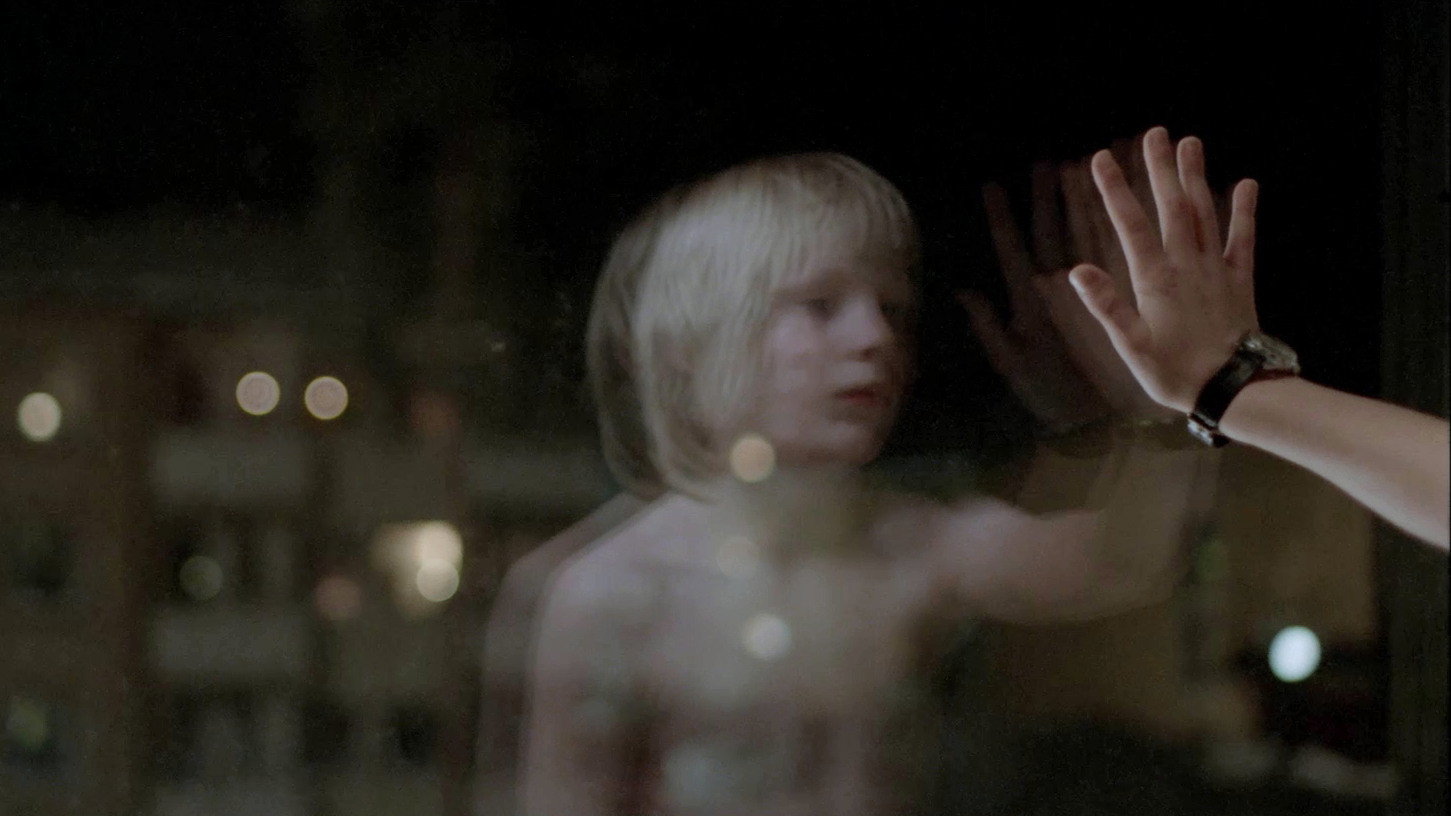
Let the Right One In is a tender, troubling vampire film, and we recommend it with one reservation: its violence can seem too carefully arranged. Director Tomas Alfredson takes a bullied boy’s wish for a friend seriously enough to make a vampire plausible company. Oskar, played by Kåre Hedebrant, lives in suburban Stockholm; Lina Leandersson’s Eli moves in next door. John Ajvide Lindqvist adapts his own novel, keeping the children’s loneliness at the centre of the horror.
Hedebrant and Leandersson are the reason this unlikely friendship holds. There is something guarded about their performances, as though each child is deciding how much of themselves it is safe to let the other see. We found ourselves relieved when Oskar had Eli for company. The bullying makes his solitude painful enough that we briefly welcome the vampire without asking what friendship with her might cost. Alfredson allows that tenderness to develop without making Eli reassuring.
Cinematographer Hoyte van Hoytema keeps the wintry suburb dim and the framing precise, so apparently quiet images still require our attention. There is time to notice the children within their surroundings, and how little comfort those surroundings offer. Eva Norén’s production design gives the suburb an everyday plainness that makes Eli’s presence unsettling. Oskar already has reasons to be frightened here before the vampire arrives. The setting makes the bullying and the supernatural threat feel part of the same unhappy place.
The editing, credited to Dino Jonsäter and Alfredson, is patient with the children and sparing with the horror. It works because the pauses give their uncertain companionship room to become convincing; suspense does not have to mean constant interruption. Johan Söderqvist’s music lends a welcome warmth to this cold-looking film. That emotional encouragement helps, although the relationship is already clear enough in the faces. The quiet exchanges have enough tension of their own.
The reservation concerns the violence, which Alfredson occasionally arranges with a care that becomes distracting. Even cruelty can look a little too tidy here. The film encourages a hunger for retaliation through Oskar’s suffering, then does less than it might to question that hunger. Lindqvist’s screenplay also stops short of examining some of the relationship’s more disturbing implications. Those are real limits, though neither makes the children’s attachment feel false.
The vampire convention of needing an invitation to enter suits this story particularly well. A lonely boy has good reason to welcome company, even when caution would be sensible. Lindqvist and Alfredson make that small domestic question carry a threat without losing sight of why Oskar wants a friend. This is where the film earns its place in the genre: the old rules have consequences for people we care about. The performances keep Eli’s affection credible without making her harmless.
At 115 minutes, the film asks for patience, and its quiet stretches may frustrate anyone waiting for a regular supply of shocks. Alfredson spends enough time on the friendship to make that slower pace worthwhile, though the reserve of the performances also demands attention. Choose it for a horror evening when there is no hurry, and no requirement to feel better afterwards.