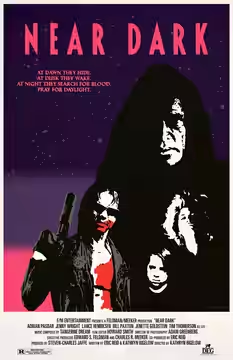
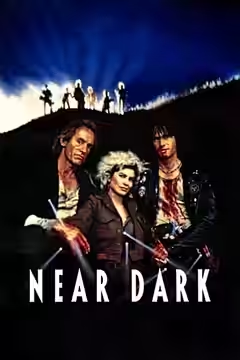
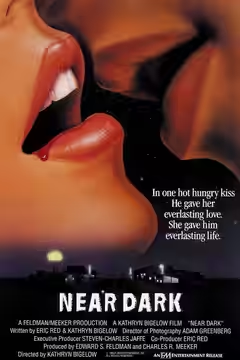
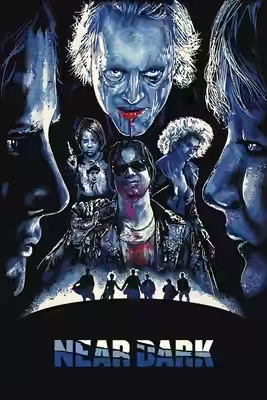
Kathryn Bigelow makes a frightening, persuasive vampire western, with Bill Paxton supplying much of its nasty pleasure. The dialogue sometimes strains and the story is uneven, but the atmosphere earns our recommendation.
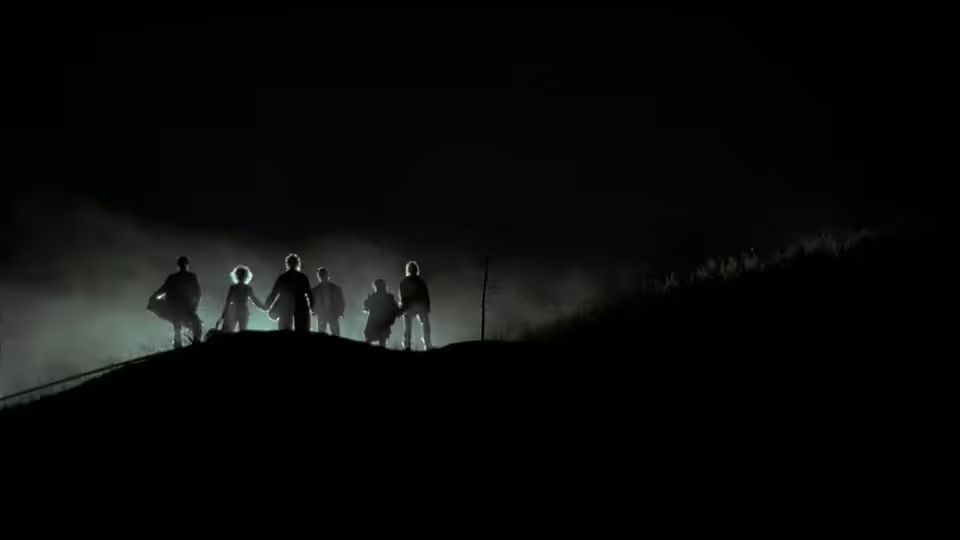
Kathryn Bigelow’s Near Dark is a frightening vampire western, and we recommend it with one reservation: the writing is not always equal to the filmmaking. It takes the vampire out of familiar Gothic surroundings and puts it into a road film, where the western’s violence and hard living fit the appetite rather well. The combination gives the horror somewhere to happen that does not already announce what sort of story this is. There is room here for seduction, but little reason to feel safe.
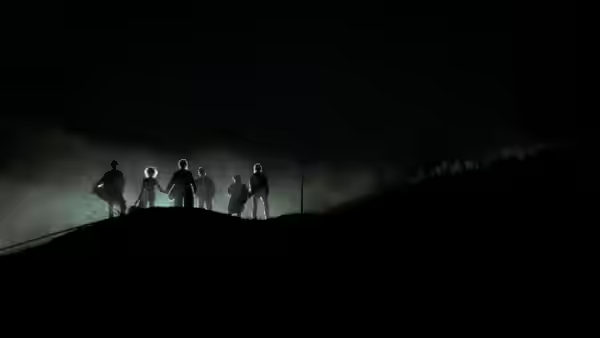
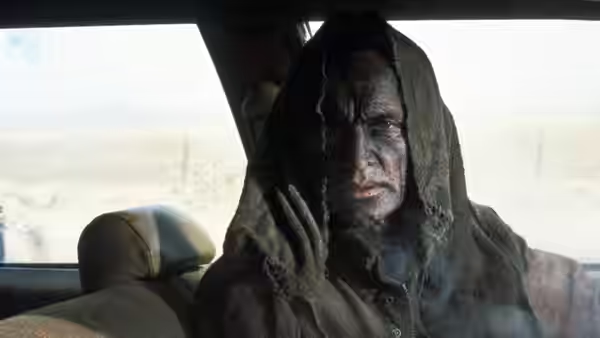
Adam Greenberg’s cinematography makes the sun-baked landscape inhospitable, while the dreamier images allow an attraction that the violence repeatedly makes difficult to indulge. We felt uneasy even in the daylight; those bleak, exposed spaces offer no reassuring sense of ordinary life continuing outside the horror. Stephen Altman’s production design helps keep the setting free of the usual Gothic grandeur. The surroundings do not need to advertise their danger, and that restraint makes the film’s ugliness more persuasive when it arrives.
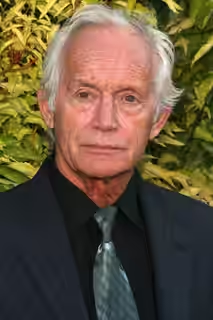
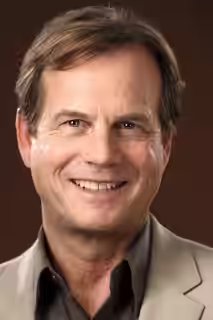
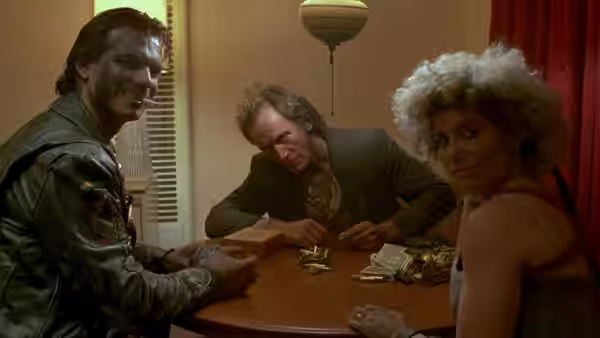
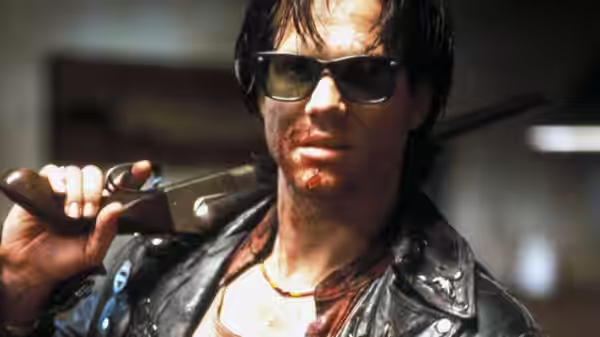
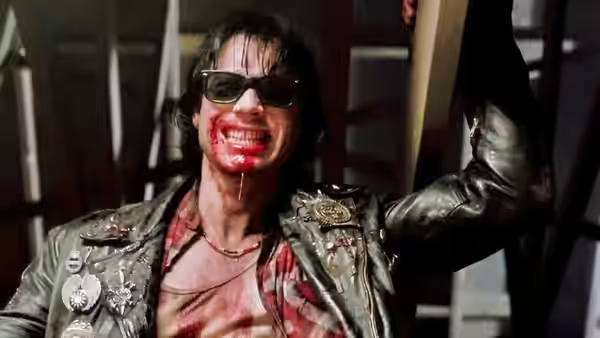
Bill Paxton, playing Severen, provides the most disreputable pleasure. There is something alarming about a performance that makes violence seem so enjoyable to the person inflicting it, and he does not soften that enjoyment to win our approval. Lance Henriksen gives Jesse Hooker a more settled authority, making a useful contrast to the relish of his fellow performer. Both actors make the company compelling without giving us much cause to excuse it.
Music by Paul Haslinger, Edgar Froese and Christopher Franke sustains the seductive mood without making it comfortable. The score is effective because it lets the dreamy images work on us without constantly insisting that we prepare for a fright. It helps explain why the film can feel so inviting despite its cruelty. There are passages where the music and photography make a stronger impression than anything the characters say.
Kathryn Bigelow’s handling of violent action is firmer than her handling of the story’s joins. Howard E. Smith’s editing gives that violence speed and force, with a roughness that suits people whose capacity for harm is the chief thing we need to understand. The danger feels physical, even within a supernatural story. That matters in a film whose seductive mood might otherwise let us enjoy the company without thinking much about what they do.
The screenplay, by Kathryn Bigelow and Eric Red, is the weak point, though hardly a reason to dismiss the film. Some of the dialogue sounds laboured, particularly beside performances that can communicate menace without needing the extra help. The storytelling is uneven enough for us to notice how often the atmosphere is doing the work. At 94 minutes, this is not a film we would accuse of sprawling, but brevity cannot quite disguise the awkward stretches. We wanted the writing to be as assured as the images.
Near Dark earns its place in vampire horror by changing the surroundings and taking the consequences seriously. The western elements give its people a convincing harshness, while the road-film shape keeps the familiar mythology from becoming a lecture. The uneven writing is a nuisance in a film otherwise made with such care. Choose it for the atmosphere and the dangerous company, and forgive a few lines that the actors should not have had to say.