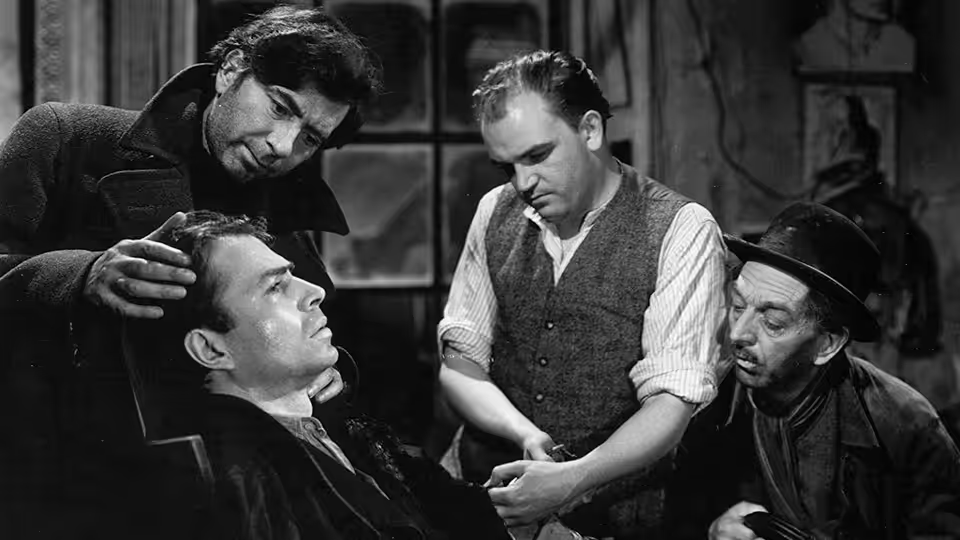
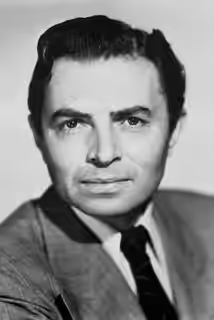
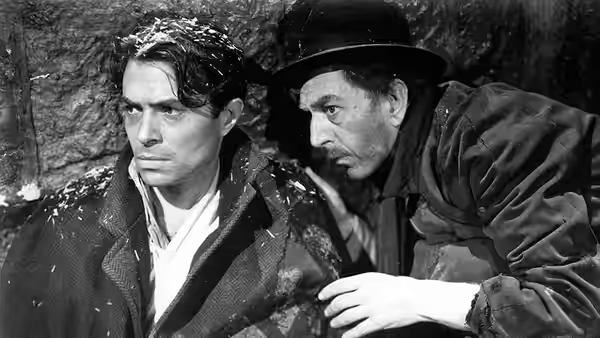
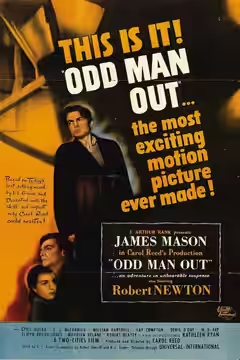
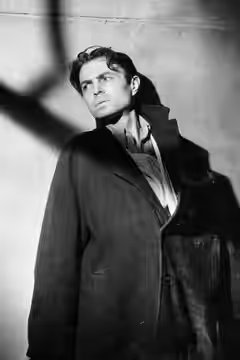
Carol Reed’s manhunt thriller is worth seeing for James Mason’s wounded Johnny and Robert Krasker’s oppressive black-and-white photography. The moralising occasionally interrupts the suspense, but Mason makes the man’s helplessness hard to forget.
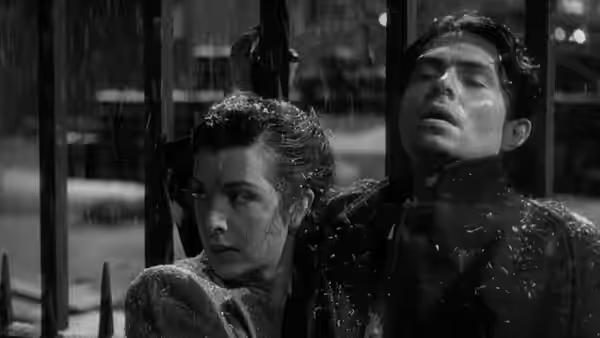
Carol Reed’s Odd Man Out is a tense, humane thriller, with one persistent fault: it sometimes presses its moral concerns harder than it needs to. The manhunt supplies the immediate danger, but Reed keeps directing our attention to the wounded man inside it. Johnny McQueen (James Mason) has less and less strength with which to influence his own story. That is an awkward proposition for a thriller, and a rewarding one for an actor prepared to surrender the usual privileges of a leading role.
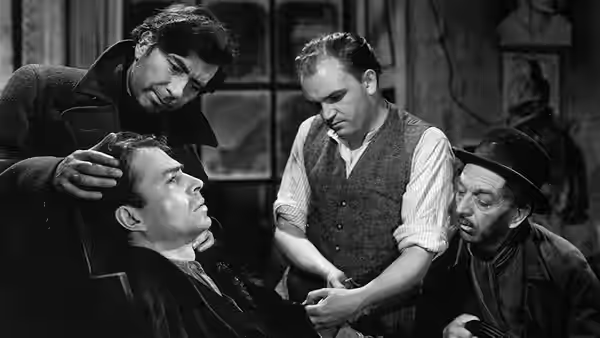
Mason makes Johnny’s passivity troubling. We were distressed by his helplessness, because the wounded, fading figure on screen cannot offer the reassurance of a hero taking charge. The performance asks us to keep watching someone whose capacity to act is diminishing, without making that demand feel like a test of patience. Mason gives us enough of a person to worry about even when the role gives him little to do. Much of the suspense depends on our willingness to stay with him.
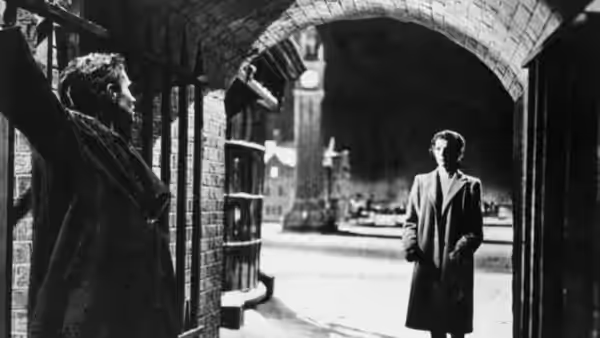
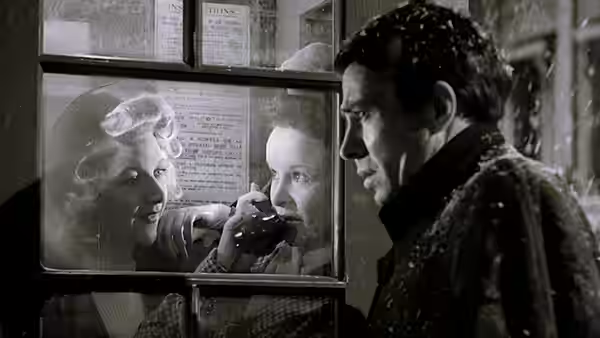
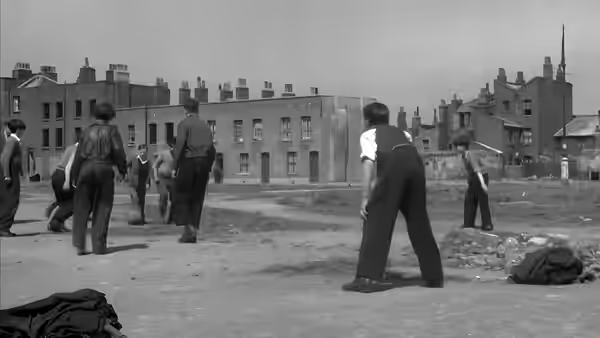
Robert Krasker’s black-and-white photography is the other reason the film holds us so firmly. His expressionistic approach makes the pursuit feel oppressive, giving the images a force that does not depend on Johnny doing anything. This is emphatic filmmaking, suited to Reed’s willingness to make the pursuit morally uncomfortable as well as frightening. The images occasionally come close to making the bleakness too attractive, but Krasker keeps the vulnerable human figure important enough that we do not simply settle down to admire the pictures.
Fergus McDonell’s editing allows the suspense to survive that unusual emphasis. We are given time to register Johnny’s condition without entirely losing the sense of pursuit, although the film becomes less taut when it turns towards moral reflection. William Alwyn’s music contributes to the gravity, fitting a drama that is not embarrassed to ask for a serious response. The combined effect is insistent, sometimes over-insistent, but the care taken over this apparently straightforward thriller is easy to appreciate.
The weakness lies in the moralising. R.C. Sherriff and F.L. Green’s writing can seem anxious that we should understand the significance of suffering we have already recognised in Mason’s performance. We grew impatient when that emphasis interrupted the suspense. The cast’s collective conviction helps, keeping the concern for other people credible even when the film becomes too deliberate about expressing it. These passages make the film feel slower, and give us time to notice how carefully our sympathies are being directed.
A conventional fugitive thriller lets us enjoy somebody thinking quickly under pressure. Reed takes away much of that pleasure and finds something more uncomfortable in its place: the need to care about a person who can no longer entertain us with resourcefulness. That choice makes Odd Man Out worth seeing despite the heavy emphasis, and Mason carries it without needing to dominate every moment. Choose it when there is time afterwards to sit with something bleak.