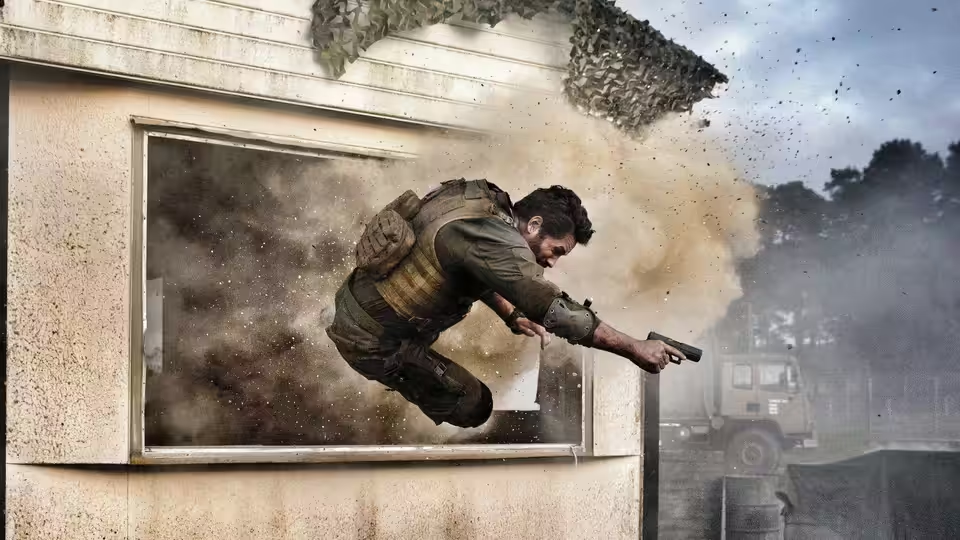
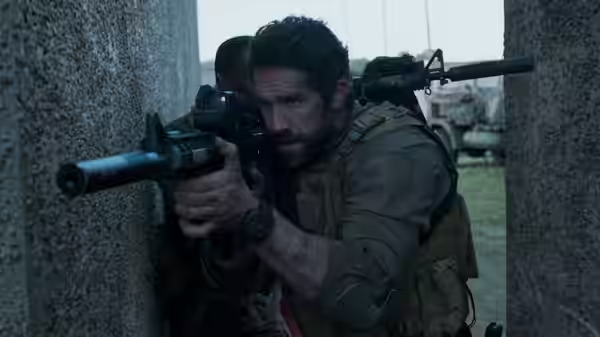
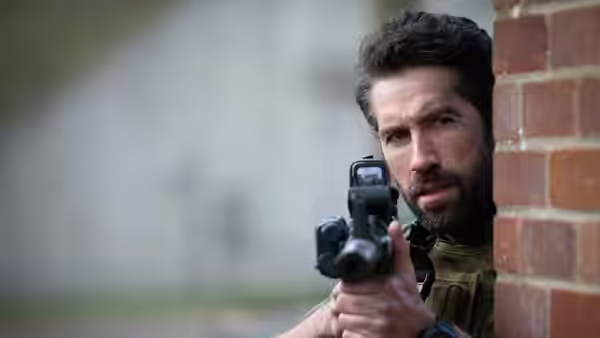
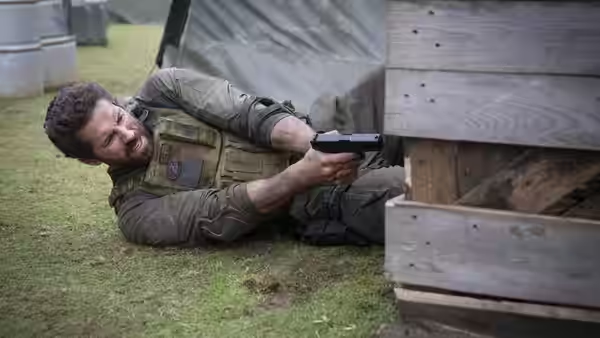
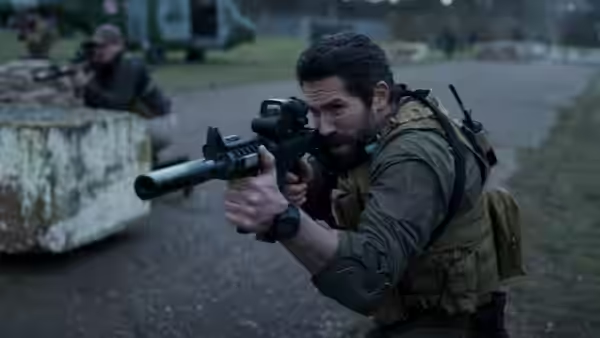
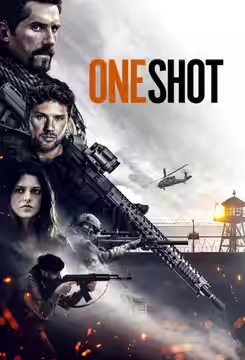
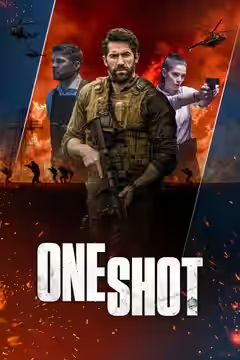
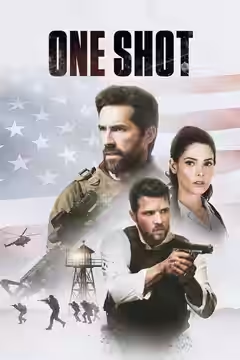
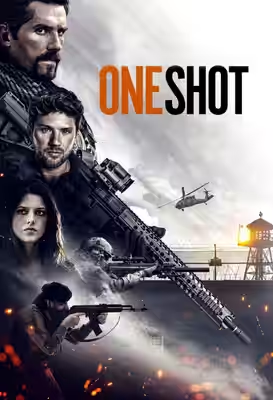
We recommend One Shot to action enthusiasts prepared to forgive thin characters and stiff dialogue. Scott Adkins and the continuous-shot choreography give the gun battles urgency, though repetition takes some of the force out of them.
James Nunn’s One Shot is a decent action thriller whose continuous-shot approach gives familiar gun battles enough pressure to hold our attention. It also makes the thin writing harder to ignore, since we have to sit through the dialogue on the way to the next fight. At 97 minutes, it asks a manageable amount of our evening. The strongest reason to give it that time is the care taken over the physical action.
The device works best when it makes us attend to the practical business of a fight. An apparently unbroken view asks the performers to sustain the action, and lets us judge their timing without a barrage of cuts doing the work for them. Liviu Jipescu’s editing helps maintain that continuity without making the joins the main attraction. We can enjoy the coordination without spending the entire film looking for where one take ends and another begins.
Scott Adkins is the chief beneficiary, because the approach gives his physical skill time to register. We were gripped by the close-quarters fighting: the movements are readable, and the sustained choreography gives us something more involving than another exchange of gunfire. He makes the effort of carrying these sequences look convincing without asking us to applaud the difficulty. There is considerable pleasure in watching a performer trusted to complete the work in front of the camera.
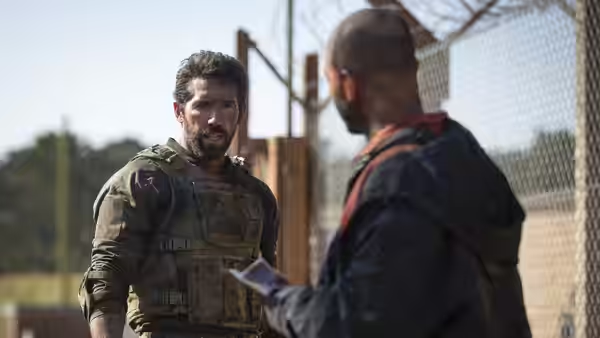
Jamie Russell’s screenplay gives the actors much less useful material when they speak. The dialogue is stiff, and too many characters seem to have been provided with just enough personality to get them into the next confrontation. Ashley Greene and Ryan Phillippe cannot do much to make that writing feel spontaneous. A stripped-down action thriller need not supply everybody with an elaborate history, but it should give us something to notice about them beyond their immediate function.
William El-Gardi’s Amin Mansur is the welcome exception. There is enough humanity in the portrayal to make us attend to a person rather than simply wait for the action to resume. That matters in a film whose other characters can feel so narrowly written. It also exposes a missed opportunity: more attention of this kind would have made the danger matter without requiring a longer running time or a pause for a speech.
Austin Wintory supplies the music, though the pressure comes most convincingly from the performers having to keep the action alive. The gun battles become repetitive, and continuous presentation cannot make every exchange equally interesting. Once we begin recognising the same dramatic purpose behind another stretch of shooting, the technique becomes easier to admire from a distance. The closer physical encounters restore some urgency because the timing and dexterity give us specific things to follow.
How much that compensates for the writing will depend on what brings us to an action film. There is enough skill here to reward an interest in choreography, and enough repetition to test anyone waiting for richer character work. The continuous-shot effect is worth experiencing without treating it as an achievement that settles every other question. Watch it for the performers doing difficult things together, and do not expect the dialogue to repay the same attention.