Open Season has lively visual detail and a useful comic contribution from Billy Connolly, but its central double act struggles. At 86 minutes, it still spends too long asking us to care.
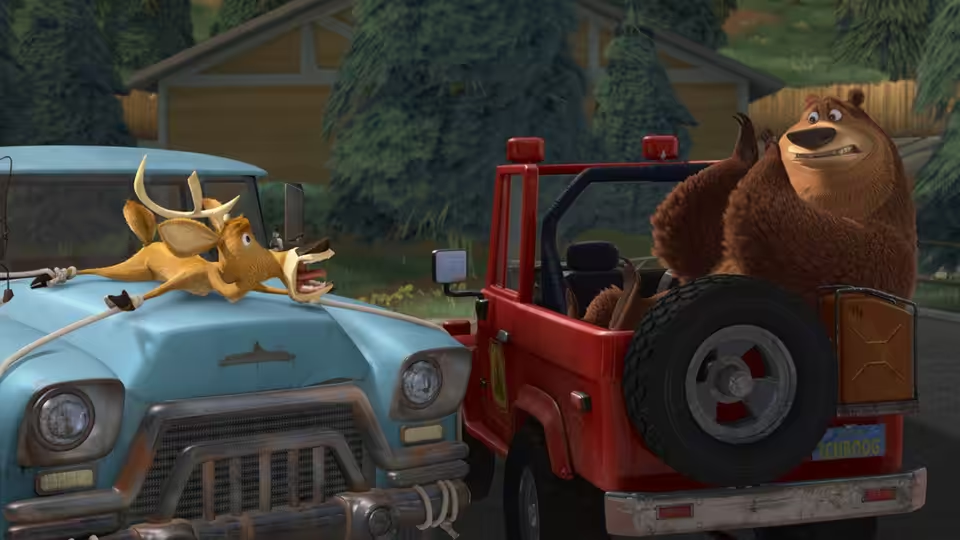
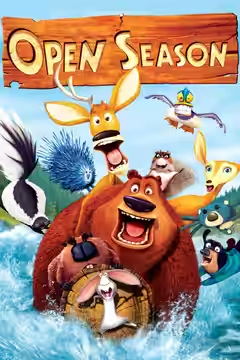
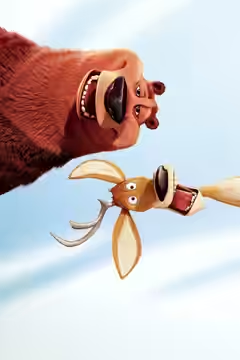
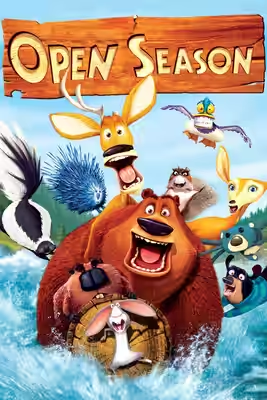
Open Season is a mixed family comedy with enough visual invention to make its thin writing frustrating. Roger Allers and Jill Culton aim for a cheerful adventure that accommodates broad jokes and some affection for its characters, and that seems a reasonable ambition. The trouble is that the central double act never becomes much fun to spend time with. The animation supplies much of the interest while Boog and Elliot struggle to hold our attention.
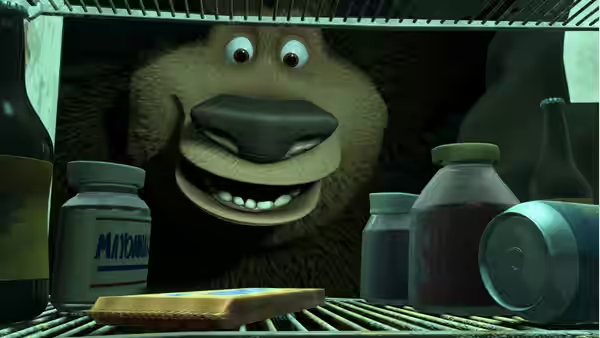
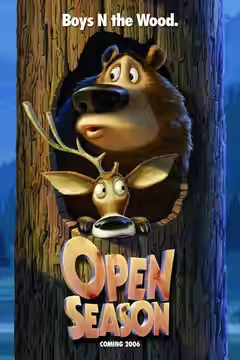
Martin Lawrence voices Boog and Ashton Kutcher voices Elliot, but the casting does more to distinguish them than their exchanges do. A comic partnership needs some pleasure in the way one character provokes the other, even when both are being tiresome. Here, the voices seldom suggest a relationship developing beyond the requirements of the next joke. Neither performance is disastrous; they simply give us too little to care about between the bursts of activity.
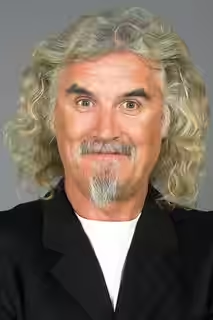
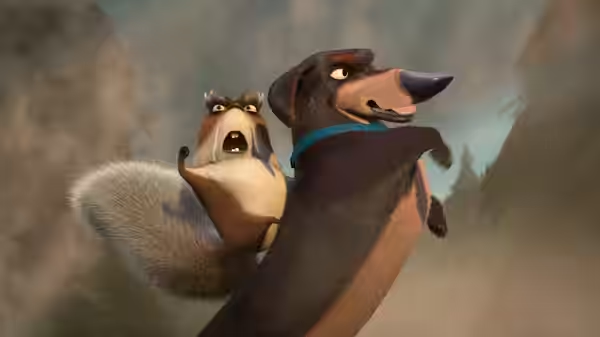
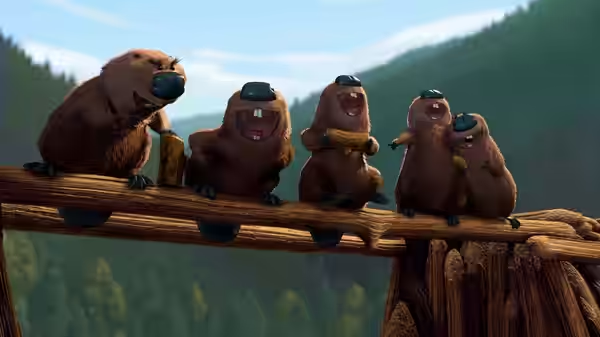
Billy Connolly fares better as McSquizzy, whose lines have a sharpness missing from much of the surrounding dialogue. We laughed at McSquizzy because Billy Connolly gets to the joke without making a ceremony of it. Those brief improvements matter, although they also make the stretches with the leads feel less rewarding. A supporting character should be able to steal a scene without leaving us wishing the film would abandon its central pair.
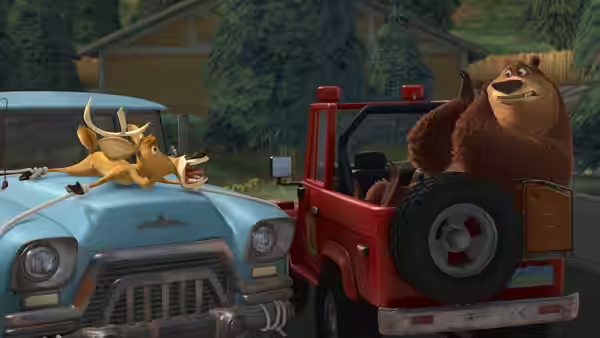
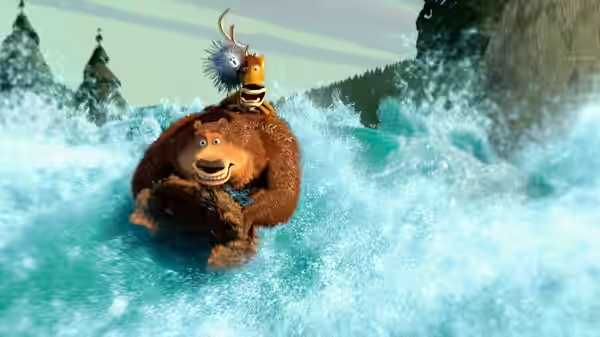
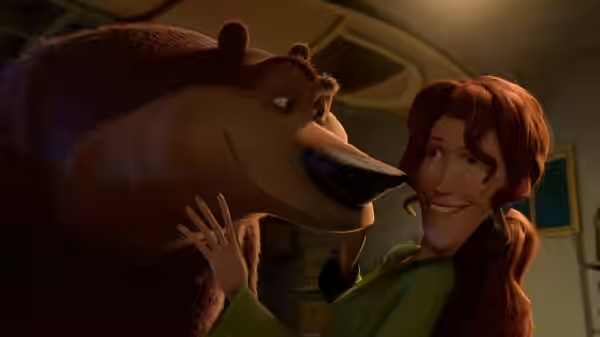
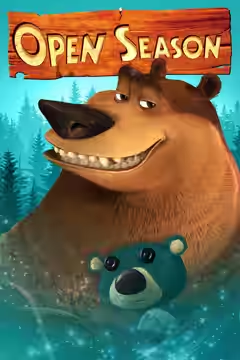
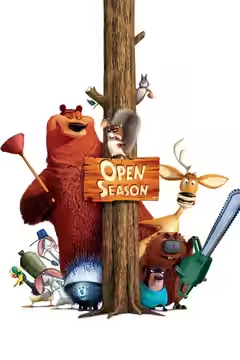
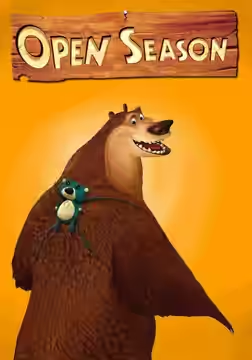
Michael Humphries’s production design gives the animation a liveliness that the writing badly needs. Colour and small visual details do useful work, suggesting character without waiting for someone to explain it aloud. The results are not consistent enough to make the film worth seeing for its animation alone, but there is care here, and the brighter passages are a pleasure to look at. The visual characterisation is often more persuasive than the dialogue.
Editors Pam Ziegenhagen and Ken Solomon keep the pace buoyant, which prevents the weaker material from becoming a complete slog. At 86 minutes, the film has little room for prolonged drift, though brisk cutting cannot make an unsuccessful joke land. The music credited to Paul Westerberg and Ramin Djawadi helps sustain the good cheer without supplying the feeling missing from the characters. These contributions keep things moving through stretches that offer little in the way of laughs or excitement.
The screenplay by Steve Bencich, Ron J. Friedman and Nat Mauldin is least convincing when it asks for tenderness. The sentiment feels too heavily applied because the comedy has done so little to make the central relationship matter. We do not need complicated psychology from an animated comedy, but we do need some evidence that these particular characters belong together. The film takes that affection for granted, leaving the voice cast to suggest feelings the dialogue has not earned.
Against the standards of the family adventure, the problem is basic: the laughs are too scattered and the excitement too mild. Familiar material can work perfectly well when it is handled with wit and conviction, and the supporting comedy occasionally supplies both. It does not happen often enough to justify a recommendation. Unless Billy Connolly’s contribution is reason enough, we would choose another family film.