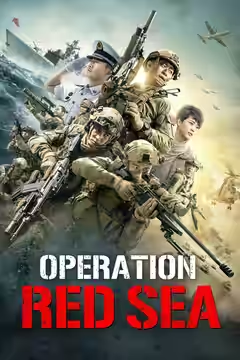
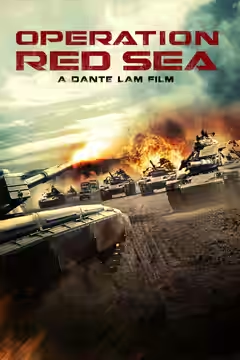
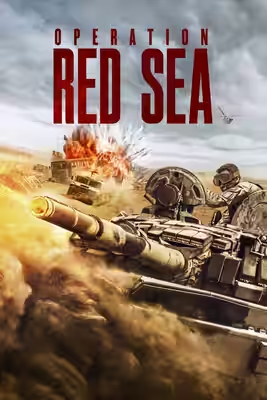
Dante Lam Chiu-yin stages a Chinese rescue mission with technical skill and punishing violence. We admired the action, but thin characters and choppy storytelling make 138 minutes of peril difficult to care about.
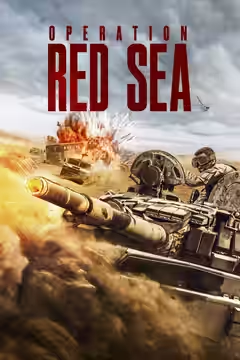
Operation Red Sea has enough skill in its action scenes to make its shortcomings frustrating. Dante Lam Chiu-yin follows a Chinese rescue mission through sustained, brutal combat, and the immediate business of surviving danger is often gripping. The trouble is that the people carrying out the mission never become interesting enough to sustain 138 minutes of it. Once the technical accomplishment has registered, we need another reason to stay, and the film is slow to provide one.
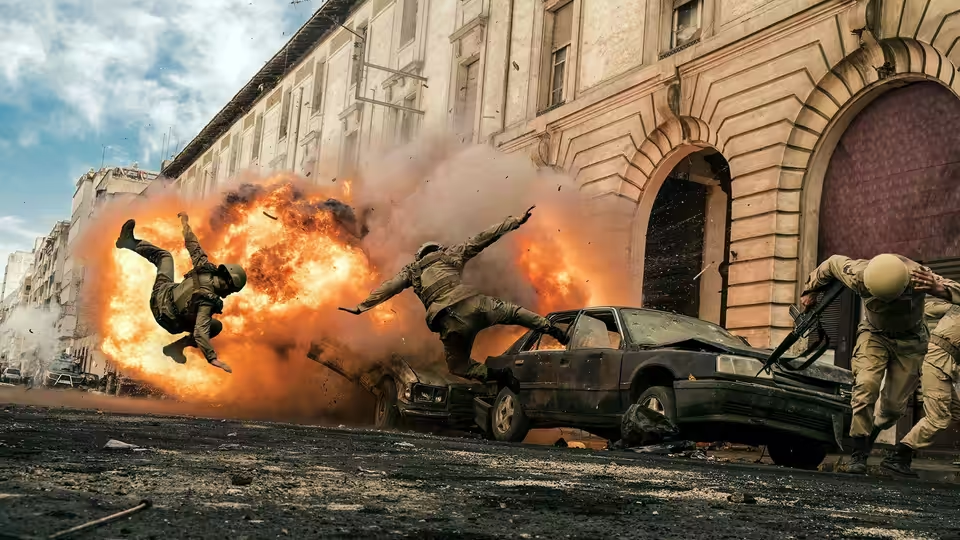
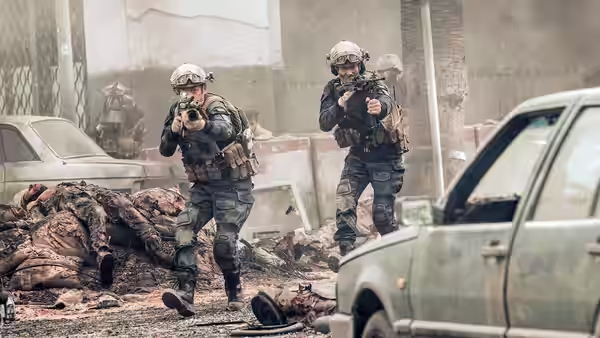
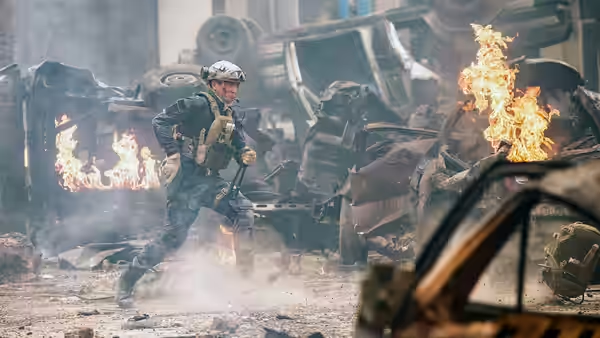
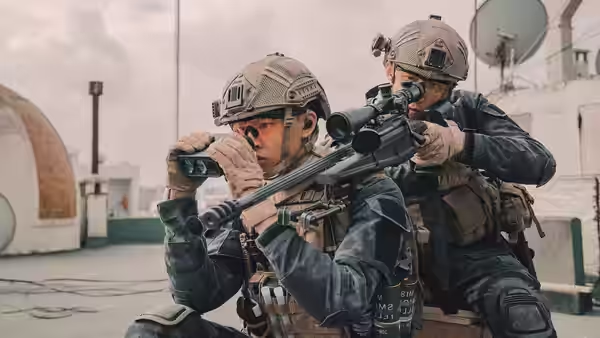
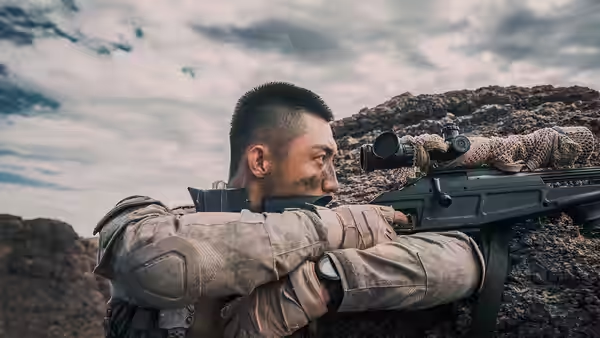
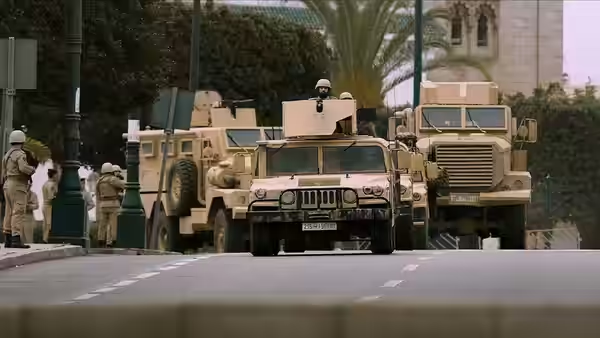
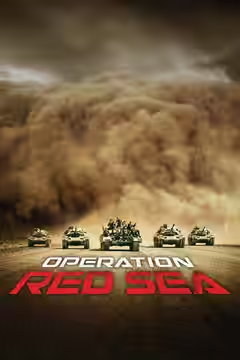
The cinematography by Horace Wong Wing-Hang and Edmond Fung Yuen-Man is a substantial virtue, particularly in the desert escape and village siege. These sequences give the action a clarity that the wider story lacks, so there is pleasure in following the immediate danger even when our interest in the mission has begun to fade. Chi-Hung Choi’s editing helps hold these complicated passages together. The town-square battle is harrowing, with the fighting remaining readable even when the violence becomes hard to watch.
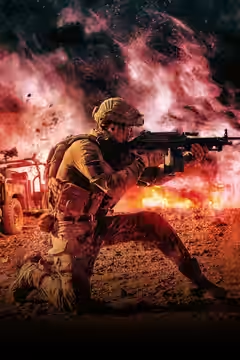
We were horrified by the injury detail. The attention paid to damaged bodies makes it difficult to settle into the usual pleasure of watching capable people handle an emergency. That discomfort is worth something: the violence has consequences we cannot simply dismiss once the action moves on. But repeated exposure also wears us down, and the film keeps asking for another surge of alarm before the previous one has subsided.
Zhang Yi as Yang Rui, Huang Jingyu as Gu Shun and Du Jiang as Xu Hong have to carry our interest through this onslaught. The screenplay, credited to Eric Lin Ming-Chie, Chen Zhuzhu and Feng Ji, with Dante Lam Chiu-yin also credited as writer, gives them too little help. Their characters remain difficult to care about beyond the basic wish to see them escape harm. More individual detail would matter here, because the fighting is so insistent that anything faintly drawn quickly gets lost.
The sound design deserves credit for how oppressive the combat feels. Elliot Leung’s music cannot supply the attachment to the characters that the writing has left undeveloped, and the assaults are far more memorable than the people. Between the big action passages, the storytelling is choppy, making it harder to stay involved. The film repeatedly has to build up our concern again, which makes its relentless pace oddly tiring.
As a military rescue thriller, it understands the appeal of watching a difficult operation carried out under pressure. Its patriotic purpose is also plain, but the gruesomeness makes that purpose harder to accept on the terms offered. We spend so much time confronting what combat does to bodies that the celebration of military prowess begins to seem poorly judged. Enthusiasm for the rescuers can only carry us through so much punishment, particularly when we know so little about them.
There is serious craft here, and the people responsible for staging and assembling the action have earned their credit. A committed combat-film enthusiast may find enough in those passages to forgive the thin characterisation. We cannot recommend the full 138 minutes on that basis. For anyone hoping to become attached to the people being shot at, this is a long evening.