Michael Bay’s comedy about Miami bodybuilders who kidnapped a rich man is loud, often funny and well cast, with Dwayne Johnson its unexpected heart. It is also 130 minutes long and never decides how it feels about the real people it laughs at.
Michael Bay took a break from giant robots to make this. The story, from a screenplay by Christopher Markus and Stephen McFeely, is a true one: in Miami in the mid-1990s a gang of bodybuilders kidnapped a rich man, held him for weeks and took everything he owned. Bay films it as a comedy about idiots. The idiots are funny and the cast is good, and the film never settles what we are meant to feel about the people they hurt. It runs 130 minutes, which is about half an hour longer than the joke.
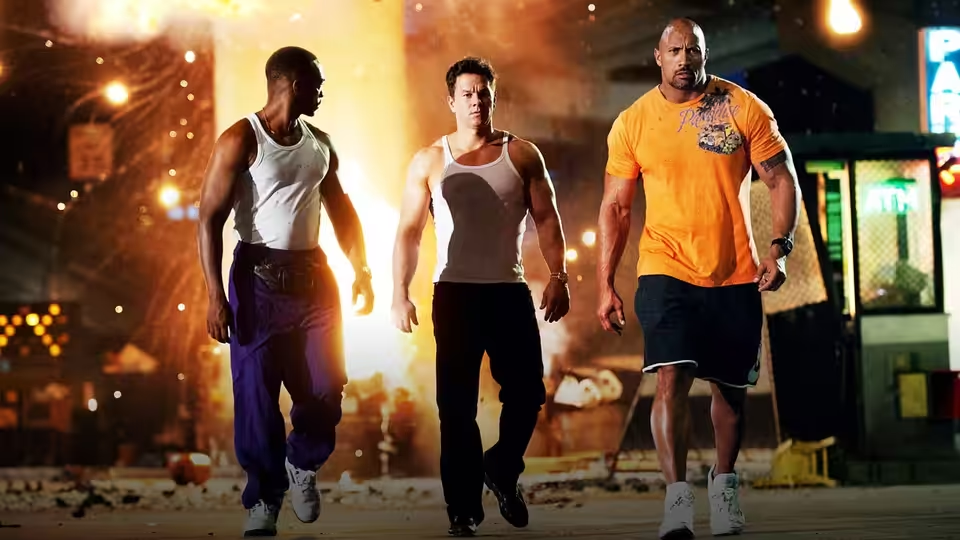
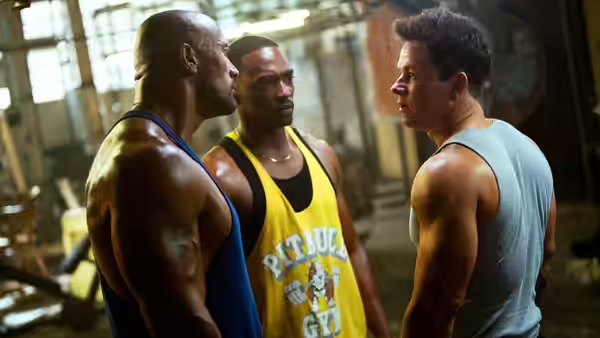
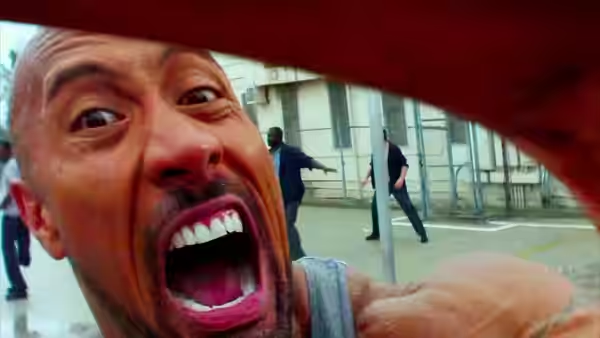
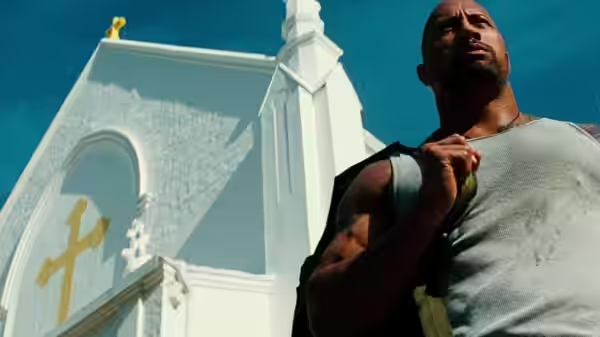
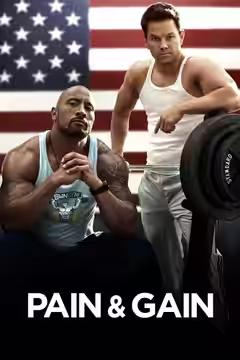
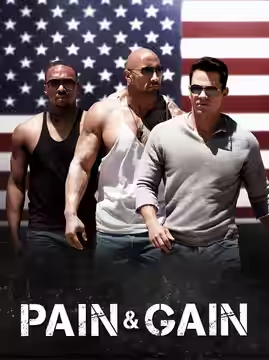
Dwayne Johnson is the reason to see it. Paul Doyle is an ex-convict who found God in prison and lost his taste for cocaine, and who has the bad luck to be the gang’s only conscience. Johnson plays him big and soft, a man who weeps when he hurts someone and then hurts someone else because Lugo asked nicely. Mark Wahlberg’s Lugo is the opposite, all plan and no doubt, a trainer who has mistaken a seminar for a philosophy, and Wahlberg reads the voiceover like a man enjoying his own eulogy. Anthony Mackie’s Doorbal is the quiet third, chasing a cure for what the steroids have done to him.
Tony Shalhoub’s Kershaw is the film’s problem and knows it. Shalhoub makes him so unpleasant, so loud about his money and so rude to everyone who serves him, that the script can hope we will enjoy watching him suffer. Ed Harris arrives late as Ed DuBois, a retired private investigator, speaking at half the speed of everyone else, and the film steadies the moment he does. He is the only person on screen who seems to think any of this is serious.
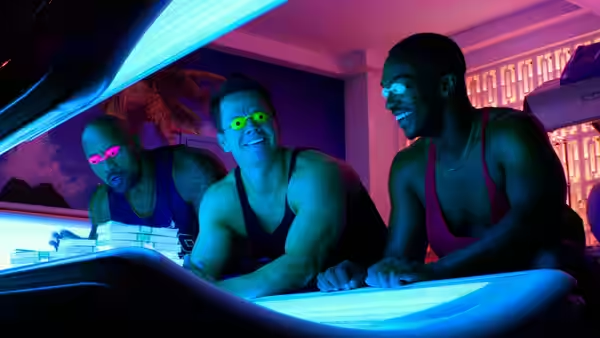
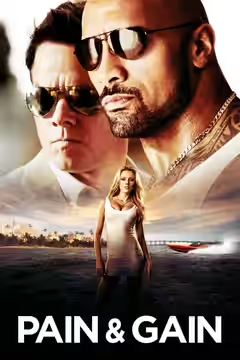
Bay shoots this exactly as he shoots everything. Ben Seresin films the gang from the knee up against hot blue skies, the sun flaring over their shoulders, the colours pushed until the skin looks oiled. Jeffrey Beecroft’s Sun Gym is chrome, neon and mirrors; Kershaw’s house is white marble and money. Deborah Lynn Scott and Colleen Kelsall dress the men in vests two sizes too small and the women in less. The point is that these men see themselves as the heroes of a Michael Bay film, and Bay gives them one. It is a decent joke, and he tells it for two hours.
Joel Negron and Tom Muldoon cut it with freeze frames, captions and three competing narrators, so the film keeps pausing to let someone explain what has just gone wrong. Steve Jablonsky’s score pumps along underneath, which suits the gym and undercuts the warehouse. The warehouse is where the film gets into trouble. Kershaw’s weeks in captivity are played for laughs, and some of the laughs are good; we laughed at Johnson praying over a man he had just helped to beat, and then remembered the man was real, and felt slightly sick. The film does not notice. It carries on grinning.
The second half takes a turn we will not describe. It is darker than anything before it, and the tone does not change to meet it. The middle hour sags while the gang spend their money, and the jokes repeat: Rebel Wilson’s Ramona is a gag about appetite, Bar Paly’s Sorina a gag about dimness, and both are asked to do the same thing four or five times. Ken Jeong’s Johnny Wu, the seminar guru who tells Lugo to be a doer, is the one piece of satire that works all the way through, because nobody gets hurt in it.
Critics have split almost down the middle on whether Bay is in on the joke. We think he is in on half of it. He knows the men are ridiculous and films them as ridiculous. He does not seem to know that the same camera makes them glamorous, and that a good part of the audience will go home wanting the cars. See it for Johnson, and for a first hour that is sharper than we expected from him. Then decide for yourself when the laughing should have stopped, because the film will not tell you.