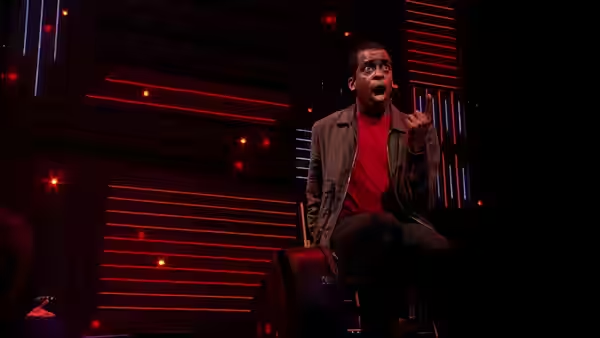
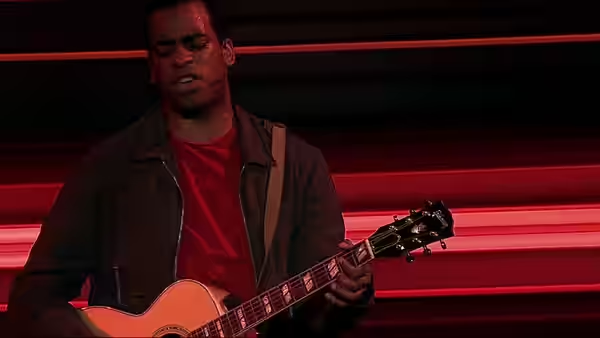
Spike Lee’s record of Stew’s Broadway musical is the rare filmed show that beats a good seat in the stalls: cameras on the faces, cuts on the beat, applause left in. It runs long and the cranes show off, but the show is a fine one.
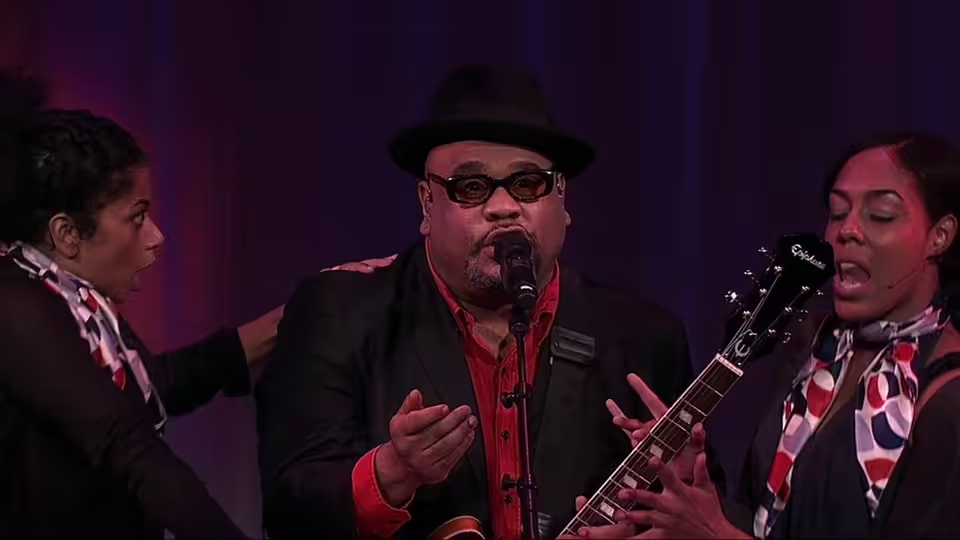
Stew is a large man in spectacles who stands at the side of the stage with a guitar and tells us about a boy from South Central Los Angeles who wanted to be an artist. The boy is called Youth, he is played by Daniel Breaker, and he is Stew, some thirty years younger, before any of the songs had been written. Passing Strange began as a stage musical written by Stew, and Spike Lee has filmed it on Broadway over its final performances. It is one of the few filmed plays we have seen that beats a good seat in the stalls, and we say that having sat through a good many that did not. At 135 minutes it is also a quarter of an hour longer than it needs to be.
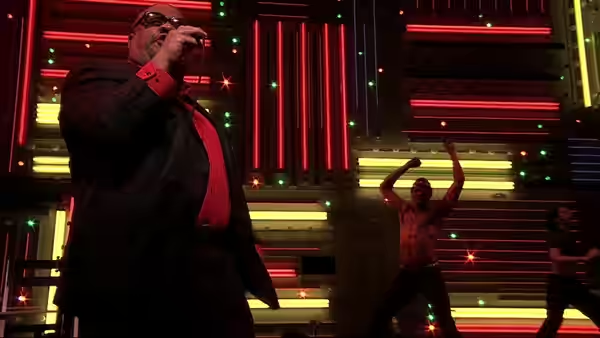
There is almost no set. A band sits on risers at the back, strips of coloured light hang and blink, and six actors work a lot of bare floor. Youth’s Mother (Eisa Davis) wants him in church; he wants out. He joins a choir run by Mr. Franklin (Colman Domingo), who turns out to have his own doubts, forms a punk band with two friends, and leaves for Amsterdam to look for what he keeps calling “the real”. The four supporting actors play everyone he meets on the way, so Rebecca Naomi Jones, Chad Goodridge and De’Adre Aziza each turn up three times as three different people, and part of the pleasure is watching them not bother to hide it.
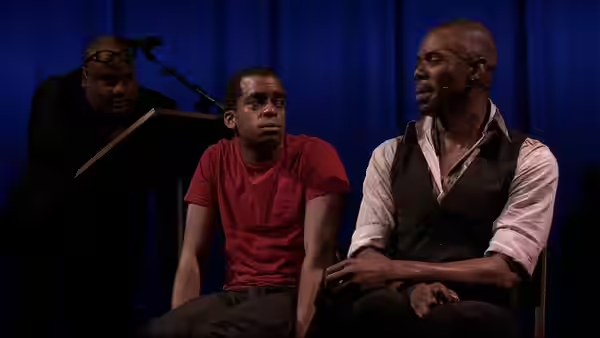
Matthew Libatique shoots with several cameras kept at or a little below the actors’ eye line, so faces fill the frame and you can see the sweat come through the make-up by the second act. Barry Alexander Brown cuts hard on the beat during the songs and then slows right down for the talk, so that a joke is allowed to land on the face of the person hearing it. The best of it is simple. When Stew stops addressing us and turns to Breaker, Lee puts both of them in the frame and holds, and the film becomes what the show always was underneath the guitars: an older man trying to get a word in with a younger one who is not listening.
Lee does not always trust that. Every so often a camera swings up on a crane over the heads of the audience and swoops towards the stage, and each time it reminded us that we were watching a recording of a room we were not in. There are cuts to people in the stalls laughing or wiping their eyes, which tell us what to feel about a scene that was managing perfectly well on its own. These are small things and there are perhaps a dozen of them. They are the only places where the director is more visible than the show.
The cast is uniformly good and Domingo is better than that. His Mr. Franklin is a soft-voiced choirmaster with a secret; his later parts include a Dutch host and a German performance artist who shouts, and he makes all three men seem to have been born on the stage he is standing on. Davis gives Mother a cardigan and a telephone and does most of her work in the pauses between Youth’s excuses. Breaker plays Youth as gangly, pleased with himself and a little tiring, which is the point, because Stew is hard on the boy he was and wants us to be too.
The second half moves to Berlin, and we will not say much about it except that the satire of the art scene there goes on longer than the joke can bear, and that the show is sharper when it stops laughing at Youth and starts asking what he did to the people he left. The scene that got at us comes much earlier, when Youth tells Mother he is leaving Los Angeles. Davis plays it without raising her voice, and Libatique stays on her while Breaker talks, so we watch the news arrive on a face that has decided not to show it. It moved us more than we expected from a boy doing the thing every boy in every musical does, and what did it was not a song but a woman being polite.
Lee is a director whose own films rarely sit still, and here he mostly sits still, which was the right call and the harder one. Watch it with the sound up and with someone who has never heard of it. They will be arguing with Youth by the interval.