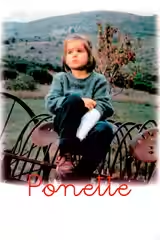
Céline Sciamma’s 72-minute film about a girl who meets her own mother at eight is small, plain and stayed with us for days. It is so exactly made that you can sometimes see the joins, and we would not trade a minute of it.
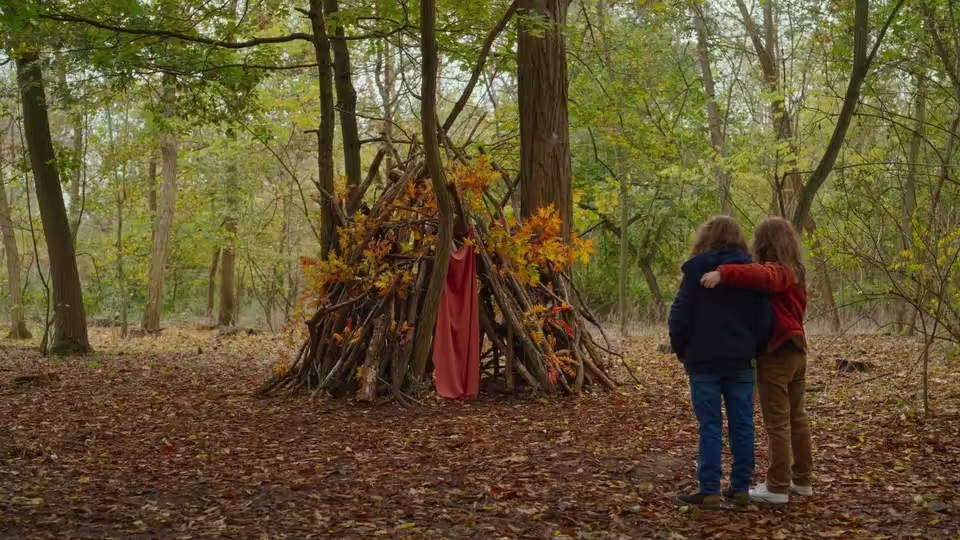
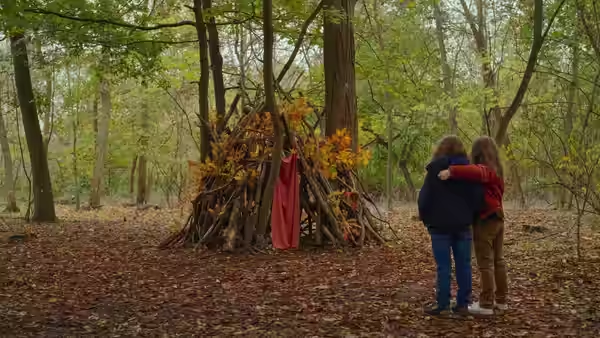
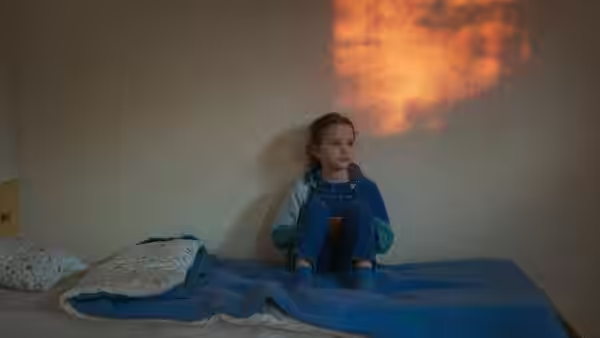
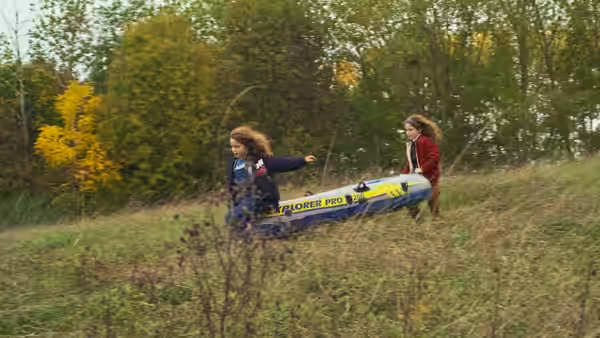
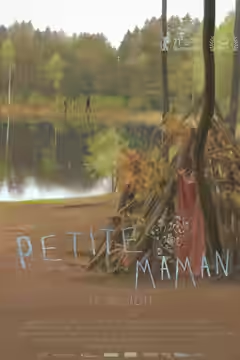
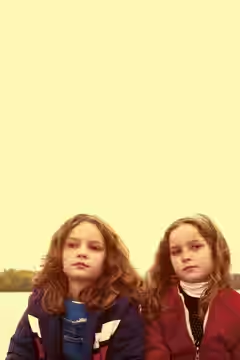
Céline Sciamma made Portrait of a Lady on Fire in 2019, a period film with a great deal of room in it, and then she made this: 72 minutes, a handful of speaking parts, a house, some woods and a U certificate. Nelly (Joséphine Sanz) is eight. Her grandmother has just died, and her parents have brought her to the house in the woods where her mother grew up, to empty it. Her mother (Nina Meurisse) cannot bear the place and leaves. Nelly goes into the trees and finds a girl her own age building a hut out of branches. The girl’s name is Marion (Gabrielle Sanz), which is also the name of Nelly’s mother, and she has Nelly’s face. The title means Little Mum. Sciamma does not treat any of this as a twist, and neither will we. It is one of the best things she has made, and we recommend it with a caveat we will come to.
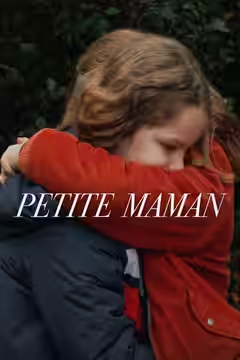
The film had us before the woods. It opens in a care home corridor, Nelly going from door to door saying goodbye to old women who are not her grandmother, and arriving at a stripped bed in an empty room. In the car afterwards she leans through from the back seat, feeds her mother crisps and juice and puts her arms round her neck, a child comforting an adult who has stopped pretending to be all right. We were undone by that, and we were not ten minutes in. Nothing in the scene asks for it. Sciamma simply lets a girl be kind and watches.
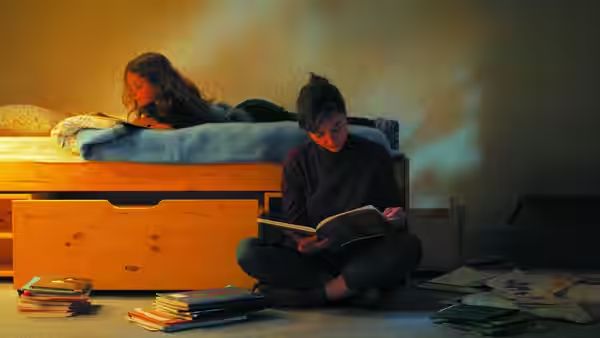
Claire Mathon, who also shot Portrait, keeps the camera at Nelly’s height and the light at autumn’s, so the woods are yellow and brown and faintly damp and the house is the colour of old wallpaper. Lionel Brison’s production design has a harder job than it looks. The house Nelly is helping to empty and the house Marion lives in are the same rooms dressed twice, one half-packed and cold, one with a kettle on, and you register the difference before you understand it. Julien Lacheray cuts without hurry; scenes end when the girls have finished, not when a line lands. Para One’s music barely exists until one song, in the last stretch, and its arrival counts because everything before it has been wind and footsteps.
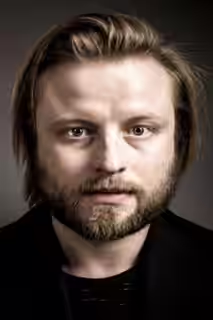
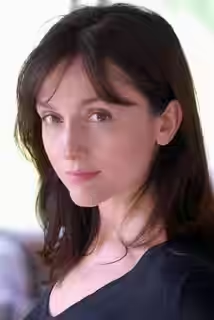
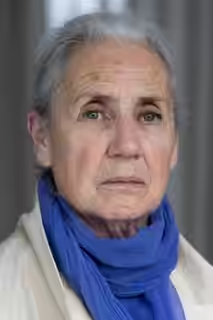
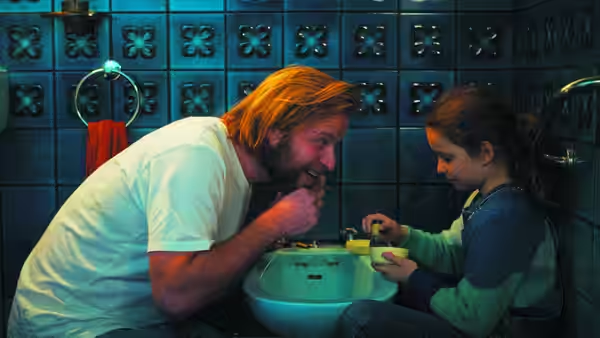
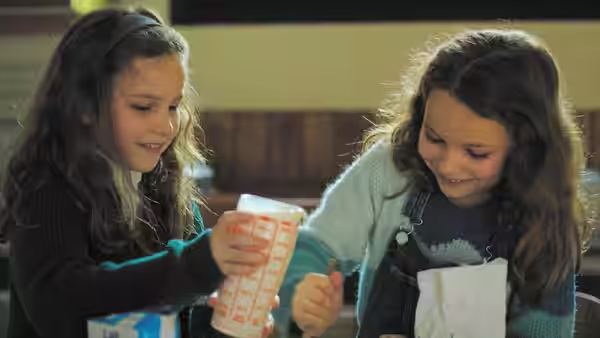
The Sanz sisters are twins, and the whole film depends on how little they make of the situation. Nobody gasps. Marion asks for help with a branch, and they build the hut. They make crêpes and get flour on everything. They put on a play with wigs, an inspector and a countess, and take it exactly as seriously as children do. When Nelly works out who her new friend is, she is interested rather than frightened, which is how a child would be. Meurisse plays the grown-up Marion with a tiredness she never explains, Stéphane Varupenne is a warm and slightly useless father who lets Nelly shave his beard off, and Margot Abascal, walking with a cane through the same kitchen, gives the film its ache without a single big scene.
Our caveat is that it is so precisely built you can sometimes see the joins. Once or twice the girls say things no eight-year-old says, lines about secrets, and about sadness and whose fault it is, and for a moment we heard the writer rather than the child. Grief here is talked about with great tact and shown hardly at all. Nobody is allowed to be ugly, or loud, or unfair. We admired the control, and now and then we wanted it to slip. It is a fable that is never once permitted to be frightening, and we would have liked one scene where the woods felt like woods.
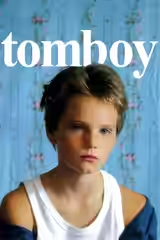
Among Sciamma’s own films it sits nearest to Tomboy (2011), which also watched a child over one summer and trusted the audience to keep up. It has none of the scale of Portrait and none of the noise of Girlhood (2014), and it does not want them. It also never runs short of things to do, which is more than we can say for a good many films twice the length.
It is a U. Watch it with a child if you have one, and with your mother if you have one of those, and expect a conversation afterwards. Seventy-two minutes on the clock, and you will spend longer than that trying to picture your own parents at eight.