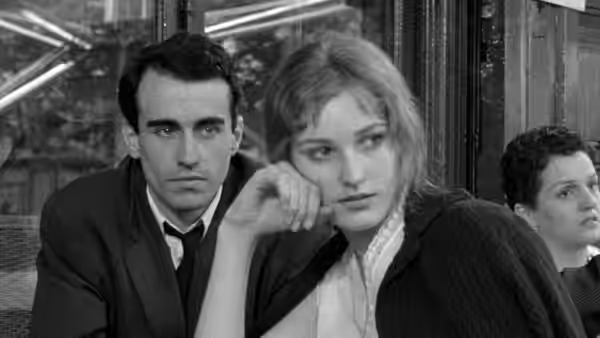
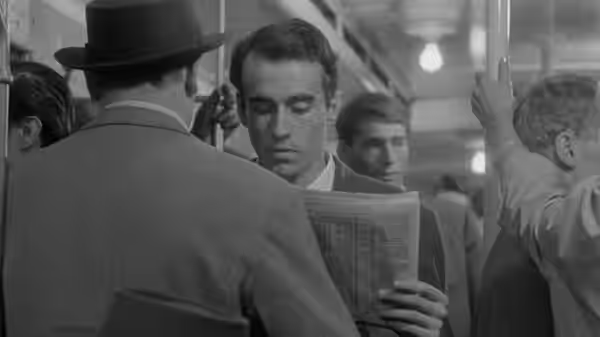
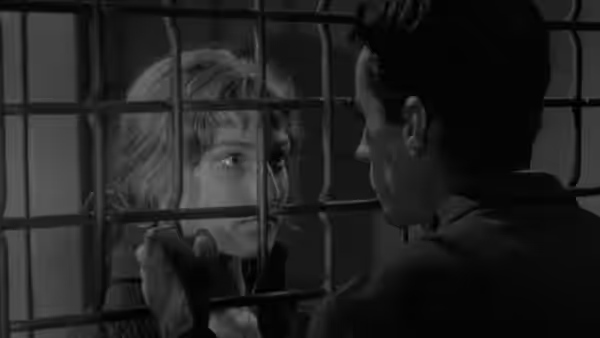
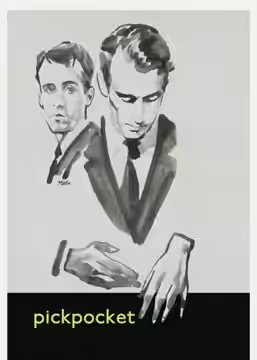
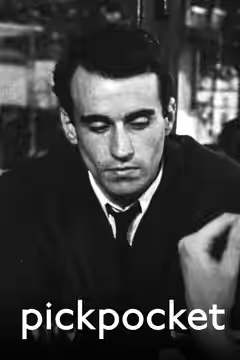
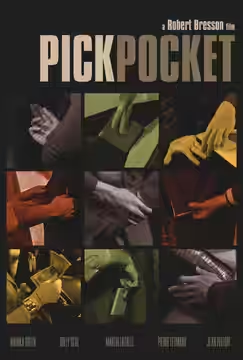
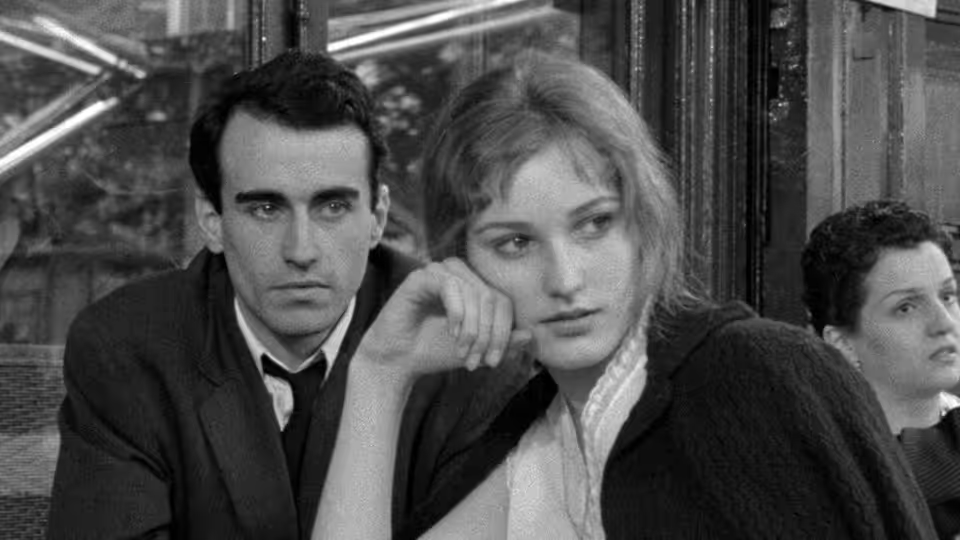
Michel (Martin LaSalle) sits beside Jeanne (Marika Green) as she rests her chin on her hand
Film review

Pickpocket

1959 · Directed by Robert Bresson · 1h 15m

In a sentenceWe spent far too much of this film hoping the thief wouldn’t get caught

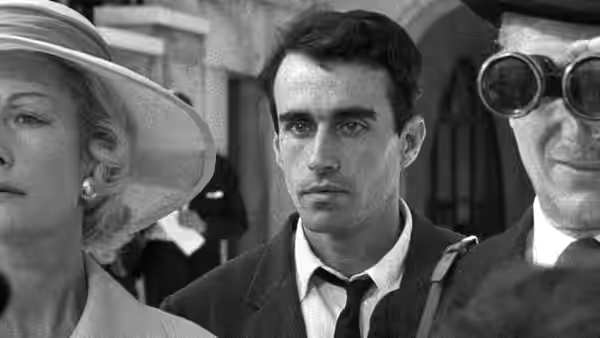
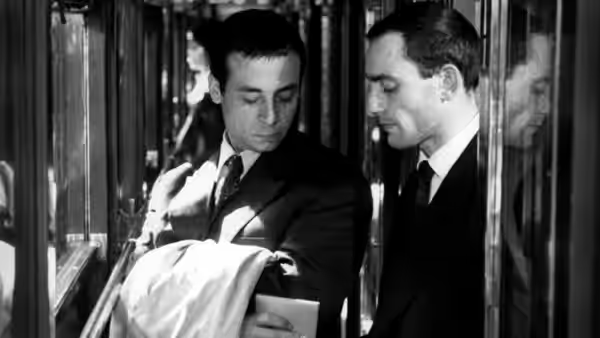
In Paris, Michel (Martin LaSalle) steals from people close enough to touch, watching for the moment when he can take something unnoticed. His work depends on hands, pockets, timing and the distance between bodies. Jeanne (Marika Green) and Jacques (Pierre Leymarie) are among the people around him, while the Lead Inspector (Jean Pélégri) represents the law his thefts break. Michel wants to keep stealing without being caught. The practical demands of each theft absorb him, but his skill does little to close the emotional distance between him and the people whose lives touch his.

Plays from YouTube when you press play; nothing loads from them until then.

Fi1m review

Robert Bresson’s crime film makes the mechanics of stealing absorbing and the thief harder to reach. The restraint can keep feeling at a distance, but the precision rewards close attention across its 75 minutes.

Pickpocket makes stealing absorbing enough to leave us slightly embarrassed by our interest. Robert Bresson has made a crime film worth seeing for the attention it pays to an act most films would hurry past. Michel (Martin LaSalle) is a compulsive thief, and the film takes that compulsion seriously without making him easy company. Across 75 minutes, the patient scrutiny of his work gives the film its grip. The reserve occasionally leaves us struggling to care about Michel.

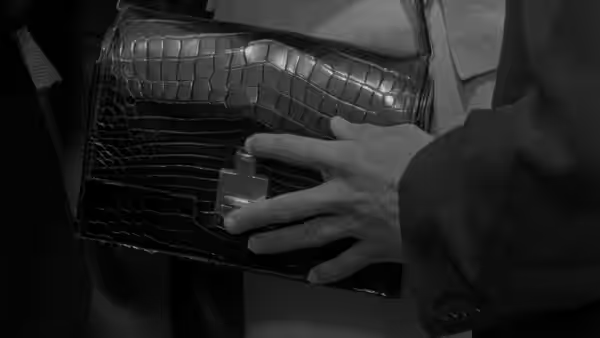
Léonce-Henri Burel’s cinematography keeps the pickpocketing close enough for small movements to hold our attention. We begin watching for the opportunity to steal with an eagerness that belongs to Michel. We wanted the thefts to succeed, and felt uncomfortable about it. The close attention to technique had made us interested in the thief’s success before we had considered the person being robbed. That is a considerable effect to achieve with such restrained images.

Raymond Lamy’s editing is central to that concentration. The handling of the pickpocketing gives the actions a rhythm we can follow, making the skill involved intelligible. The detailed sound helps make these small acts vivid, encouraging us to listen as carefully as we look. This is where the film earns its measured pace: we are being given something precise to attend to, and the attention produces suspense.

Pierre Charbonnier’s production design is correspondingly unobtrusive. The surroundings give the pickpocketing little visual competition, which suits a film asking us to notice such small movements. There is no need for us to stop and admire the setting before returning to the action. The restraint is useful: we stay alert to the distances between people and the opportunities those distances offer a thief.

Martin LaSalle gives us little encouragement to find Michel charming. That suits a film so interested in emotional emptiness, and we appreciate the decision not to make criminal skill an excuse for his behaviour. The difficulty is that his restraint can also make the people around him seem less important than the next theft. There are stretches when we wanted the acting to admit more feeling, particularly after the precision of the stealing has made us so responsive to physical detail.

The film’s spiritual concerns grow out of that difficulty. What does it mean to become so accomplished at taking things from other people while remaining emotionally remote from them? The question gives these small crimes weight without requiring us to believe that Michel is a grand or fascinating criminal. Crime films often invite us to admire the professional at work; this one makes that admiration uncomfortable, because the man doing the work remains troubling company.

We recommend it with a simple caveat: the pickpocketing is easier to engage with than the people. Its concentration can feel severe, particularly if we expect a crime film to offer ready explanations for its central figure. But the detailed thefts offer an immediate pleasure that needs no specialist vocabulary or interest in spiritual questions. Save it for an evening when nobody is likely to talk over the small sounds.
Critical consensus AI synthesised

82
Positive
6
Mixed
2
Negative
0

Most critics respond warmly to Pickpocket, with praise clustering around Bresson’s restraint and the precision of the theft sequences. The reviews repeatedly single out the tightly observed movements of hands and bodies, finding the mechanics of pickpocketing compelling in their own right. Several also see emotional and spiritual depth in the austerity, reading Michel’s compulsive stealing as a way into his isolation rather than simply the basis for a crime story.

The clearest reservation comes from The AV Club, which admires the detailed sound and formal control but questions how persuasive the spiritual dimension will be for every viewer. That places the disagreement around interpretation more than technique. The scores suggest a wider spread than the available comments establish: six reviews are positive and two mixed, but the supplied text for the two lower-scoring entries offers no identifiable criticism.

Slant Magazine
10 November 2005 · ★★★★/4 · Ed Gonzalez
100

Gonzalez describes the film as a profoundly personal and illuminating portrait of spiritual and emotional emptiness. He praises Bresson’s interweaving of the spiritual and psychosexual dimensions of Michel’s compulsive thieving.

Read the full review →
RogerEbert.com
· Roger Ebert
90*

Ebert’s Great Movies essay treats the film as a major work. It emphasizes Bresson’s restrained style and spiritual concerns.

Read the full review →
The Guardian
31 May 2022 · Peter Bradshaw
90*

Bradshaw finds the film brilliant and its measured pace central to its intellectual force. He singles out the balletic stealth of the pickpocketing scenes as still compelling.

Read the full review →
Empire
1 January 2000 · David Parkinson
85*

Parkinson regards the film as a masterwork of poise and restrained emotion. He praises Bresson’s austere authenticity and the tightly filmed pickpocketing techniques.

Read the full review →
The AV Club
23 July 2014 · B+ · Mike D'Angelo
83

D'Angelo finds the film compelling when it focuses on the mechanics of pickpocketing, though its spiritual ending may not convince every viewer. He praises Bresson's formal precision, especially the detailed sound design that makes the thefts vivid.

Read the full review →
The New Yorker
80*

The review presents the film as a powerful affirmation of redemptive love. It praises Bresson’s austere, precise images and the street ballet of pickpocketing.

Read the full review →

Straight answers AI written, from our review

Is Pickpocket worth watching?
Pickpocket is worth watching for its absorbing, precise treatment of stealing, and we score it 84 out of 100. We found ourselves hoping the thefts would succeed, then feeling uncomfortable about it. Its 75 minutes reward close attention, though viewers who want warmth or an easy connection with the central character may find the restraint severe.
How long is Pickpocket, and what is it rated?
Pickpocket runs 1h 15m. It is a crime and drama film.
Where can I watch Pickpocket in South Africa?
Pickpocket is not on any streaming or rental service in South Africa at the moment. It is available in 3 other countries; change your country at the top of the page to see where. Availability is checked daily.
How violent or frightening is Pickpocket, and is it suitable for children?
Pickpocket carries a UK PG certificate, indicating general viewing with parental guidance, though some material may be unsuitable for younger children. The suspense we describe comes from closely observed thefts and the possibility of being caught; the certificate alone does not establish specific levels of violence or frightening content. Its measured pace and emotionally remote central character make it a less obvious choice for children.
How does Pickpocket compare to A Man Escaped?
Pickpocket and A Man Escaped both make practical skill absorbing, but we would choose A Man Escaped for suspense and Pickpocket for its uncomfortable involvement in a thief’s success. The prison thriller makes preparation engrossing, with sound carrying much of the danger. We recommend both with a similar caveat: their restraint can leave the people harder to engage with than the tasks.
What should I watch after Pickpocket?
After Pickpocket, try A Man Escaped (1956, Fi1m 90): Another patient study of practical skill, with suspense in every small task. Then The Conversation (1974, Fi1m 92): A lonely professional discovers that technical competence offers little protection from conscience.

Cast

If you liked this, try…

  1. A Man Escaped (1956, Fi1m 90)Another patient study of practical skill, with suspense in every small task.

  2. The Conversation (1974, Fi1m 92)A lonely professional discovers that technical competence offers little protection from conscience.

  3. Following (1998) · not on Fi1m yetPetty crime and unhealthy curiosity, told with economy and a watchful eye.

  4. The Headless Woman (2008) · not on Fi1m yetFor another unsettling account of someone keeping other people’s suffering at a distance.

  5. The Kid with a Bike (2011) · not on Fi1m yetSpare storytelling finds unexpected feeling in a difficult young person’s encounters with kindness.