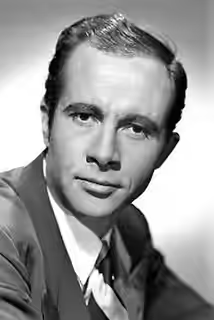
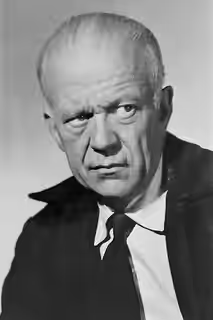
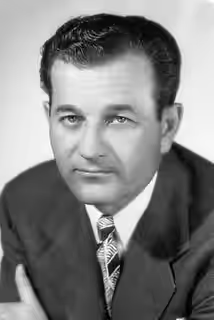
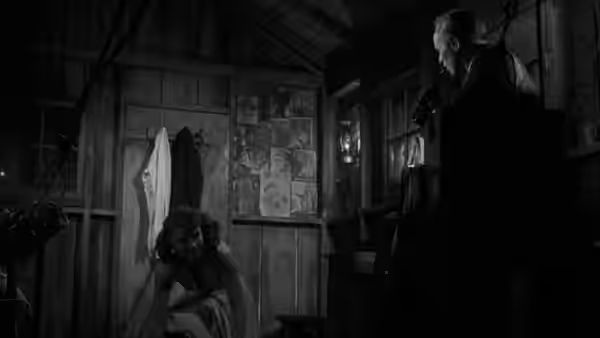
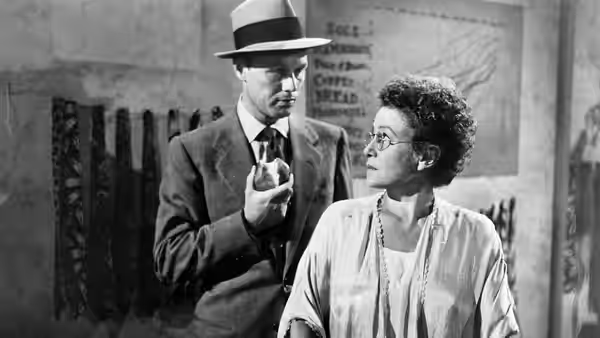
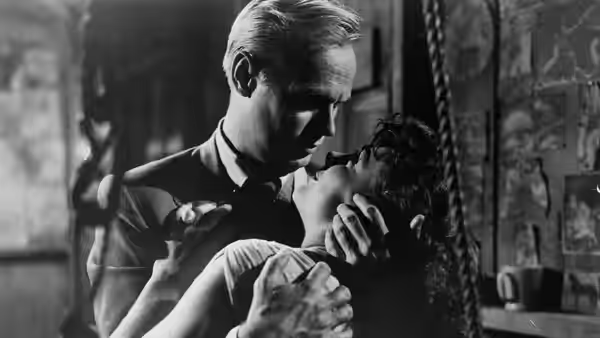
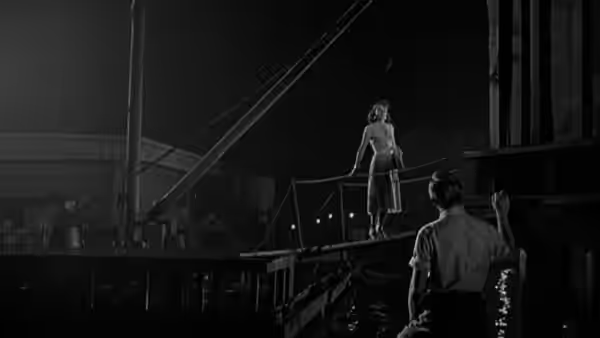
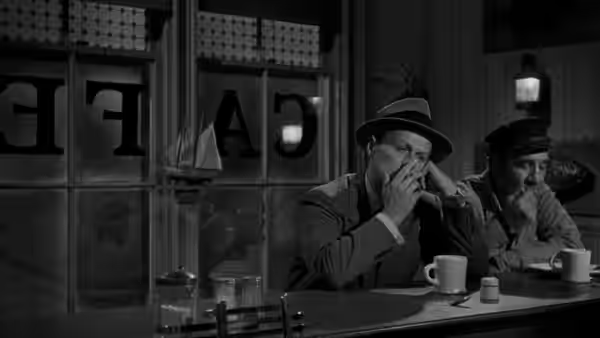
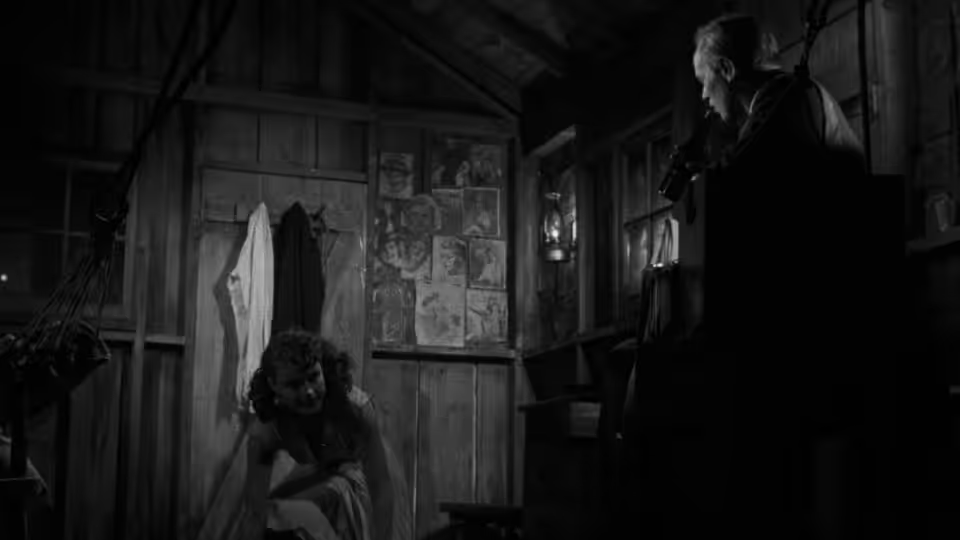
A man crouches in a dim room as another watches from the raised platform
Film review

Pickup on South Street

1953 · Directed by Samuel Fuller · 1h 20m

In a sentenceThe spies can wait; Richard Widmark and Jean Peters are having an argument worth listening to

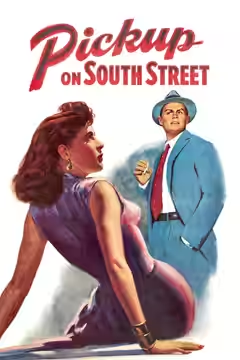
On a crowded New York subway, pickpocket Skip McCoy (Richard Widmark) steals a wallet from Candy (Jean Peters). Neither knows that its microfilm is bound for Communist agents. Candy is carrying it for Joey (Richard Kiley), unaware of what his errand involves. Skip wants a profitable theft; Candy needs the wallet back, while the authorities are already watching her. Informant Moe Williams (Thelma Ritter) knows enough about the city’s thieves to help identify the man they want. A routine theft draws Skip into a hunt for spies, with information to sell and several interested buyers.

Fi1m review

Samuel Fuller’s crime thriller is brisk, funny and well worth an evening. Its politics are blunt; Richard Widmark, Jean Peters and Thelma Ritter make its people much harder to dismiss.

Pickup on South Street is a sharp, funny crime thriller, worth seeing despite the bluntness of its politics. Samuel Fuller is interested in what a spy hunt does to people who already have good reasons to distrust the law. His screenplay gives their less respectable motives room to compete with the official ones. Greed, attraction and the need to earn a living keep the film interesting when the espionage becomes ordinary.

Richard Widmark makes Skip McCoy’s self-interest entertaining without making him harmless. There is pleasure in watching an actor decline to ask our approval, and Widmark gives the character enough energy to carry us along anyway. Jean Peters makes Candy an effective opponent: their bickering has the impatience of people who cannot afford to waste time. We laughed at their arguments because neither seems prepared to let attraction get in the way of having the last word.

Thelma Ritter gives Moe Williams the weight that makes the film more than an efficient chase. Fuller treats the informant’s work as a livelihood, and Ritter makes the need to keep earning feel pressing even amid the spy business. We were moved by the weariness she brings to Moe’s efforts to get by. The performance never asks us to overlook what Moe does for a living, and Fuller gives her concerns the attention they deserve.

Joseph MacDonald’s close-ups do much of the work that a more talkative thriller would hand to dialogue. They keep us looking at people as they calculate how far to trust one another, and give a change of expression enough space to register. Nick DeMaggio’s editing keeps those exchanges tense without making every pause feel like a delay. Fuller’s precise staging gives the violence a clear rhythm, so its force comes through without the action becoming muddled.

Leigh Harline’s music is serviceable, though the actors’ exchanges are what stay with us. Fuller’s hard-boiled dialogue gives the cast plenty to work with, and its force comes partly from how little patience these people have for one another. Yet the film finds time to enjoy their difficult company. That humour matters: a thriller about grubby motives can become monotonous if everyone spends the whole running time demonstrating how hard they are.

The weakness is the political shorthand in Fuller’s screenplay. The hunt for spies gives the story momentum, but attaching a political label to an enemy saves the trouble of making that person interesting. The film is far more curious about its criminals than about the larger conflict surrounding them. Some of the opposition consequently feels thinly written, especially beside Skip, Candy and Moe, whose immediate concerns are so much easier to understand.

For all that, this is an unusually humane example of a genre that can take cruelty for sophistication. Fuller gives disreputable people needs we can recognise without stopping the thriller to explain why we should care. The 80-minute running time helps; little has been allowed to stand between the characters and their next difficulty. Give it an evening when the prospect of another solemn spy film seems especially unappealing.

Critical consensus AI synthesised

75
Positive
8
Mixed
1
Negative
1

Most critics respond warmly to Pickup on South Street, praising its economical crime storytelling and Fuller’s forceful direction. The praise clusters around vivid underworld detail, expressive close-ups and editing that sustains tension. Thelma Ritter’s performance draws particular admiration, while the combative chemistry between Richard Widmark and Jean Peters gives the criminal intrigue an unexpectedly cheerful edge. Several reviews also find moral complexity in the film’s sympathy for people whose motives are far from respectable.

The spread is wide, though reservations are concentrated rather than shared across the reviews. The political material divides opinion: some critics find a probing treatment of hysteria beneath the spy plot, while Variety finds the theme thin and the effect unintentionally comic. Even that negative assessment makes exceptions for Ritter and the photography. The favourable reviews differ chiefly in emphasis, finding either propulsive entertainment or a tougher, more poignant account of criminal loyalties.

The AV Club
24 February 2004 · Scott Tobias
90*

Tobias praises the film as an incisive, economical crime drama with a resonant moral vision. He singles out Fuller's sympathy for a stool pigeon and the film's vivid details of criminal life.

Read the full review →
The Guardian
23 August 2015 · Philip French
90*

French calls the film a masterly noir whose moral complexity and realism have endured. He particularly praises Thelma Ritter’s moving performance as a working-class informant who refuses to betray a fellow criminal.

Read the full review →
Time Out
85*

The review calls the film a superb thriller despite its initial dismissal as a McCarthyist tract. It singles out the film’s probing of political hysteria beyond its nominal hunt for spies.

Read the full review →
Slant Magazine
17 July 2021 · ★★★★ · Chuck Bowen
80

Bowen calls the film an amazing, poignant crime classic and praises Fuller’s distinctive visual style. He singles out the musicality of the violence, especially the dynamic close-ups and staging.

Read the full review →
Sight and Sound
75*

The capsule presents the film as a forceful, engaging blend of noir storytelling and political concerns. It singles out the vivid characters and their less-than-noble motives.

Read the full review →
The New Yorker
70*

The capsule presents the film as a forceful, compelling blend of crime, politics, and romance. It particularly praises Fuller’s pugnacious direction and reportorial view of underworld life.

Read the full review →

Straight answers AI written, from our review

Is Pickup on South Street worth watching?
Pickup on South Street is well worth watching for its sharp dialogue, difficult characters and brisk crime plotting; we score it 84 out of 100. We recommend it to anyone who likes a thriller with humour and sympathy for disreputable people, though its blunt politics and thinly written opponents keep the espionage less interesting than the criminals.
How long is Pickup on South Street, and what is it rated?
Pickup on South Street runs 1h 20m. It is a thriller and crime film.
Where can I watch Pickup on South Street in Colombia?
Pickup on South Street is not on any streaming or rental service in Colombia at the moment. It is available in 7 other countries; change your country at the top of the page to see where. Availability is checked daily.
How violent or frightening is Pickup on South Street, and is it suitable for children?
Pickup on South Street contains forceful, clearly staged violence, and its US NR status and lack of a UK certificate here offer no age-based reassurance for children. We would be cautious about choosing it for younger viewers: the review describes a tense crime thriller, but does not establish how graphic or frequent the violence is.
How does Pickup on South Street compare to The Asphalt Jungle?
Pickup on South Street is the brisker, funnier choice beside The Asphalt Jungle, and we recommend it more readily when pace matters. Both give criminals lives worth caring about, but we find the patient heist planning in The Asphalt Jungle better suited to an evening of slowly gathering suspense; Fuller's film gets more pleasure from arguments and impatience.
What should I watch after Pickup on South Street?
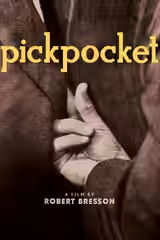
After Pickup on South Street, try The Asphalt Jungle (1950, Fi1m 88): Another crime film that gives the people doing wrong proper lives. Then Pickpocket (1959, Fi1m 84): The same criminal trade, watched with a far cooler, quieter patience.

Cast

Awards

Academy Awards, 1954

Nominated
Best Supporting Actress

If you liked this, try…

  1. The Asphalt Jungle (1950, Fi1m 88)Another crime film that gives the people doing wrong proper lives.

  2. Touchez pas au grisbi (1954) · not on Fi1m yetAgeing criminals and the daily routines that make their loyalties matter.

  3. The Friends of Eddie Coyle (1973) · not on Fi1m yetFor more informants, precarious livelihoods and conversations with a price attached.

  4. Pickpocket (1959, Fi1m 84)The same criminal trade, watched with a far cooler, quieter patience.

  5. Drunken Angel (1948) · not on Fi1m yetA bruising encounter with criminal pride, illness and stubborn human sympathy.

Pickup on South Street (1953) review: Hard crime with a human face (Colombia) | Fi1m