Samuel Fuller’s crime thriller is brisk, funny and well worth an evening. Its politics are blunt; Richard Widmark, Jean Peters and Thelma Ritter make its people much harder to dismiss.
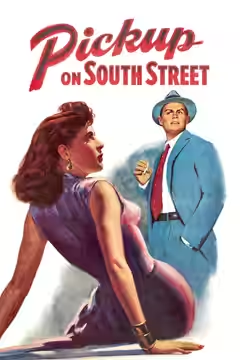
Pickup on South Street is a sharp, funny crime thriller, worth seeing despite the bluntness of its politics. Samuel Fuller is interested in what a spy hunt does to people who already have good reasons to distrust the law. His screenplay gives their less respectable motives room to compete with the official ones. Greed, attraction and the need to earn a living keep the film interesting when the espionage becomes ordinary.
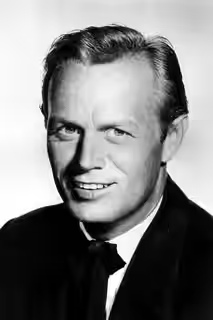
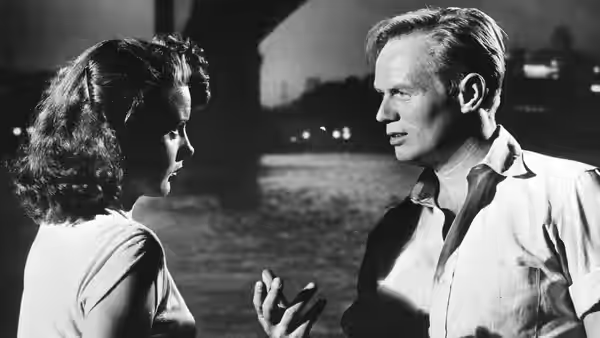
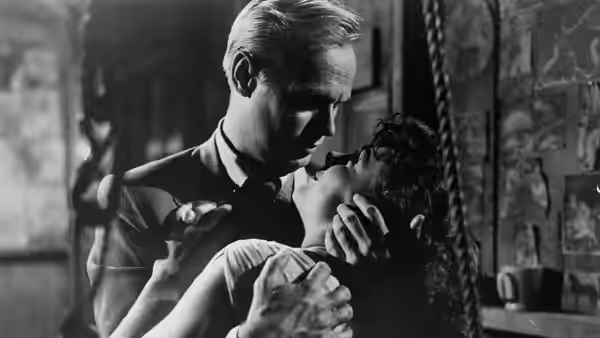
Richard Widmark makes Skip McCoy’s self-interest entertaining without making him harmless. There is pleasure in watching an actor decline to ask our approval, and Widmark gives the character enough energy to carry us along anyway. Jean Peters makes Candy an effective opponent: their bickering has the impatience of people who cannot afford to waste time. We laughed at their arguments because neither seems prepared to let attraction get in the way of having the last word.
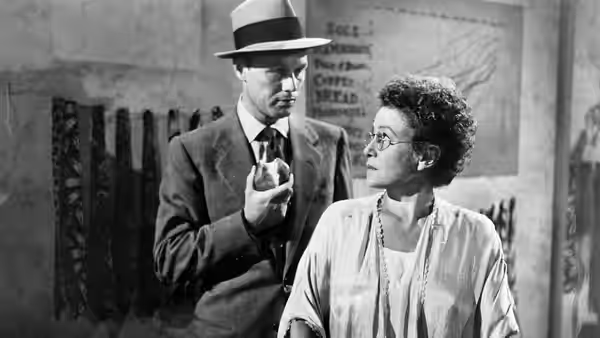
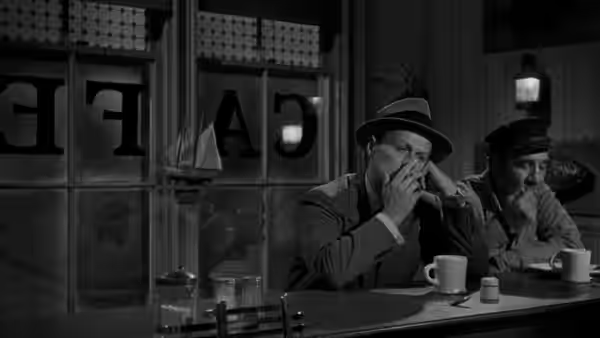
Thelma Ritter gives Moe Williams the weight that makes the film more than an efficient chase. Fuller treats the informant’s work as a livelihood, and Ritter makes the need to keep earning feel pressing even amid the spy business. We were moved by the weariness she brings to Moe’s efforts to get by. The performance never asks us to overlook what Moe does for a living, and Fuller gives her concerns the attention they deserve.
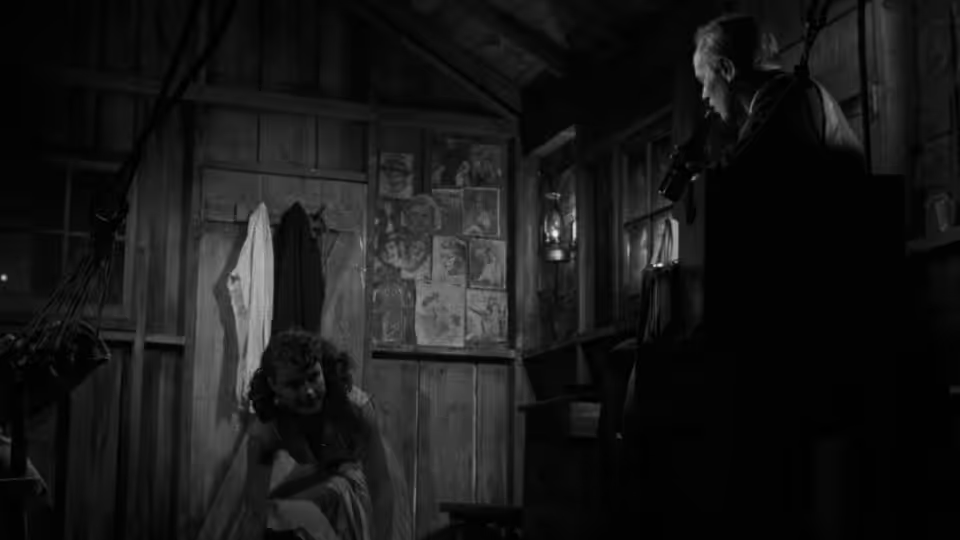
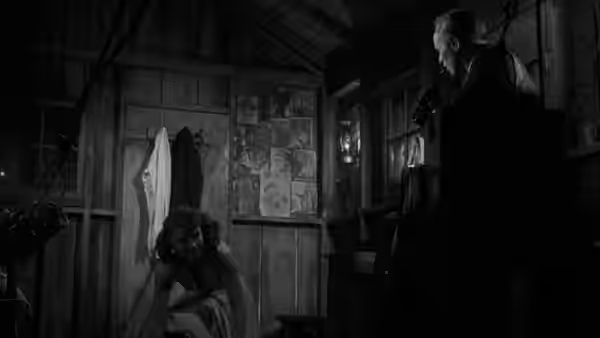
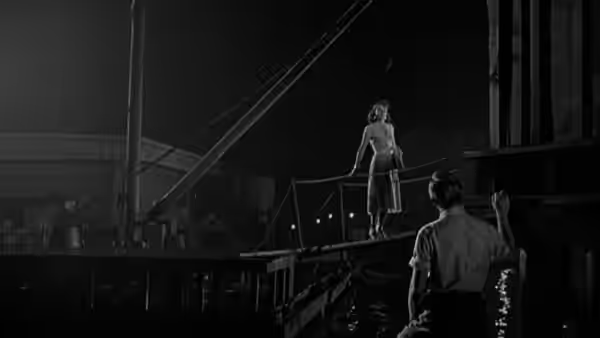
Joseph MacDonald’s close-ups do much of the work that a more talkative thriller would hand to dialogue. They keep us looking at people as they calculate how far to trust one another, and give a change of expression enough space to register. Nick DeMaggio’s editing keeps those exchanges tense without making every pause feel like a delay. Fuller’s precise staging gives the violence a clear rhythm, so its force comes through without the action becoming muddled.
Leigh Harline’s music is serviceable, though the actors’ exchanges are what stay with us. Fuller’s hard-boiled dialogue gives the cast plenty to work with, and its force comes partly from how little patience these people have for one another. Yet the film finds time to enjoy their difficult company. That humour matters: a thriller about grubby motives can become monotonous if everyone spends the whole running time demonstrating how hard they are.
The weakness is the political shorthand in Fuller’s screenplay. The hunt for spies gives the story momentum, but attaching a political label to an enemy saves the trouble of making that person interesting. The film is far more curious about its criminals than about the larger conflict surrounding them. Some of the opposition consequently feels thinly written, especially beside Skip, Candy and Moe, whose immediate concerns are so much easier to understand.
For all that, this is an unusually humane example of a genre that can take cruelty for sophistication. Fuller gives disreputable people needs we can recognise without stopping the thriller to explain why we should care. The 80-minute running time helps; little has been allowed to stand between the characters and their next difficulty. Give it an evening when the prospect of another solemn spy film seems especially unappealing.