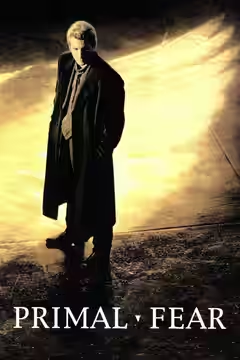
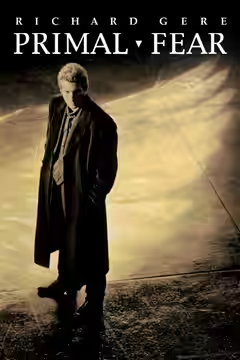
Gregory Hoblit’s first film is a smooth, handsome courtroom thriller that runs on rails, and the rails are visible. What lifts it is Edward Norton, in his first screen part, doing something in a holding cell that we have not forgotten.
Primal Fear is Gregory Hoblit’s first feature, and it knows exactly how long a scene should be. Working from William Diehl’s novel, with a screenplay by Steve Shagan and Ann Biderman, he puts a murdered archbishop, a bloodied altar boy and a lawyer who wants his face on magazine covers into a Chicago of wood-panelled courtrooms and wet streets. It is a glossy, professionally assembled courtroom thriller, and for most of its 130 minutes you can see the assembly. What makes it worth the evening is a first-time actor called Edward Norton.
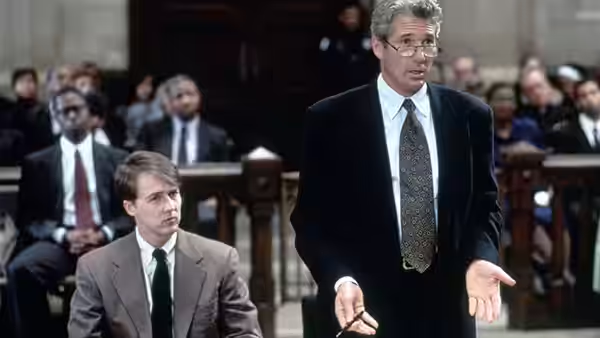
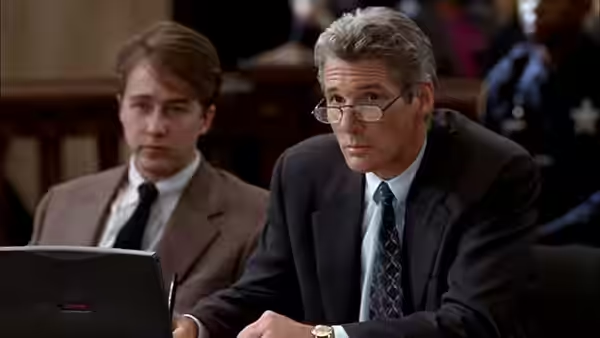
Richard Gere plays Martin Vail with his chin up and his tie expensive. He opens the film telling a journalist that a defence lawyer’s job is not to ask whether the client did it, and he grins as if he enjoys being disliked for it. It is a good part for him: he is more convincing performing sincerity than being sincere, and Vail is always performing. Laura Linney, as the prosecutor Janet Venable, is handed a former colleague and former lover to play and not much else, and finds a tiredness in the woman the script did not write. John Mahoney’s Shaughnessy smiles like a man who owns the building, and Alfre Woodard’s Judge Shoat has a patience with limits.
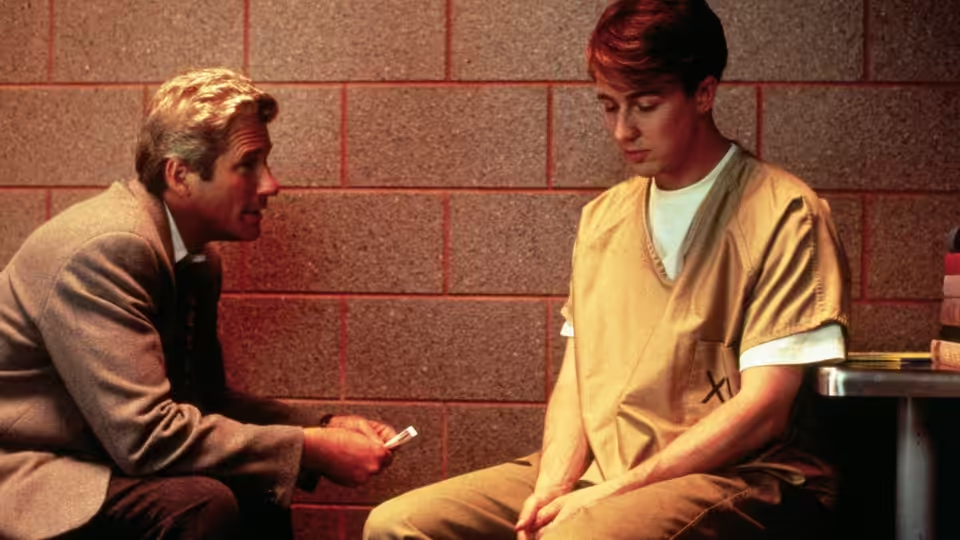
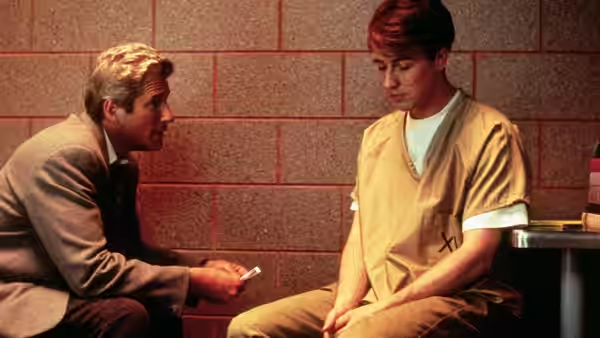
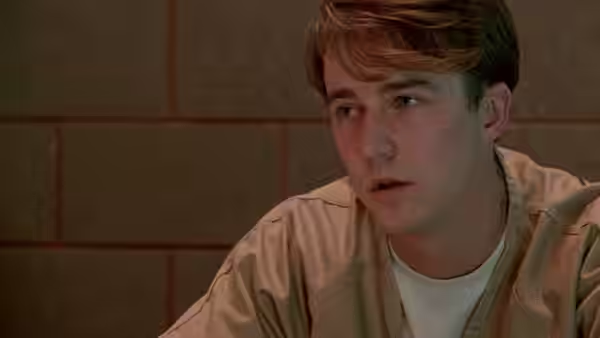
Then there is Norton. Aaron Stampler arrives with a Kentucky stammer, wrists too thin for his cuffs and eyes that go to the floor whenever a question is put to him, and for a while we took the performance for good casting: a boy who looks like a victim. Somewhere in the middle there is a scene in a holding cell that we will not describe. What we can say is that Norton does something with his voice and his shoulders and the set of his jaw, and we sat upright, and we have not forgotten it. The tagline promises a man with two faces; Norton is why that is not a gimmick.
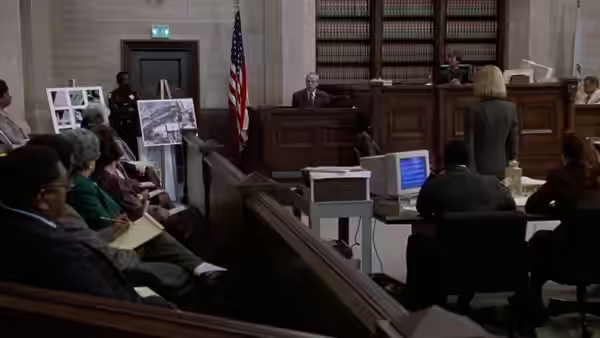
Michael Chapman lights it like an expensive television drama, and we do not mean that as a complaint: amber lamplight in Vail’s rooms, cold blue in the cells, the cathedral in candle and shadow, a courtroom where every face is readable. Jeannine Oppewall gives Vail a flat of brick, glass and good furniture, the home of a man who buys things to be seen with, and Betsy Cox puts him in suits to match and Norton in clothes that look borrowed for court. James Newton Howard’s score is low strings and a slow pulse, and it knows when to stop. David Rosenbloom cuts the trial briskly, crossing between the courtroom and Goodman’s digging so the case seems to build even when it is only being explained.
And it is explained, at length. The archbishop had property dealings; a gangster client of Vail’s, Pinero (Steven Bauer), knows about them; City Hall is involved. Each is a piece the script moves so that a later piece can move, and none has any weight of its own. The psychiatry, delivered by Frances McDormand’s Molly, comes out as briefings, the words that matter said twice in case we missed them. For a stretch of the second hour we were waiting: not bored, but aware the film was telling us what it would later need us to know. It carries an 18, which the archbishop’s bedroom earns in the first ten minutes.
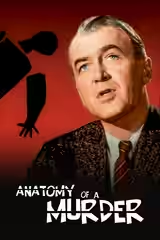
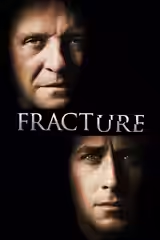
Against the courtroom film’s own standards this is the polished middle of the range. Anatomy of a Murder (1959) let its trial breathe and its lawyer be tired. Jagged Edge (1985) built a similar machine and hid the joins better. Hoblit went back to court with Fracture (2007) and by then let the actors run the plot rather than the other way round. Here, until Norton’s scene, the actors mostly serve the plot.
The final scene is the one the film is remembered for, and rightly. We will say only that it is a two-hander, that Hoblit and Norton arrived at it partly through improvisation, and that it sends you out talking. Watch it with someone who has not seen it and has somehow avoided being told. It is a rare pleasure to watch a film land a punch on a person who does not see it coming, even if you can see the arm being drawn back.