Film review

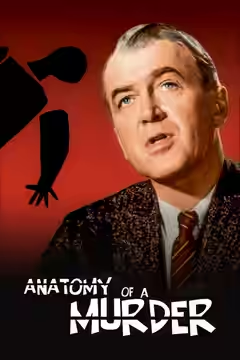
Anatomy of a Murder

1959 · Directed by Otto Preminger · 2h 41m · MPA NR

In a sentenceEveryone agrees who fired the gun; the next two and a half hours are about what to call it

CrimeDramaMystery

Paul Biegler (James Stewart), a lawyer in a small town in Michigan’s Upper Peninsula, has lost his job as district attorney and spends his days fishing and his nights at the piano. His secretary Maida Rutledge (Eve Arden) and his friend Parnell Emmett McCarthy (Arthur O’Connell), a lawyer who drinks, keep the office open. Then Laura Manion (Lee Remick) asks him to defend her husband, Lt. Frederick Manion (Ben Gazzara), an army officer in the county jail for shooting a bar owner dead. Manion does not deny it. He says the man raped and beat his wife. Biegler takes the case, visits the jail, and sets about finding a defence the law will accept, while the prosecution brings in Claude Dancer (George C. Scott) from the state capital to face him.

Plays from YouTube when you press play; nothing loads from them until then.

Fi1m review

Preminger’s trial film is nearly as good as its reputation: a defence built in the open, a prosecutor worth the trouble, and James Stewart as a lawyer who knows how useful it is to look harmless. It is long, and unkind to its one woman.

Otto Preminger opens with a man coming home from a fishing trip. Paul Biegler (James Stewart) has lost his job as district attorney of a small town in Michigan’s Upper Peninsula and does not seem to mind, since it leaves more time for trout and jazz records. The case that interrupts him is brought by Laura Manion (Lee Remick), whose husband, Lt. Frederick Manion (Ben Gazzara), is in the county jail for shooting a bar owner dead. Manion admits it. He says the man raped his wife. Nobody disputes the shooting, and the 161 minutes that follow are about what the law should call it.

The scene that sets the tone comes early, in the jail. Biegler cannot tell his client to lie, so he explains which defences exist and which of them work, and then goes quiet and waits for Manion to remember how he felt. Wendell Mayes wrote it, from John D. Voelker’s novel, and Stewart plays it with his hat in his hands and his eyes on the floor. We laughed at it, and then we felt uneasy about laughing, because we had just watched a decent man coach a killer and enjoyed his company while he did it. Stewart never lets you settle that. He plays the yokel for the jury, all shuffles and apologies, and then asks a question that lands like a slap.

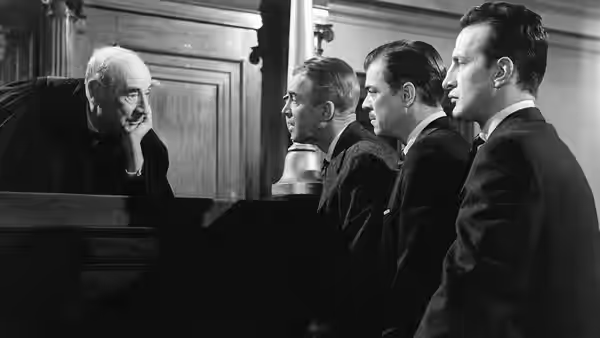
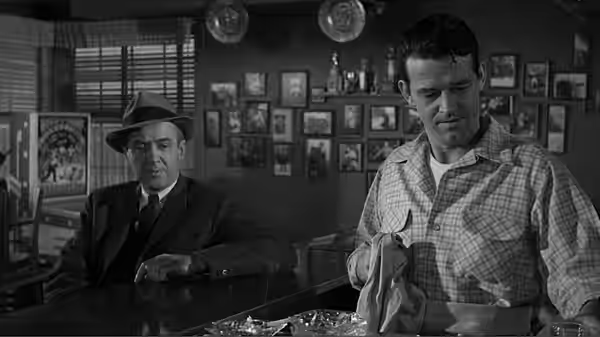
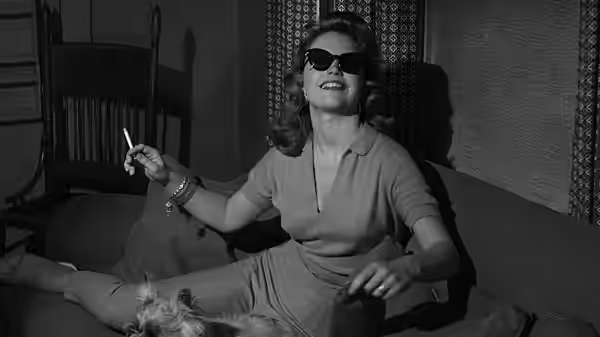
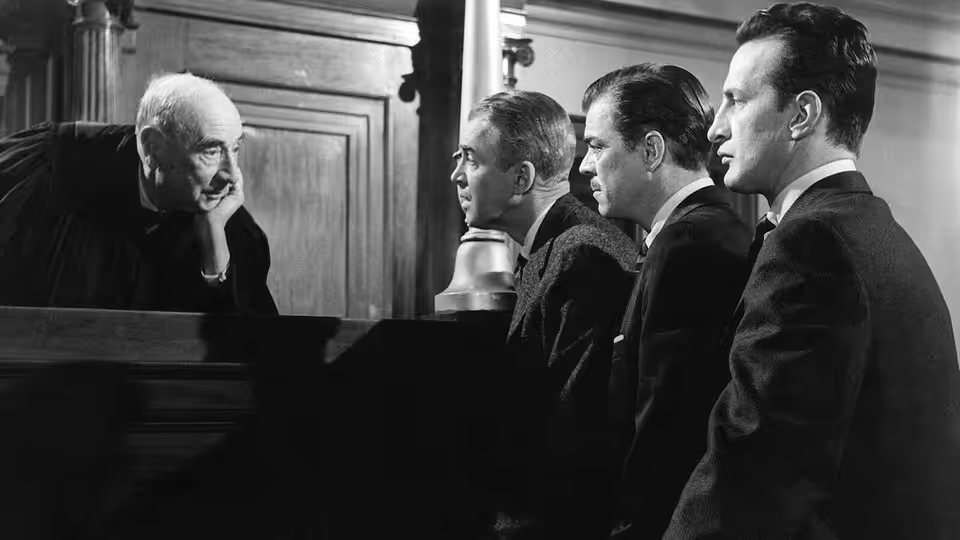
Preminger and his cameraman Sam Leavitt shoot the whole thing in black and white with the camera held back. Scenes run long and wide, four or five people in the frame at once, and when someone crosses a room the camera goes with them rather than cutting. Louis R. Loeffler edits so little that you notice when he does. Boris Leven’s courtroom is plain wood and tall windows. Vou Lee Giokaris, Paula Giokaris and Hope Bryce do their best costume work on Laura: she arrives in a tight sweater and slacks, and Biegler puts her in court in a shapeless suit, spectacles and a hat, so that the jury will see a wife rather than a woman. The film knows what that costume is for, and so does she.

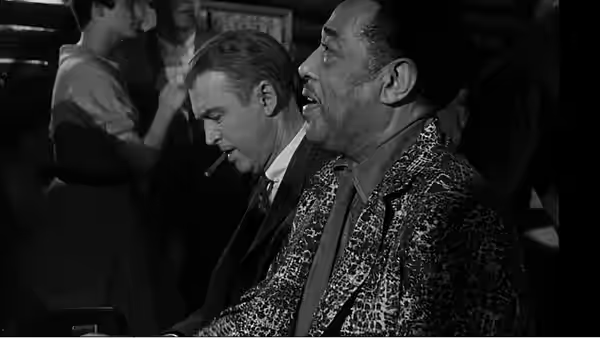
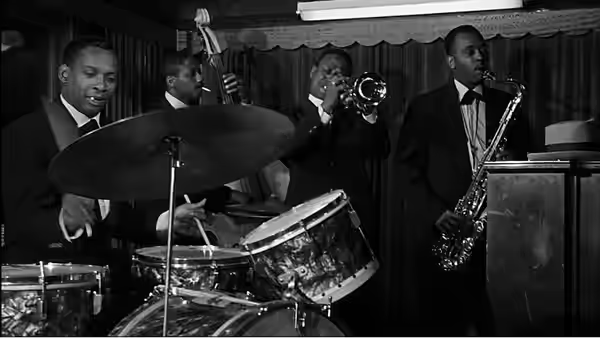
Duke Ellington’s score is brass and piano and it is kept almost entirely out of the courtroom. It plays over Biegler at home, over the road into town, over a jazz bar, and its absence in court means the trial is scored by voices and chairs. An unusual choice for the period, and the right one.

George C. Scott, as the prosecutor Claude Dancer, is the reason the trial is a contest. He is tight, quick and contemptuous, and he stands between the witness and the jury when he does not want them to see her face. Gazzara plays Manion as a man who despises everyone helping him, and Preminger lets him stay unlikeable to the end. Arthur O’Connell and Eve Arden give Biegler an office that feels lived in, and Arden gets the driest lines in the film.

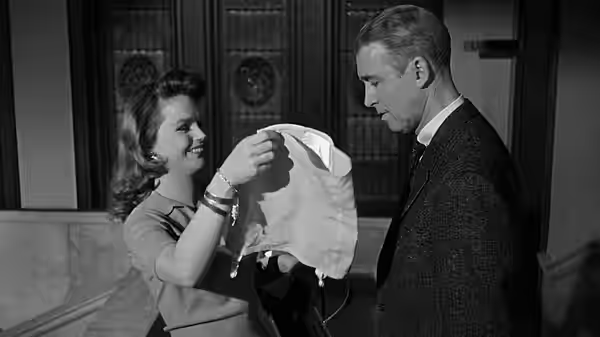
What the film is not good at is Laura. The script is frank about rape in a way that must have startled in 1959; the trial turns for a while on the word “panties”, and the judge has to tell the courtroom to stop giggling. But the film’s own camera looks at Remick the way the bar did, and the question the trial asks about her, over and over, is what she was wearing and how she behaved. Remick plays her as bored, frightened and pleased to be looked at all at once, which is more than the writing gives her. There is a stretch in the middle of the trial where the procedure is thorough rather than interesting. We checked the time once. Only once.

Most critics rank this with the best trial films made, and we would not argue with them. It refuses to tell us whether Manion is guilty of anything a jury would recognise, and it refuses to tell us whether Biegler is a good man. The 15 certificate is for the subject rather than anything shown. Watch it on an evening when you have the patience for a film that lets its lawyers finish their sentences.
Critical consensus AI synthesised

82
Positive
12
Mixed
1
Negative
0

Most critics rate this highly, and the reviews agree on why. James Stewart’s small-town defence lawyer draws the most praise, with several reviews calling it one of his best performances, and George C. Scott’s prosecutor and Ben Gazzara’s defendant also singled out. Preminger’s method is admired almost as often: the patient courtroom procedure, the refusal to tell the audience what to think, and a willingness to leave motives unsettled. Duke Ellington’s jazz score is mentioned approvingly by nearly everyone who mentions the music at all.

The reservations are few and mild. The one mixed notice, from The New Yorker in 1959, finds the early stretch slow and treats the whole as a diverting romp rather than anything weightier. The Playlist admires the film but admits some discomfort with its sexual politics, a point the newer reviews raise more than the older ones. The Guardian and Slant are warm without being rapturous. Beyond that the spread is narrow; reviews written sixty years apart land in much the same place.

Radio Times
★★★★★ · Adrian Turner
100

This is probably the greatest courtroom drama ever made and features James Stewart's finest screen performance. The courtroom duels are mesmerising, revealing an America leaving its traditional moral values behind, with a notable Duke Ellington score.

Read the full review →
The AV Club
14 March 2012 · A · Scott Tobias
95

The review commends the film’s commitment to candor in a trial involving rape and murder, its authentic location shooting and procedure, and how it respects the audience by letting facts emerge without easy resolutions. It singles out the cast (especially Stewart) and the value placed on truth over censorship.

Read the full review →
Empire
1 January 2000 · Kim Newman
90*

The film remains a trenchant, bitter, tough and witty dissection of the US legal system. It is simply the best trial movie ever made, showing that lawyers have to be not only actors but stars, performing for their 12-man audience.

Read the full review →
The New York Times
3 July 1959 · Bosley Crowther
90*

The critic calls it the best courtroom melodrama seen, a potent character study with strong suspense and drama in the trial details. It brilliantly reveals the defense lawyer played by James Stewart in one of his finest performances.

Read the full review →
The Times
7 April 2005 · Ian Johns
90*

The reissued film is hailed as Preminger's greatest courtroom epic for its ambiguity, real-life judge casting, and exposure of the legal system's cynicism, with strong performances from Stewart, Gazzara and Scott standing out.

Read the full review →
Time Out
10 September 2012 · JWin
80*

The film cloaks itself in smartly tailored ambiguity and irresolution, remaining coolly absorbing and nonchalantly cynical. Preminger refuses standard thriller payoffs while highlighting the score by Duke Ellington and strong performances from Stewart, Remick and Scott.

Read the full review →

Cast

Awards

Academy Awards, 1960

Nominated
Best Actor
Nominated
Best Cinematography, Black-and-White
Nominated
Best Film Editing
Nominated
Best Picture
Nominated
Best Supporting Actor
Nominated
Best Writing, Adapted Screenplay

If you liked this, try…

12 Angry Men poster91

12 Angry Men

1957 · One room, twelve men and a verdict argued out in real time.

The Verdict poster84

The Verdict

1982 · Paul Newman as a drunk lawyer who finds one case worth being sober for.

A Separation poster93

A Separation

2011 · An Iranian divorce that turns into a trial where nobody is quite lying.

Saint Omer poster

Saint Omer

2022 · A French courtroom film that refuses to explain the woman in the dock.

Advise & Consent poster

Advise & Consent

1962 · Preminger applies the same wide frames and patience to Washington politics.