Film review

Punch-Drunk Love

2002 · Directed by Paul Thomas Anderson · 1h 36m · MPA R

In a sentenceAdam Sandler falls in love, and even the percussion seems worried about him

RomanceDramaComedy

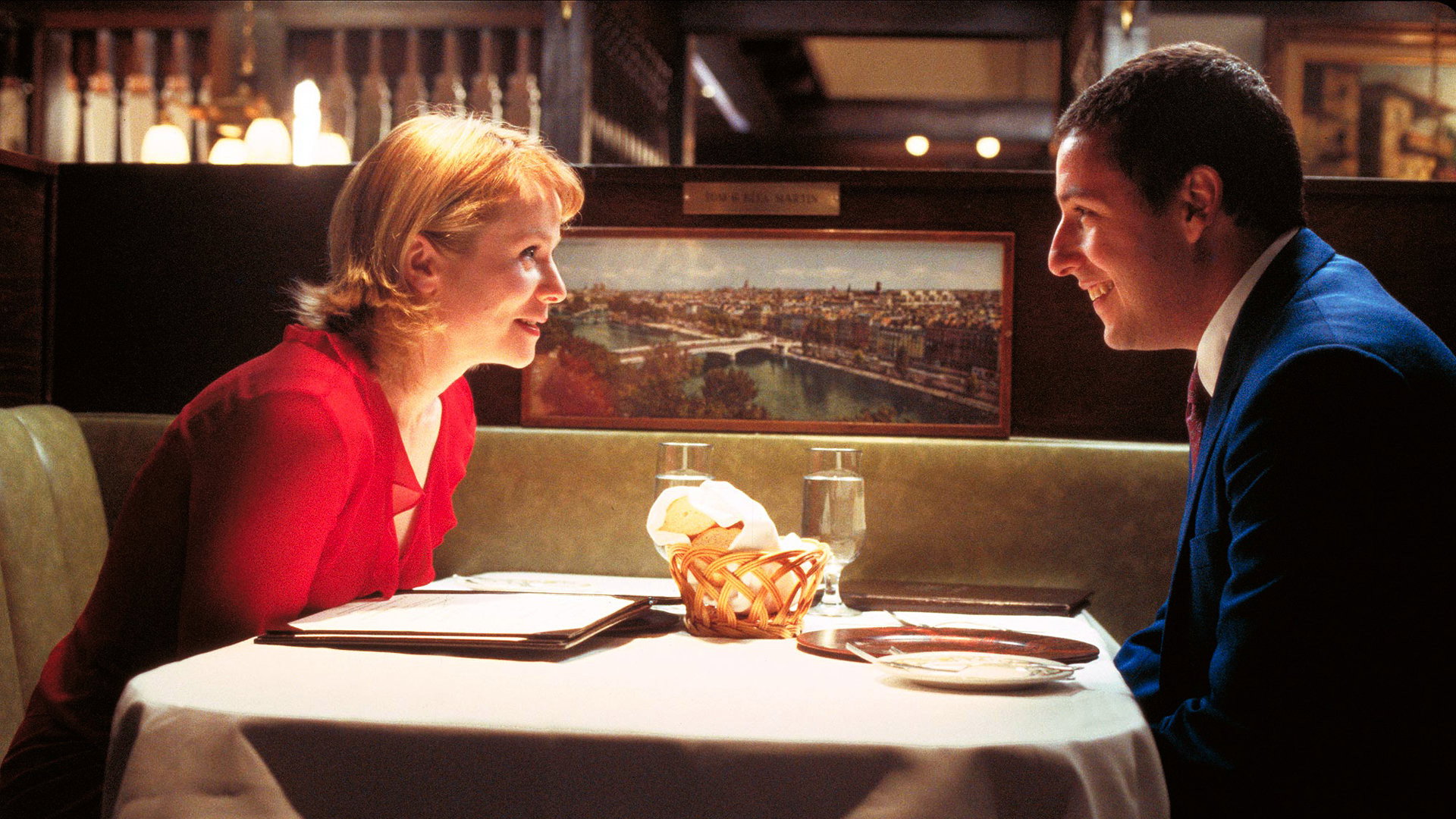
Barry Egan (Adam Sandler) struggles with other people, his own temper and the demands of his domineering sisters. A relationship with Lena Leonard (Emily Watson) brings the possibility of affection into a life marked by isolation and sudden anger. Barry has to contend with his anxiety as well as his attraction to Lena, with no easy way of separating the two. Written and directed by Paul Thomas Anderson, the film follows their courtship through uneasy comedy and episodes of violence. Philip Seymour Hoffman also appears as Dean Trumbell.

Plays from YouTube when you press play; nothing loads from them until then.

Fi1m review

Paul Thomas Anderson’s anxious romance is funny, abrasive and unexpectedly touching, with Adam Sandler making Barry’s anger difficult to dismiss. Emily Watson makes the courtship convincing, though the writing gives her too little of her own.

Paul Thomas Anderson approaches romantic comedy through a man whose temper makes even affection a difficult proposition. Punch-Drunk Love is a rewarding, sometimes wearing film, with Adam Sandler making Barry Egan’s distress convincing even when the film around him grows fussy. We recommend it, with a reservation about how much of the romance the woman is expected to supply. Anderson writes and directs as though embarrassment, anger and tenderness might all arrive at once, and he makes their coexistence surprisingly funny.

Barry’s domineering sisters offer some explanation for his sudden rages, though Sandler does not make those rages easy to forgive. He plays the anger with enough force to make Barry uncomfortable company. We felt cornered by the family’s bullying, because Barry’s violent reactions make the prospect of relief feel frightening too. Philip Seymour Hoffman, as Dean Trumbell, brings an abrasive force to the antagonism. There is enough hostility here to make the prospect of a romance seem distinctly unpromising.

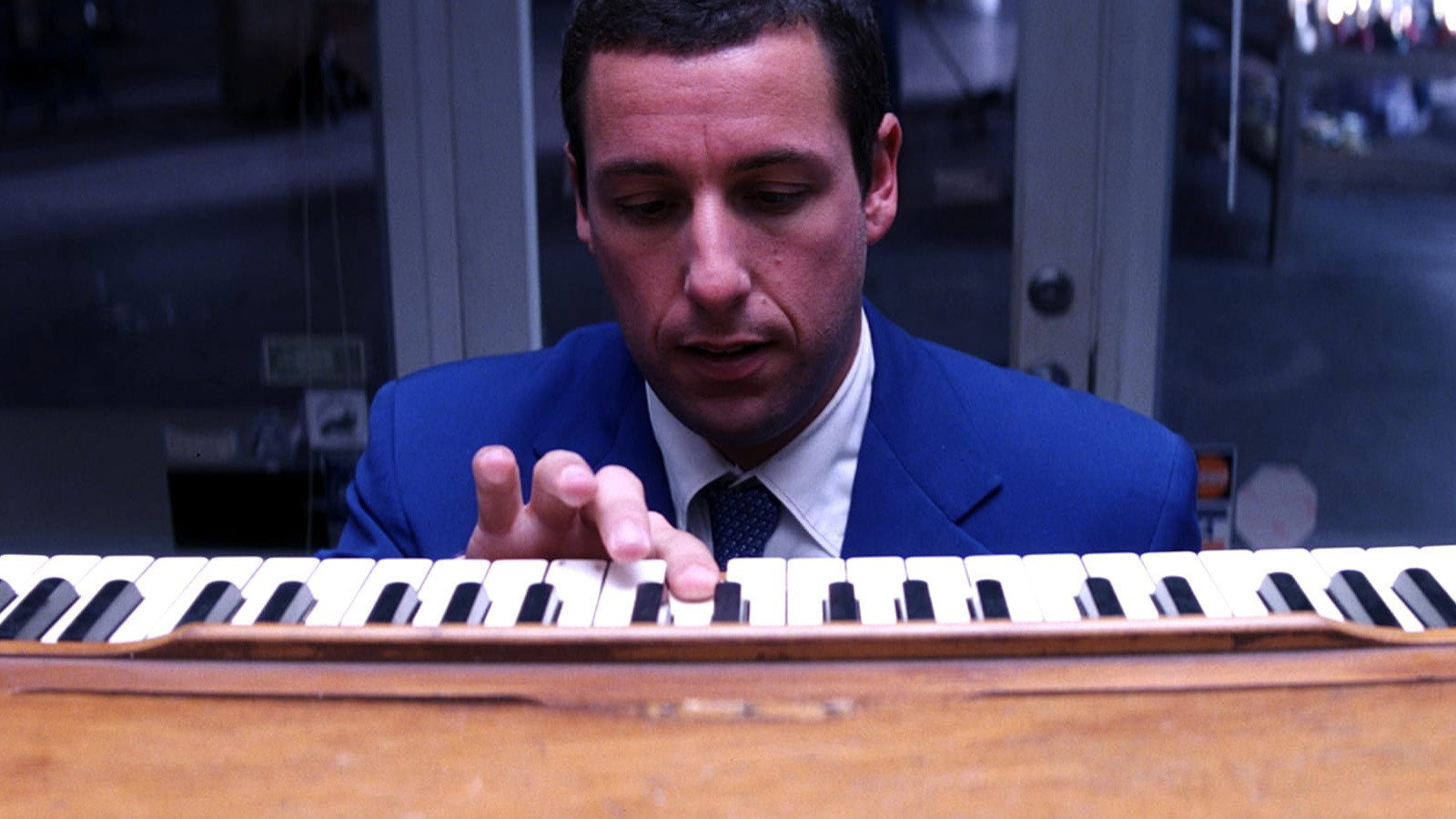
Emily Watson’s Lena Leonard makes the attraction credible without turning every exchange into an explanation of what she sees in him. Her warmth allows the film to become tender without suddenly pretending Barry has become easy to live with. We were touched by their affection, precisely because Sandler keeps the hostility so close to the surface. Watson gives Lena enough assurance to suggest she is making a choice, and the relationship becomes convincing through the pleasure these performers take in each other’s strangeness.

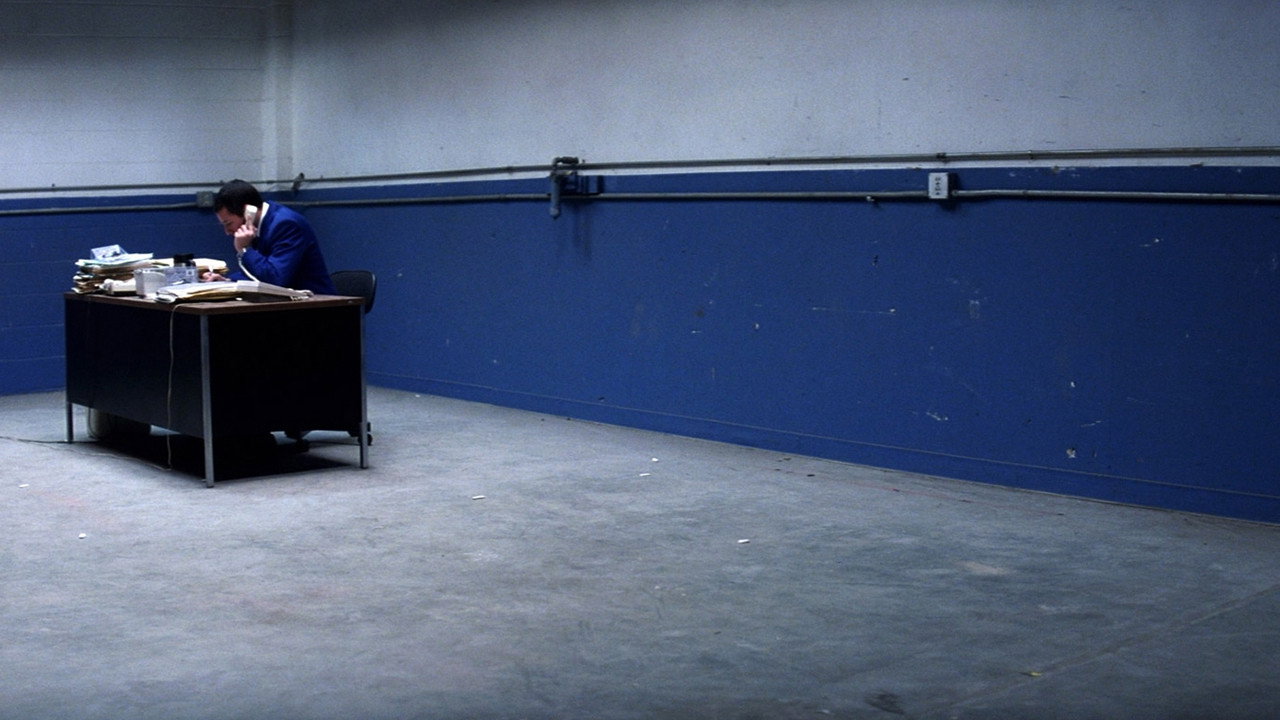
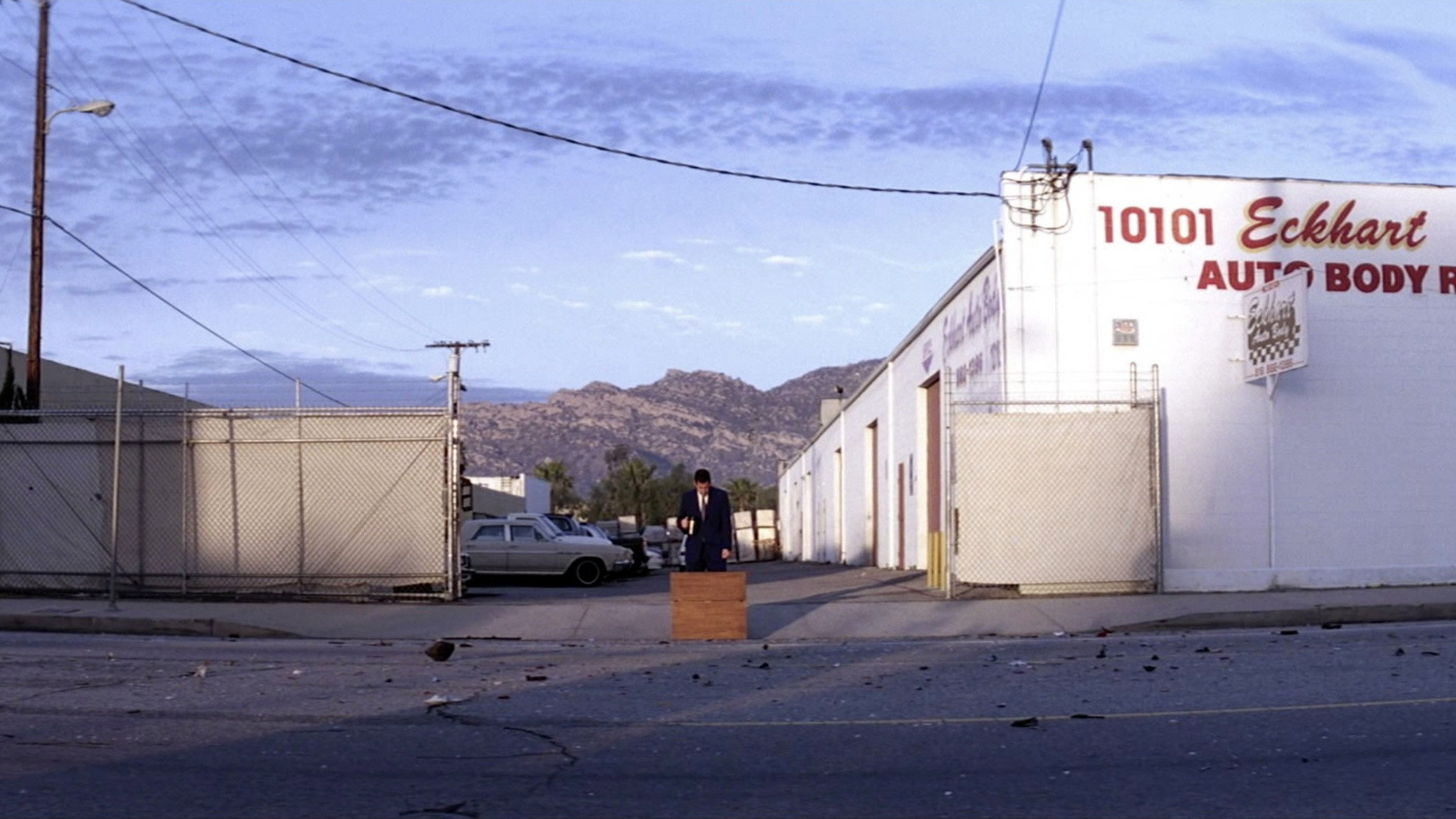
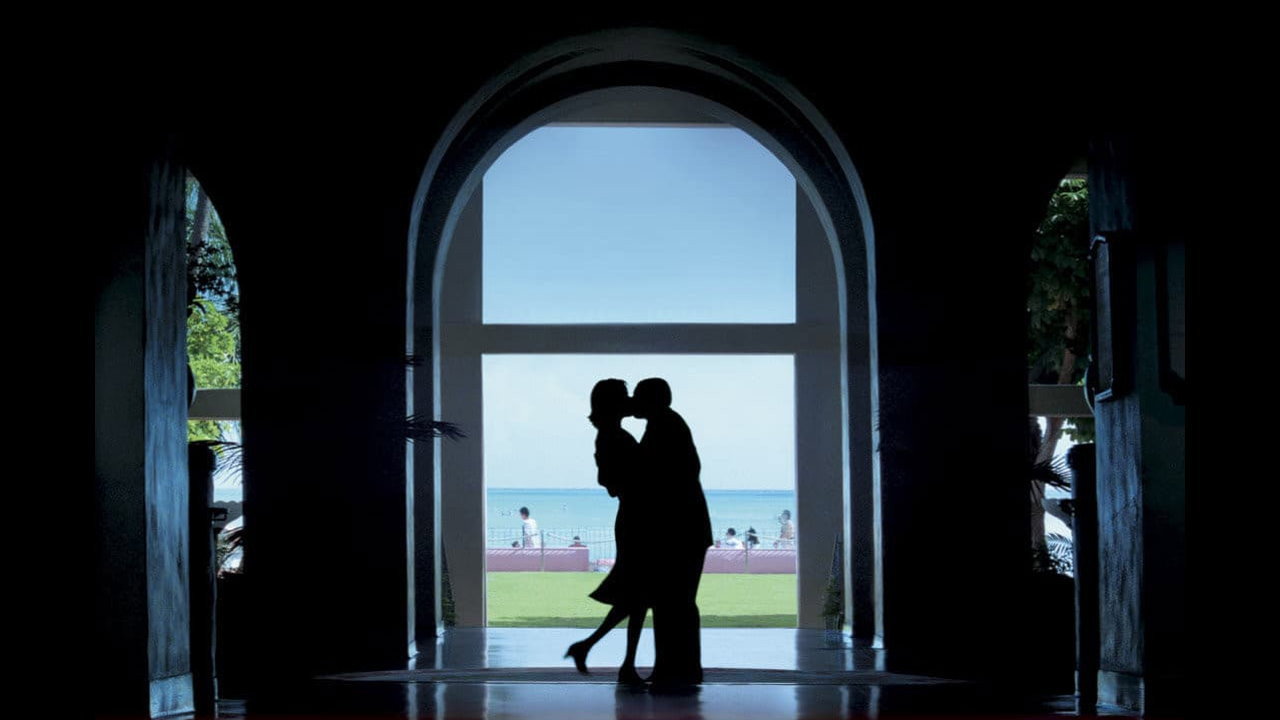
Robert Elswit’s saturated cinematography gives the romance an intensity that a more naturalistic look would struggle to match. The colour can be insistently pretty while Sandler is making us uncomfortable, and that friction works. William Arnold’s production design contributes to the heightened look, although the combined effect occasionally feels too carefully arranged around an already conspicuous misfit. We do not need quite so much encouragement to notice that Barry experiences his surroundings differently; Sandler has established it without assistance.

Jon Brion’s percussive score is more successful at making that discomfort physical. Its restless insistence gives scenes a nervous energy that can be funny and exhausting within the same passage. Leslie Jones’s editing sustains the uneasy rhythm, allowing changes of mood to arrive before we have quite adjusted to the previous one. Across 96 minutes, that approach keeps the romance precarious and makes its moments of affection particularly welcome. It is not a rhythm everyone will enjoy.

The substantial weakness is Anderson’s writing for Lena, which leaves Watson to supply qualities the script has not developed. Barry’s unhappiness receives close attention; her interest in him is asked to explain rather a lot about her. The film gives us ample reason to understand why he needs affection, and much less reason to understand what she needs. Her performance does enough to keep the relationship convincing, but the writing narrows a romance that might have been richer.

Romantic comedy often asks us to find bad behaviour endearing, and Anderson is usefully reluctant to make Barry’s anger pleasant. He also permits a giddiness that would disappear if the film spent every scene explaining its troubled hero. The comedy benefits from that freedom, even when the noise and deliberate oddness become a little much. Watch it for Sandler and Watson, and expect the music to make sitting quietly beside them unusually difficult.

Critical consensus AI synthesised

74
Positive
12
Mixed
0
Negative
4

Most critics respond warmly to Punch-Drunk Love, with praise centred on Adam Sandler’s vulnerable, volatile performance and Anderson’s unusual approach to romantic comedy. The favourable reviews find tenderness in the uneasy humour and sudden anger, often singling out the chemistry between Sandler and Emily Watson. Anderson’s handling of tone also earns substantial admiration, while the saturated colour, distinctive photography and percussive soundtrack help make the romance feel unpredictable.

The spread is wide, however, with a minority finding the same approach strained rather than touching. The Guardian questions the romance’s emotional credibility and finds little depth beneath the distinctive style; The Independent objects to the disjointed rhythm and lack of fun. Even The Times, which praises Sandler, finds the film exasperating. The central disagreement is about whether the awkwardness and noise make the love story convincing or prevent it from becoming so.

RogerEbert.com
18 October 2002 · ★★★★/4 · Roger Ebert
100

Ebert praises the film as revealing unexpected depths in Adam Sandler, portraying his character Barry as a damaged, angry outsider whose violent outbursts stem from domineering sisters. He highlights Anderson's direction in creating an unpredictable, liberating portrait that sympathizes with the protagonist's extremity.

Read the full review →
Time Out
10 January 2012 · ★★★★★ · Tom Huddleston
100

Calls it the oddest romcom ever made, with an impossible-to-pin-down tone that somehow works perfectly. Singles out the eye-ravishing LA photography and the perfect love affair between Sandler and Emily Watson for praise.

Read the full review →
The New York Times
5 October 2002 · festival review · A. O. Scott
90*

Scott describes the film as a centerpiece of the New York Film Festival about the eruption of grace and love into a chaotic life, with Sandler infusing his persona with vulnerable humanity. He singles out Anderson's mastery of emotional machinery and ability to recapture the giddiness of old movies without nostalgia.

Read the full review →
Empire
· Angie Errigo
85*

Praises Anderson's genius in crafting an anti-Sandler film with an astonishing performance from Sandler, calling it a quirky, cute, weird and diverting offbeat romantic comedy.

Read the full review →
Los Angeles Times
11 October 2002 · Kenneth Turan
85*

Turan calls it a daring high-wire romantic comedy that stretches the genre to its limits, charming and outlandish with real emotion mined on the extreme edges. He singles out Anderson's singular vision, the percussive soundtrack, color-saturated cinematography, and Sandler's convincing mix of innocence and hostility.

Read the full review →
Radio Times
★★★★ · Stephen Hughes
80

Describes it as either a truly original gem or a complete folly depending on taste, but finds the curious Sandler-Anderson pairing works well. Singles out Sandler's surprising, touching twist on his persona and the surreal romance for praise.

Read the full review →

Cast

Stills

If you liked this, try…

Marty poster

Marty

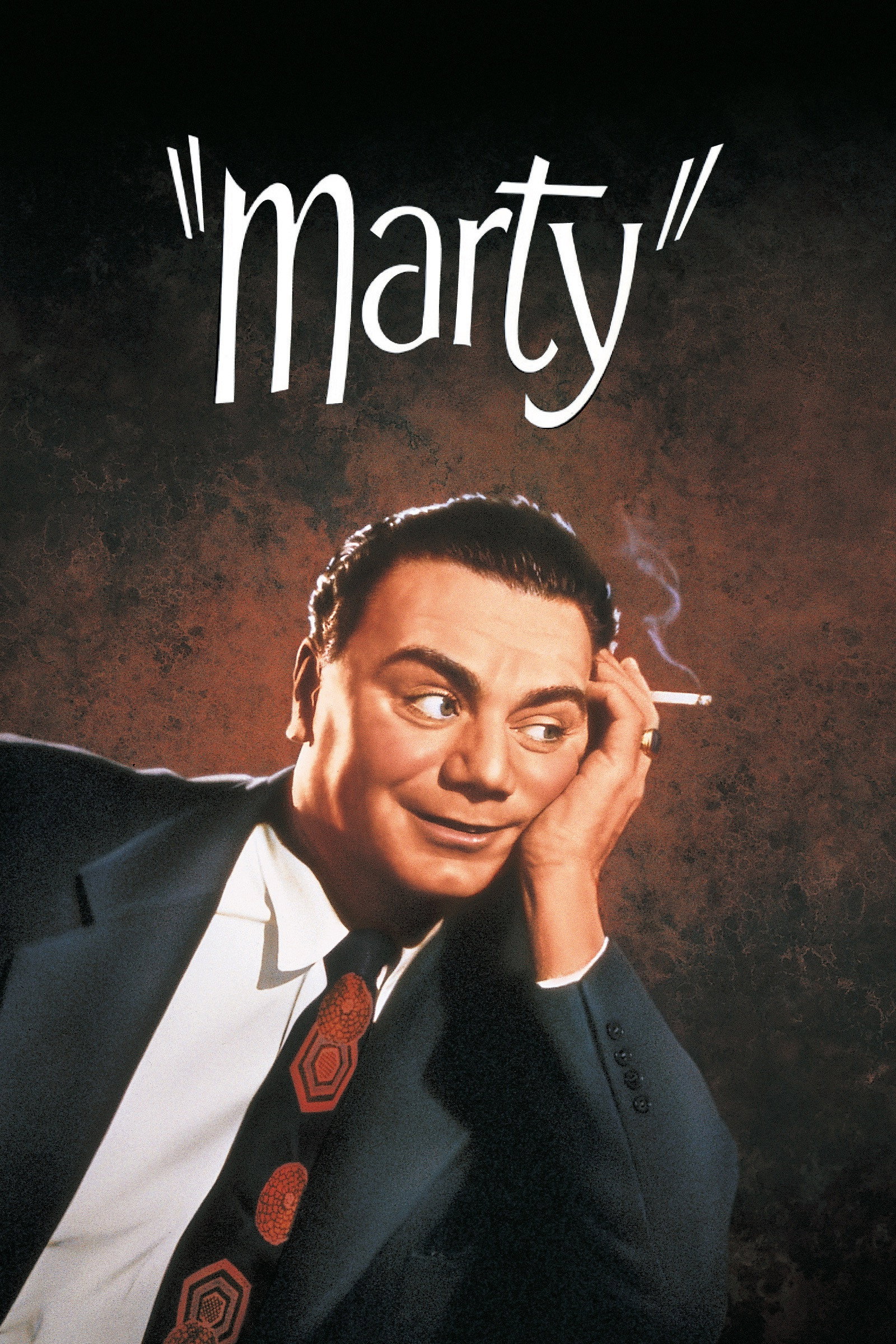
1955 · Family pressure and ordinary loneliness give this tentative courtship its weight

The Apartment poster

The Apartment

1960 · A romance that makes room for loneliness without treating it as charming

Fallen Angels poster

Fallen Angels

1995 · Restless colour and uneasy comedy accompany another collection of lonely people

The Lunchbox poster

The Lunchbox

2013 · A gentler romance for people who have grown used to being alone

On Body and Soul poster

On Body and Soul

2017 · An awkward courtship that allows strangeness without making loneliness seem quaint