Johannes Roberts sends the series back to 1998 and to horror, and for forty minutes a rain-soaked, emptied-out Raccoon City is a place we wanted to stay in. Then he tries to film two games at once and loses the town in the dark.
Johannes Roberts writes and directs a fresh start for Resident Evil, and his idea is to go backwards. Out go the Milla Jovovich films, with their wire-work and their white corridors; in comes Raccoon City in 1998, a company town the Umbrella Corporation has finished with and is leaving to rot. The games were about being alone in a large dark building without enough ammunition, and for a while the film remembers that. It runs 107 minutes, carries a 15 certificate, and spends its first forty minutes or so being the film it wants to be.
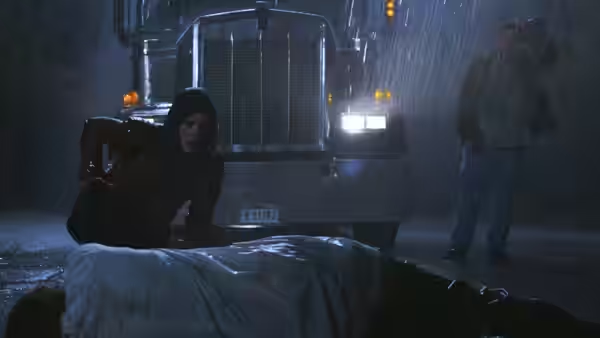
Claire Redfield (Kaya Scodelario) comes home in the cab of a lorry, in the rain, to a town with more boarded windows than people. Jennifer Spence’s production design gives us wet asphalt, dead neon and Umbrella lorries heading for the exit, and Maxime Alexandre lights it all in orange sodium and not much else. We felt our shoulders tighten in these early minutes, not at anything that happens but at how empty the streets are and how long the film is prepared to leave them that way, and we spent the next twenty minutes hoping it would keep that up.
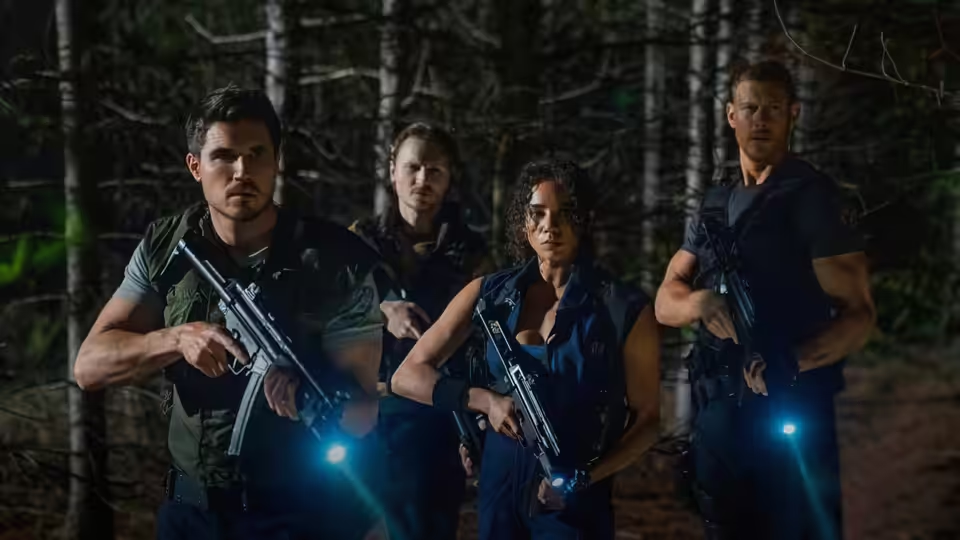
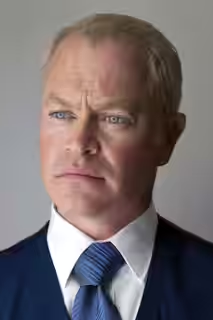
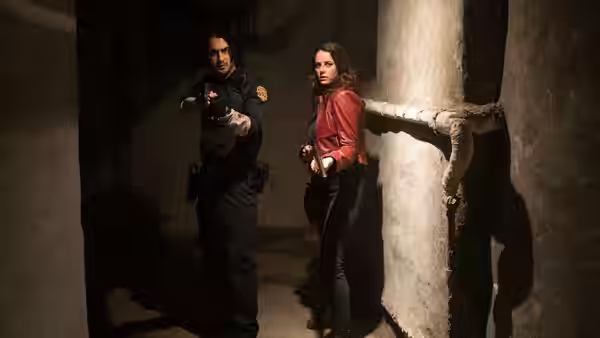
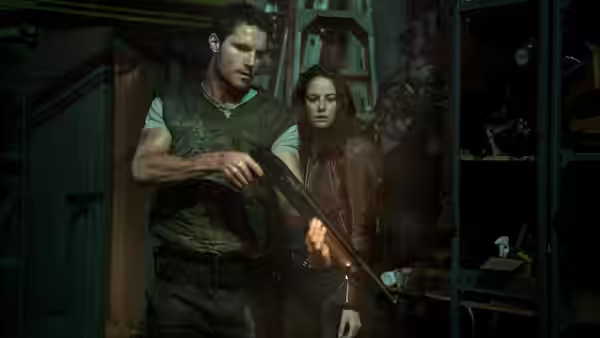
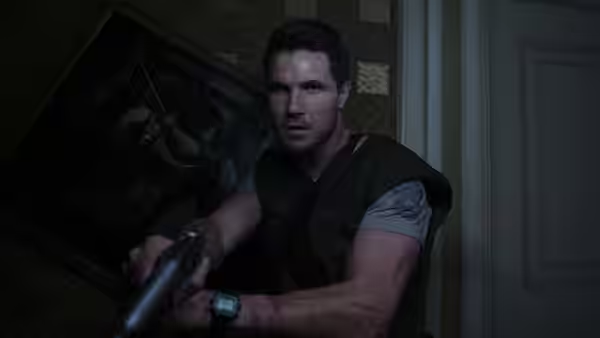
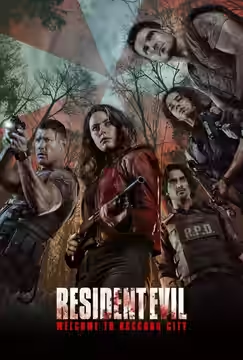
The cast is better than the script gives them cause to be. Scodelario plays Claire as tired rather than tough, a woman who has been running from this place for years and is not pleased to be back, and she carries the first half almost alone. Avan Jogia’s Leon Kennedy is a rookie who is treated by everyone, the film included, as a joke, which is funnier than we expected. Hannah John-Kamen’s Jill Valentine and Tom Hopper’s Albert Wesker share a squad car and some bickering; Donal Logue’s Chief Irons is a sour bully with the best line about the town. Robbie Amell, as Claire’s brother Chris, mostly frowns at her. Neal McDonough’s William Birkin arrives with a briefcase and we will leave him there.
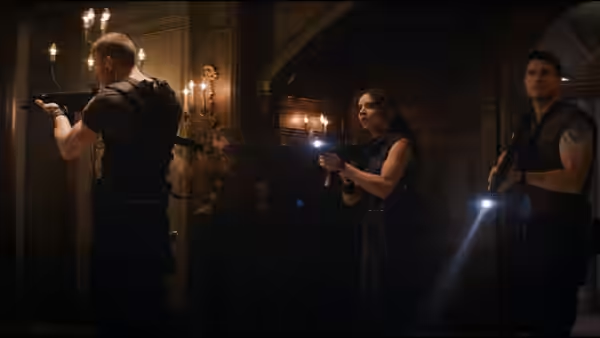
Then the film divides. Half the characters drive out to a mansion, the other half hole up in the police station, and Roberts has to cut between two games that were never built to share an evening. Dev Singh’s editing does not so much cross-cut as alternate, and each time we leave one building the tension in it drains away and has to be built again from nothing. The mansion is the better set and gets less time.
Alexandre keeps the second half so dim that we sometimes could not tell who was firing at what, and the reason becomes plain whenever the computer-generated creatures step into the light: the skin does not sit on the bodies, and they move with a weightless, sped-up quality that no shadow disguises. Mark Korven, who did such patient, scraping work on The Witch, is asked here to bang on a door for an hour, and the score rises at every corner until the film has no quiet left to be frightened in. By the last half hour we were bored, then slightly cross about it, because the opening had shown us Roberts knows how to do this.
His 47 Meters Down put two women in a shark cage at the bottom of the sea and stayed with them, and it worked because it never left. Here he has a dozen named characters, two buildings, a good deal of lore and 107 minutes, and the result is a film that keeps stopping to introduce someone. Players will recognise a great deal, down to a diary entry lifted from the first game, and Roberts plainly loves the material. Loving it is not the same as making it frightening.
Most critics landed about where we have, with most of the reviews either undecided or against, and we understand both camps. If you played these games in a bedroom in 1998 there is a real pleasure in seeing the station’s main hall built full-size and rained on. If you did not, this is a competent haunted-town picture that loses its way once it leaves the town, and you will spend its second half squinting.