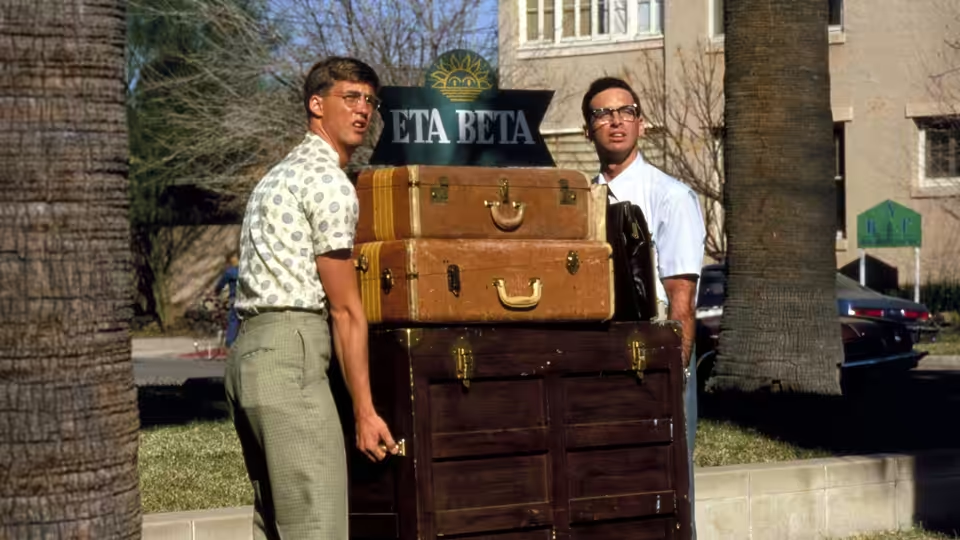
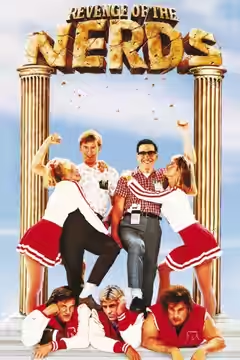
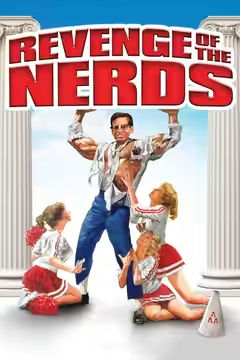
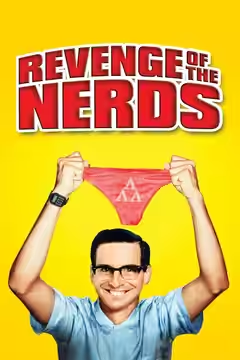
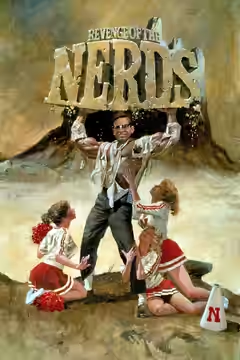
Robert Carradine and Anthony Edwards bring warmth to a poor college comedy. Its underdogs deserve sympathy, but racial stereotypes and voyeuristic humour make supporting them more trouble than the laughs can justify.
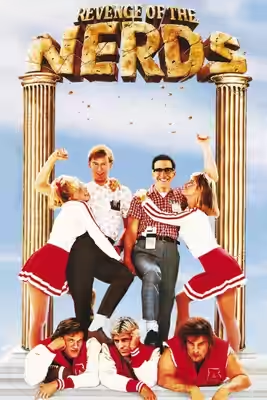
Jeff Kanew’s Revenge of the Nerds is a poor college comedy built around an easy appeal: people who are mocked want to get even. We recognise the attraction, and a film need not turn its underdogs into saints to earn our affection. The screenplay by Jeff Buhai and Steve Zacharias keeps asking for that affection while serving up jokes that make the request increasingly difficult to grant. At 90 minutes, it moves briskly enough, but a short running time cannot help much when the same comic limitations keep coming round.
Robert Carradine as Lewis Skolnick and Anthony Edwards as Gilbert Lowell give us the strongest reason to stay with it. They make the outcasts’ wish to be accepted easy to understand, and there is enough warmth in the performances to suggest a more agreeable comedy might have been possible. The humour works best when we can enjoy their company without being instructed to despise somebody else. That makes the failures more frustrating, because the actors have done enough to win some sympathy before the writing begins to squander it.
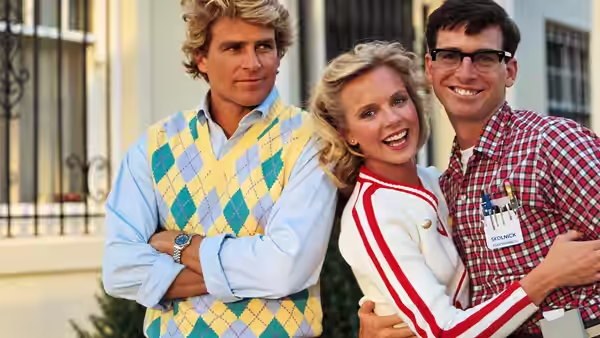
The supporting characters suffer from being assigned a type and left with it. Broad characterisation has its uses in a comedy, but the racial stereotypes here are stale shortcuts, and the childish slapstick rarely gives the performers much to build on. Too many jokes depend on recognising somebody as a figure of fun before they have had a chance to do anything funny. For a film about the misery of being labelled and dismissed, there is remarkably little curiosity about the people beyond its central pair.
We were repelled by the voyeuristic humour, because the film treats an invasion of privacy as a comic pleasure. There is no need to describe the episode to explain the problem: the joke asks us to enjoy someone else’s exposure. Bad taste is not automatically a failure in a college comedy, and outrage is hardly a useful test of whether something is funny. Here, though, the cruelty makes the appeal for sympathy harder to accept, and the film seems uninterested in that difficulty.
The craft is competent enough to make the missed opportunities irritating. Alan Balsam’s editing helps Jeff Kanew keep the comedy brisk, while King Baggot’s cinematography and James L. Schoppe’s production design leave the performers room to carry it. Thomas Newman’s music fits the film’s eagerness to entertain, but it cannot make the nastier business feel as harmless as the film appears to think it is. Nobody needed to make this more solemn; giving the characters a little room between the gags would have been enough.
The college comedy has plenty of room for vulgarity, selfishness and bad decisions, provided the jokes repay the time spent with them. Here the laughs arrive too irregularly to make the ugliness worth enduring, and the occasional pleasure of seeing outsiders push back cannot carry the whole film. Those interested in the genre may find enough in Robert Carradine and Anthony Edwards to tolerate the rest. For an evening’s comedy, we would choose something that makes spending time with its leads less of a chore.