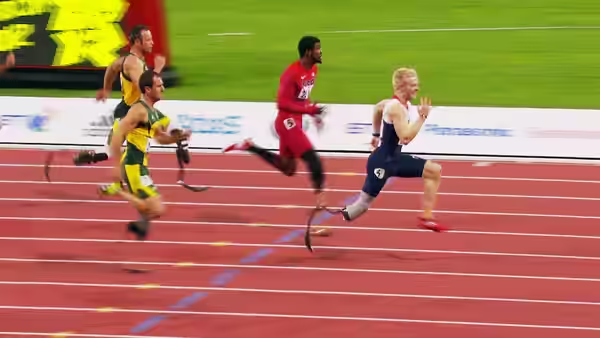
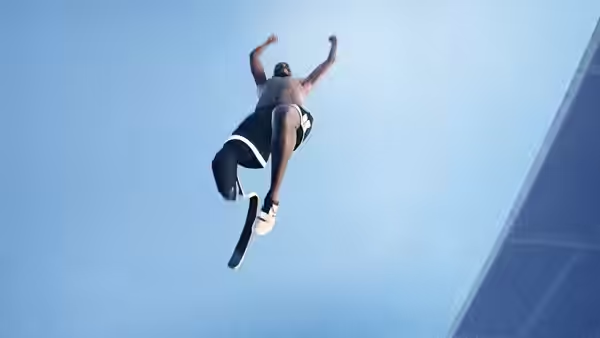
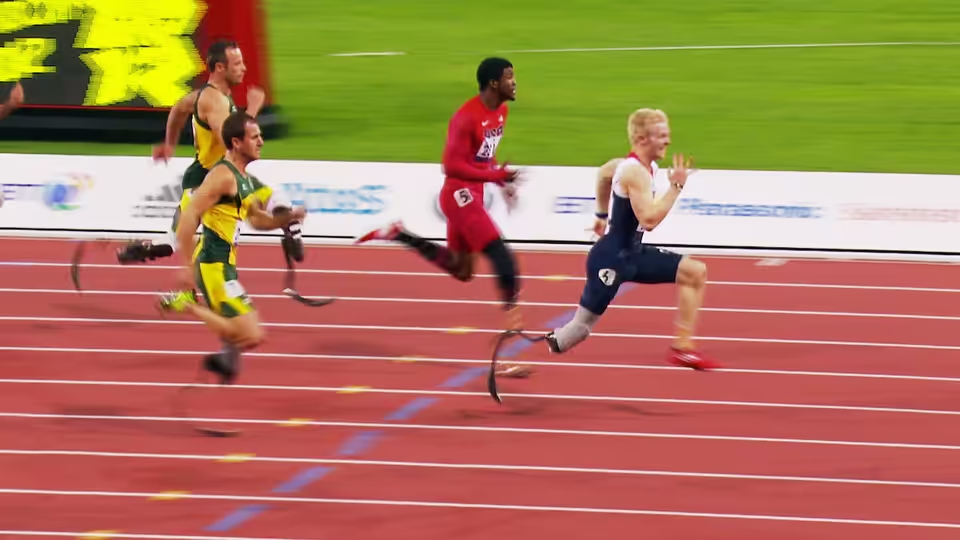
Three track athletes sprint around the red track, one wearing a yellow and green racing kit
Film review

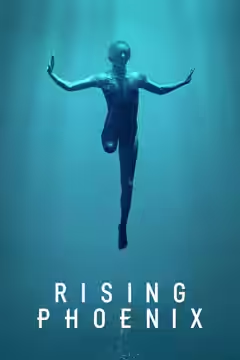
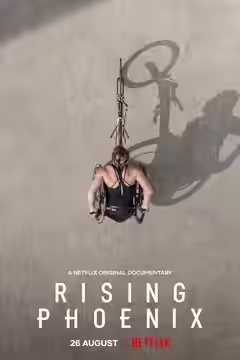
Rising Phoenix

2020 · Directed by Peter Ettedgui, Ian Bonhôte · 1h 46m

In a sentenceThe Paralympians earn the applause; the soundtrack seems determined to get there first

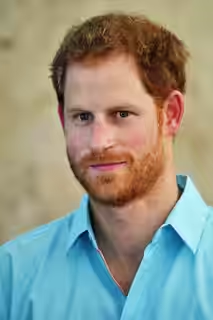
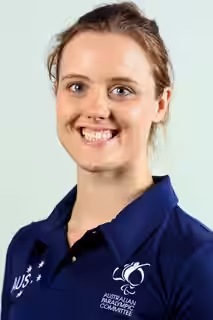
Bebe Vio, Tatyana McFadden and Ellie Cole appear as themselves in this documentary about the Paralympic Games. Athlete introductions, personal accounts and competition footage establish a group whose sporting abilities sit at the centre of the film. Their experiences share space with archive material tracing the Games’ history, linking individual competitors to the event they help define. The athletes pursue excellence while confronting assumptions about what disabled people can do. Moving between their stories and their sporting performances, the film introduces both the participants and the public perceptions they challenge.

Plays from YouTube when you press play; nothing loads from them until then.

Fi1m review

Ian Bonhôte and Peter Ettedgui make an affecting, handsome introduction to Paralympic sport. The athletes and competition footage earn our attention, though the insistent music and crowded storytelling sometimes make admiration feel over-organised.

Rising Phoenix is a stirring introduction to Paralympic sport, with enough compelling people to survive a presentation that sometimes applauds on our behalf. Directors Ian Bonhôte and Peter Ettedgui want us to look closely at what these athletes can do, and they make that a pleasure. Their film approaches its subjects with plenty of polish and ceremony. We recommend it, with a reservation about how readily its many different lives become variations on the same encouraging story.

Bebe Vio, Tatyana McFadden and Ellie Cole are among those appearing as themselves, and the range of personal accounts gives the film much of its force. There is a welcome appetite here for ability: the filmmakers expect us to be interested in physical excellence rather than simply impressed that disabled people participate. The competition footage justifies that expectation. We were gripped by it, because the athletes’ combination of strength and control gives us something immediate to care about without needing their achievements explained.

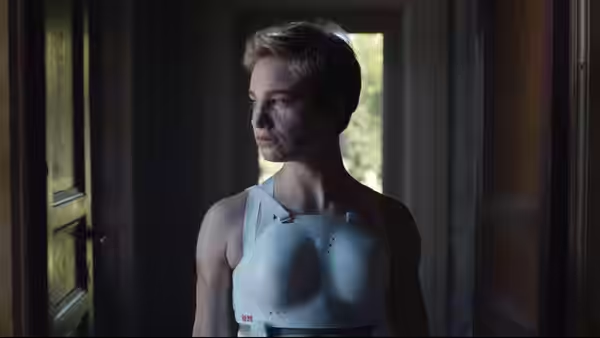
Will Pugh’s cinematography contributes to a glossy presentation that feels appropriate to the athletes’ command of their sports. The superhero-style introductions are a reasonable way to ask an audience to revise its expectations, even if they lay the admiration on thickly. There is pleasure in seeing physical skill treated as something worth looking at for its own sake. The limitation arrives when that heroic framing begins to seem compulsory, leaving less space for each person to be anything other than impressive.

Otto Burnham’s editing keeps the competition material lively and gives the personal stories a sense of urgency. That momentum helps a film with so many people to introduce, but it also means some accounts feel curtailed just as they begin to interest us. We wanted more time with individuals before moving on to the next example of determination. The crowded structure is a real limitation, although the range of voices prevents the film from resting entirely on one person’s experience.

Daniel Pemberton’s music is less inclined to leave the material alone. Its persistent encouragement can make moving testimony feel as though it has arrived with instructions, and the film would benefit from trusting an audience to respond without quite so much assistance. The score does contribute to the excitement of the sporting material. It is the lack of contrast that wears; the quieter human details need more room than this approach gives them.

The archive material is valuable because it gives the Games a history beyond the biographies of the people taking part. It also makes the film’s desire to change perceptions easier to understand: athletic achievement belongs within a wider account of who gets recognised and taken seriously. That is a useful ambition for an accessible documentary. The frustration is that the present-day portraits too often settle for triumph when their subjects suggest lives worth exploring with more patience.

Judged as a sports documentary, it succeeds at the thing that matters most: making the abilities of the competitors worth our sustained attention. Its insistence on their strength is welcome, even when the heroic packaging becomes a little restrictive. We would have preferred fewer prompts to feel uplifted and more time to discover what distinguishes one athlete from another. It is worth an evening for anyone drawn to competitive sport, provided a little over-encouragement does not put them off.
Critical consensus AI synthesised

72
Positive
7
Mixed
2
Negative
1

Most critics respond warmly to Rising Phoenix, with praise centred on the Paralympians’ personal stories and the force of the sporting footage. The reviews generally find it an affecting, accessible introduction to the Games, admiring the athletes’ strength and skill as well as the polished visual treatment. Several welcome its challenge to pity-based portrayals of disability, finding that the emphasis on sporting achievement gives the athletes their due.

The reservations concern how insistently the film steers those stories towards uplift. IndieWire admires the dramatic editing but finds some subjects underdeveloped, while The Guardian considers the cutting frenetic and the score relentlessly uplifting. The spread includes a sharp dissent from Eye for Film, which values the historical material and archive footage but finds the present-day portrayal patronising. Its objection goes beyond presentation: it argues that an overcoming-the-odds narrative squeezes out the variety of the athletes’ lives.

Los Angeles Times
26 August 2020 · Kevin Crust
85*

Crust gives the documentary an enthusiastic verdict, calling it a fitting bridge to the postponed Olympics. He praises its glossy visual style and its portrayal of the athletes’ strength and finesse.

Read the full review →
IndieWire
27 August 2020 · B+ · Ryan Lattanzio
83

Lattanzio gives the documentary a strong positive verdict, calling it a winning homage to Paralympic athletes. He praises its cinematic visual style and dramatic editing, while noting that its crowded focus occasionally leaves subjects underdeveloped.

Read the full review →
Little White Lies
25 August 2020 · 4/4/4 · Lillian Crawford
80

Crawford finds the documentary a powerful, uplifting celebration of resilience. She especially praises the emotional force of the athletes’ sporting footage.

Read the full review →
Screen Daily
20 August 2020 · Tim Grierson
80*

The critic finds it a rousing, crowd-pleasing introduction to the Paralympic Games. The riveting sports footage and athletes’ compelling personal stories are singled out for praise.

Read the full review →
Radio Times
21 August 2020 · Grace Henry
75*

The review presents the documentary as an inspiring celebration of Paralympic athletes. It praises the film for challenging pity-based views of disabled people and highlighting their strengths.

Read the full review →
The Guardian
26 August 2020 · Leslie Felperin
70*

Felperin finds the documentary affecting and its athletes’ stories compelling, though its presentation can feel overbearing. She singles out the athletes’ fortitude for praise, while criticizing the relentlessly uplifting score and frenetic editing.

Read the full review →

Straight answers AI written, from our review

Is Rising Phoenix worth watching?
Rising Phoenix is worth watching for anyone drawn to competitive sport, and we score it 74 out of 100. We were gripped by the athletes’ strength and control in the competition footage, though the insistent music pushes too hard for uplift and the crowded storytelling gives some personal accounts too little time.
How long is Rising Phoenix, and what is it rated?
Rising Phoenix runs 1h 46m. It is a documentary film.
Where can I watch Rising Phoenix in Lithuania?
Rising Phoenix is streaming on Netflix in Lithuania. Availability is checked daily; the links above go straight to each service.
How violent or frightening is Rising Phoenix, and is it suitable for children?
Rising Phoenix carries a UK 12 certificate, which makes it a choice for viewers aged 12 and over rather than younger children. We would follow that age guidance for family viewing, rather than assume that its focus on Paralympic sport makes it suitable for all ages.
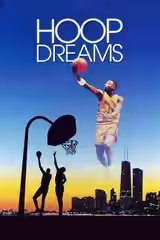
How does Rising Phoenix compare to Hoop Dreams?
Rising Phoenix offers an engaging introduction to Paralympic sport, but we recommend Hoop Dreams as the stronger documentary for its patient attention to individual lives. The former moves briskly between athletes and competition footage; the latter gives two young basketball hopefuls’ school and family lives time to develop, rewarding even viewers with little interest in sport.

Cast

If you liked this, try…

  1. Murderball (2005) · not on Fi1m yetA fiercer account of disabled athletes, with competition and personality kept close together.

  2. Hoop Dreams (1994, Fi1m 92)Young sporting ambitions receive the time and attention crowded ensemble portraits often deny them.

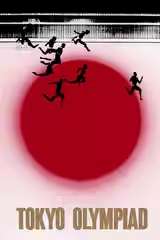
  3. Tokyo Olympiad (1965) · not on Fi1m yetPatient observation of sporting bodies offers a useful change from relentless encouragement.

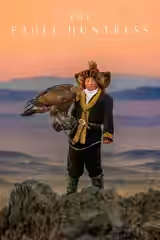
  4. The Eagle Huntress (2016) · not on Fi1m yetAnother young competitor asks to be judged by skill rather than other people’s expectations.

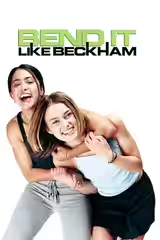
  5. Bend It Like Beckham (2002) · not on Fi1m yetFor a lighter evening about sporting ambition and the people who complicate it.

Rising Phoenix (2020) review: Moving sport with too much uplift (Lithuania) | Fi1m