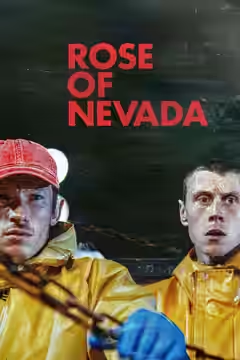
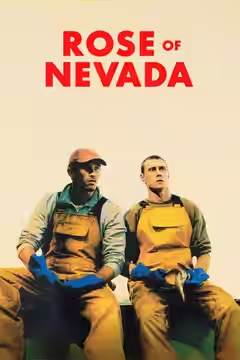
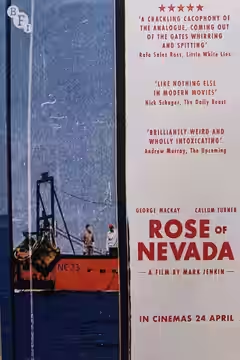
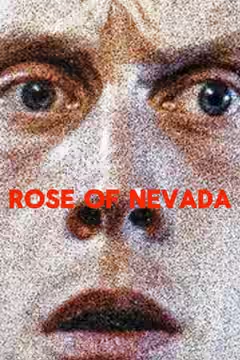
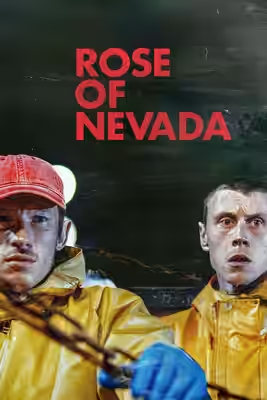
Rose of Nevada poster

Rose of Nevada

2026 · Directed by Mark Jenkin
1h 54mMysteryDrama15
79
Fi1m score
81
Critics · 15
Audience · not yet

Where to watch in the UK

Checked 10 September at 22:28. Prices and availability change; the service’s page is the last word.

Plays from YouTube when you press play; nothing loads from them until then.

Synopsis

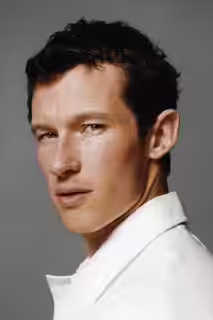
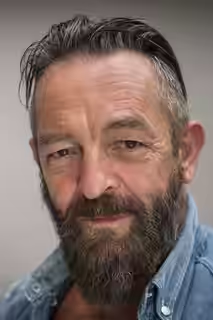
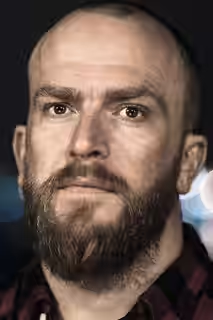
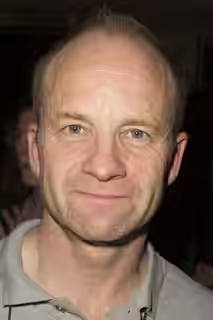
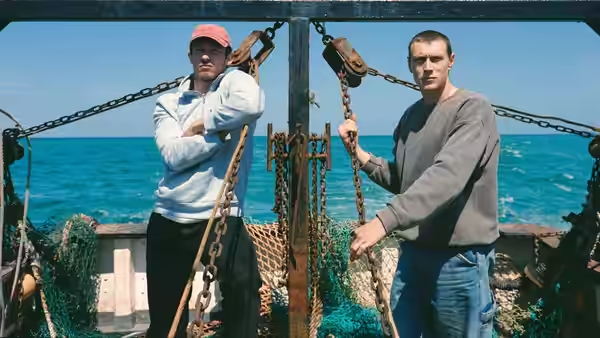
In a Cornish fishing village that has been running down for decades, a boat that was lost at sea years ago drifts back into the harbour. The Rose of Nevada is patched up and put back to work, and two men with nothing better on offer, Nick Dyer (George MacKay) and Liam (Callum Turner), sign on to crew her. The first trip out goes well enough. Francis Magee, Edward Rowe, Rosalind Eleazar, Mary Woodvine and Adrian Rawlins are among the faces on the quay. Mark Jenkin writes, directs, shoots, edits and scores.

Fi1m review

In a sentenceThe catch is good; the decade is wrong

Mark Jenkin’s Cornish time-slip tale is his handsomest and most watchable film, with a first hour that put us right on the deck. The middle drifts while it decides what its mystery is for, but the sea and the two men hold.

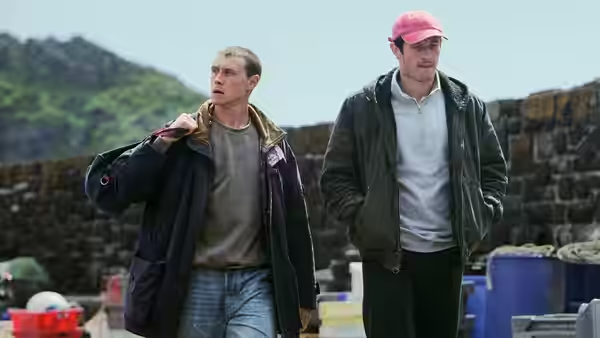
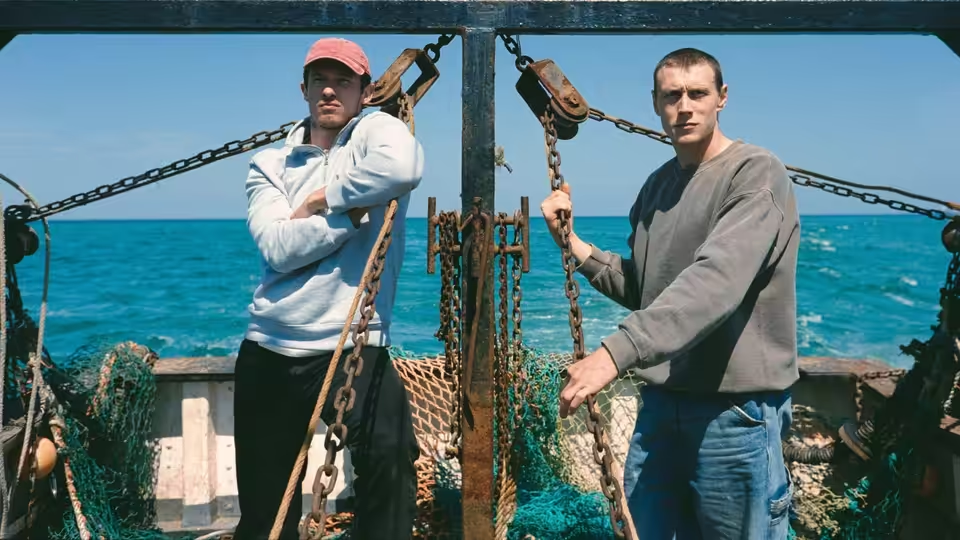
The Rose of Nevada is a fishing boat that was lost years ago, and at the start of Mark Jenkin’s third feature she comes back. She drifts into a Cornish harbour that has had no fleet worth the name since she left, and the village does the only sensible thing, which is to put her back to work. Nick Dyer (George MacKay) and Liam (Callum Turner) take the berths. They go out, they fish, and the trip goes well. What they come back to is the film’s business, not ours.

This is the most watchable film Jenkin has made and, for most of its length, the best. Bait (2019) was a quarrel between locals and incomers told in silent-era close-ups; Enys Men (2022) was a woman, a flower and a standing stone, and dared you to find the story. Rose of Nevada has a story, with a beginning and a boat, and it spends a good hour earning the right to go strange. Where it slips is in the middle, when the mystery has been set and the film is not yet ready to say what it wants from it.

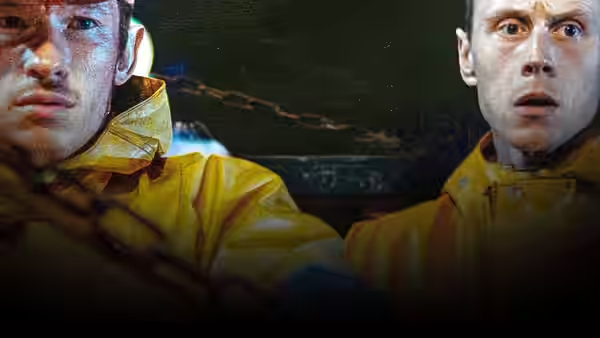
Jenkin shoots, cuts and scores the film himself, on 16mm, and the grain is the whole surface of the thing. Colours bleed at the edges, the image jitters as though the reel has been through the sea, and the sound is laid on afterwards, so that voices sit a fraction away from the mouths speaking them. Here it is the method: nothing on screen is quite where you left it, and the picture tells you so before anyone does. Felicity Hickson’s production design keeps the boat cramped and working, and Jo Thompson’s costumes carry a good deal of the telling once the story turns.

The fishing is the film’s best material. Jenkin gets in close on hands, rope, the winch, the catch coming over the side, and he holds there long enough that the work becomes work rather than montage. We felt the cold and the tilt of the deck. And when the men come up the quay after that first trip, we got a chill that had nothing to do with the weather, because Jenkin plays what they find flat, as a fact, and leaves us to do the arithmetic.

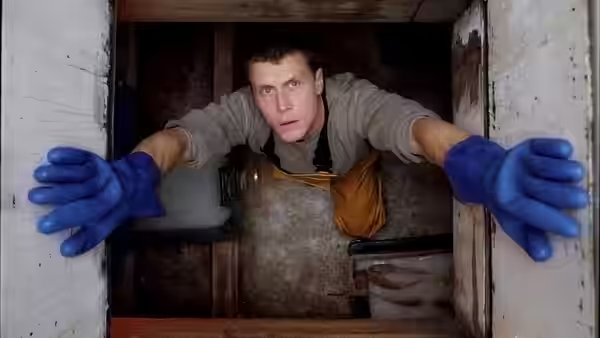
MacKay is the reason the second half holds. He plays Nick as a man who keeps his questions to himself, and Jenkin’s camera, which likes a face held still, gets a great deal out of him without asking him to explain anything. Turner has the showier task and is careful not to overplay it. The two men take what has happened to them differently, and the later stretch of the film is the distance that opens between them. Francis Magee, Edward Rowe, Rosalind Eleazar, Mary Woodvine and Adrian Rawlins fill out the village, and the faces are right; nobody looks bussed in.

That later stretch is also where we lost our footing, and then, for a while, our patience. Jenkin has decided not to explain the rules of what has happened, which is his right, but in the middle the film stops advancing and starts circling, and each circuit looks much like the last. There are scenes where the picture is telling a ghost story and the script a social one, and they pull against each other. Jenkin’s own score does more to hold the mood through this than the plotting does. At 114 minutes the film is not long, but it feels the length of a night at sea.

Underneath it is an argument about what happened to places like this one when the fish stopped paying, and the film is strongest when it leaves that in the pictures. It is Jenkin’s most generous film to an ordinary audience, and the generosity costs him a little of the strangeness that made Enys Men so hard to shake. See it in a cinema if you can; the grain that reads as sea air on a big screen reads as a faulty signal on a small one. Certificate 15, 114 minutes, and a boat worth the ticket before it does anything odd.
Critical consensus AI synthesised

81
Positive
15
Mixed
0
Negative
0

The reviews are uniformly warm and the spread is narrow: nothing below a qualified approval, nothing that reads as a rave without a reservation. Almost every critic starts with the look and sound of the thing. The grainy 16mm photography, the post-dubbed audio and the close attention to nets, boats and the labour of fishing are praised again and again, and several call this Mark Jenkin’s most accessible film so far, or his most ambitious, or his most genre-leaning; the descriptions vary but the admiration does not. George MacKay’s performance is singled out most often, with Callum Turner named alongside him. The reservations, where they appear, cluster around the story rather than the style. The Playlist finds the narrative bumpy and convoluted in places, The Hollywood Reporter notes some mismatch between image and plot, and Empire calls the film baffling, though as a compliment. Nobody dissents outright.

Little White Lies
20 April 2026 · 4/5/5 · Rafa Sales Ross
100

Mark Jenkin’s third feature is a moving tale of personal versus communal sacrifice in a Cornish fishing village. The critic singles out the textured analogue cinematography and strong performances, especially George MacKay’s, for praise.

Read the full review →
IndieWire
7 September 2025 · festival review · Sam Bodrojan
85*

The review hails the film as haunting aesthetic nirvana, a singular Cornish folk tale anchored by the performances of George MacKay and Callum Turner in its slippery time-unstuck narrative.

Read the full review →
The Independent
23 April 2026
85*

The critic praises Jenkin as one of Britain’s most original filmmakers for crafting another 16mm gem that immerses viewers in the textures, sounds, and unease of the Cornish coast. They highlight how the film blends star performances into its haunting, time-bending narrative about identity and community loss.

Read the full review →
Vulture
19 June 2026
85*

The review celebrates the handcrafted, fable-like quality and captivating textures of the ghost story, noting how Jenkin's precise style builds emotional depth and an otherworldly aura around the time-travel premise.

Read the full review →
The AV Club
17 June 2026 · B+ · Monica Castillo
83

The critic describes the lo-fi time-travel tale as an immersive mystery with an otherworldly 16mm visual style, praising how the performances ground the story of men unmoored from time.

Read the full review →
Empire
23 April 2026 · Neil Alcock
80*

Jenkin delivers another stubbornly analogue, baffling film about Cornish communities and the supernatural tension between past and present, with filmmaking that is the star of the show. The critic singles out the mesmerising shots and sensory impact that make the film one you can virtually feel.

Read the full review →

Cast

George MacKay
Nick Dyer
Edward Rowe
Mike Bruffin
Mary Woodvine
Mrs. Richards
Adrian Rawlins
Billy Richards
Mae Voogd
Emily Carroll

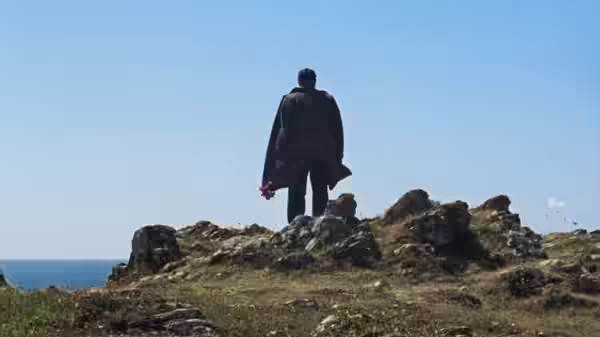
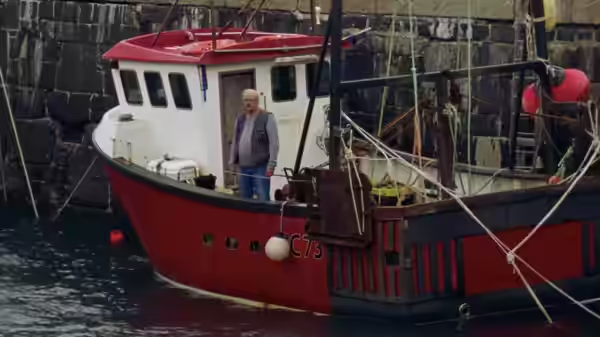
Stills

If you liked this, try…

Bait poster

Bait

2019 · Jenkin’s earlier Cornish fishing film, rougher and angrier, and shorter by a good half hour.

Leviathan poster

Leviathan

2012 · A trawler documentary with cameras strapped to everything; the sea has never looked less friendly.

Kaili Blues poster

Kaili Blues

2015 · A Chinese doctor’s journey slips out of time mid-film, in one very long take.

The Edge of the World poster

The Edge of the World

1937 · Michael Powell on a Scottish island whose people are leaving; the same grief, older.

La Jetée poster

La Jetée

1962 · Twenty-eight minutes of still photographs about a man sent back to a memory.