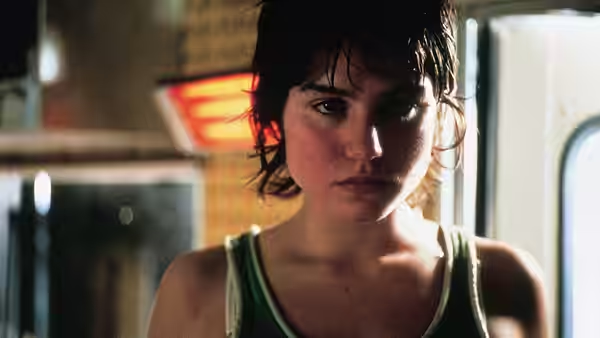
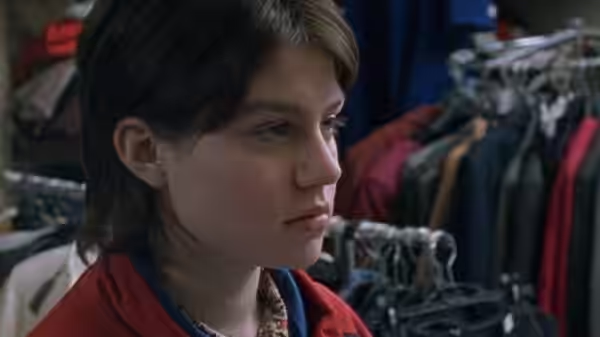
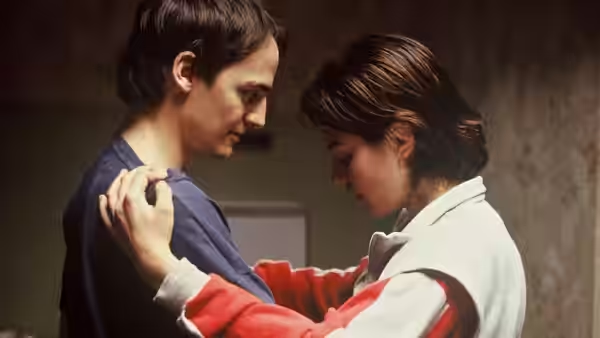
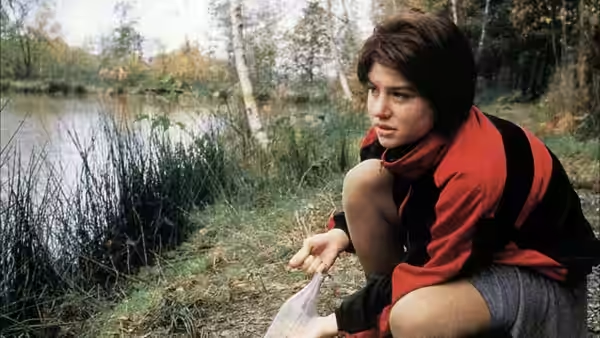
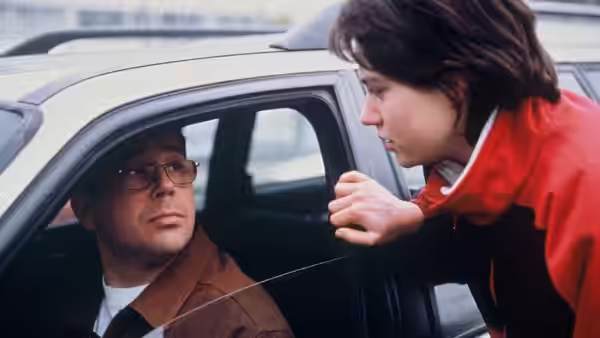
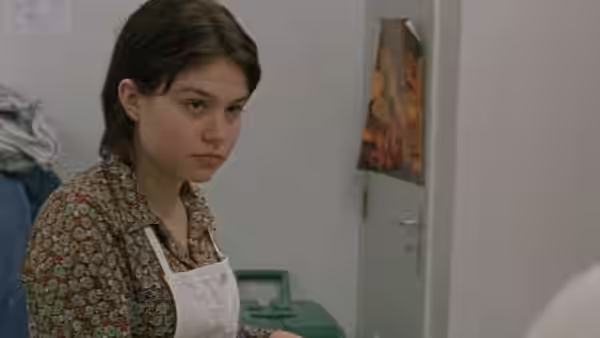
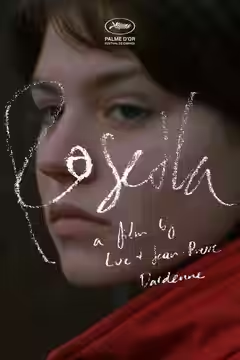
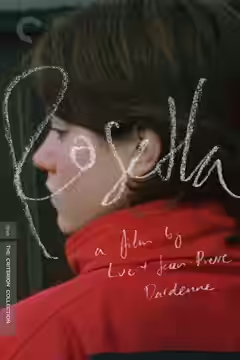
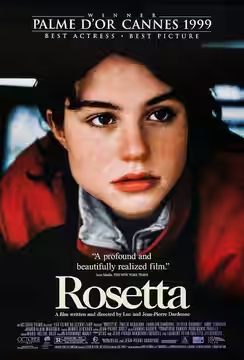
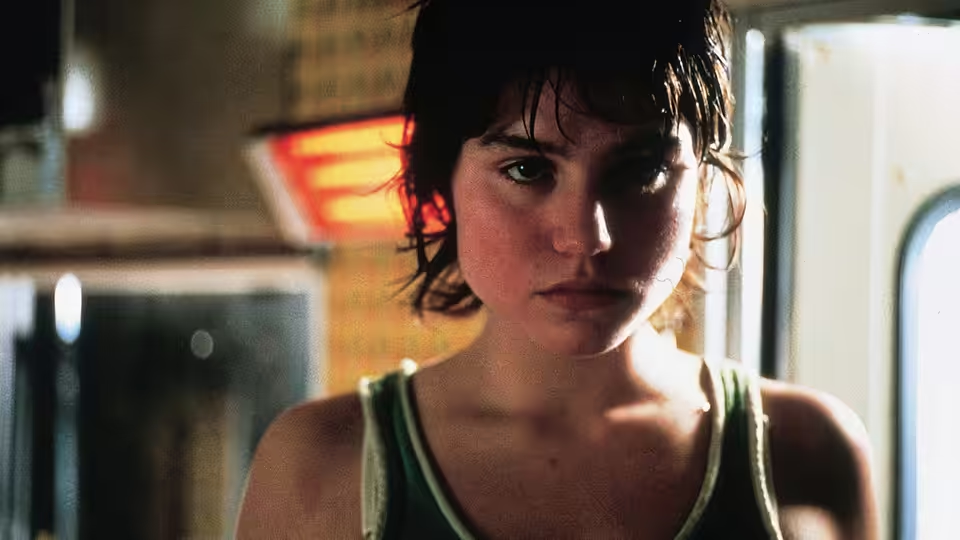
Rosetta (Émilie Dequenne) looks ahead in a dim room
Film review

Rosetta

1999 · Directed by Jean-Pierre Dardenne, Luc Dardenne · 1h 35m

In a sentenceWe spent ninety-five minutes wanting someone to be kind to Rosetta

Rosetta (Émilie Dequenne) struggles to get by, meeting each difficulty with a persistence that leaves little room to pause. Her mother (Anne Yernaux), Riquet (Fabrizio Rongione) and Patron (Olivier Gourmet) are part of her immediate world, as are a head of personnel (Frédéric Bodson) and a campground manager (Bernard Marbaix). She wants to get beyond the constant demands of survival, but those demands keep her attention fixed on the next problem. The story follows her efforts closely, offering little explanation of her family history or the wider circumstances that have brought her here.

Plays from YouTube when you press play; nothing loads from them until then.

Fi1m review

Émilie Dequenne’s fierce performance makes Rosetta worth the strain. Jean-Pierre Dardenne and Luc Dardenne stay close to a young woman’s struggle to survive, though their reluctance to explain her circumstances can become frustrating.

Rosetta is a gripping film about the effort of getting by, made difficult to watch by how little relief it allows. Jean-Pierre Dardenne and Luc Dardenne keep their attention on one young woman until her persistence becomes almost physically exhausting. We recommend it for Émilie Dequenne’s performance and for the directors’ willingness to let Rosetta be difficult company. The narrowness of their approach is also a limitation: we sometimes need more understanding of her circumstances than the film provides.

Émilie Dequenne gives Rosetta a persistence that can be abrasive. The performance does not tidy that away to make our sympathy easier. We were worn out by her physical effort, then uncomfortable about wanting a rest from it. The fact that we sometimes resist her is part of the film’s strength: she does not have to become more agreeable before her difficulties deserve our attention.

Alain Marcoen’s cinematography makes that discomfort difficult to escape. The camera stays close to Rosetta, asking us to keep looking at someone whose urgency can be exhausting. It works because Émilie Dequenne gives that attention something to follow: we remain interested in the effort she is making and wonder how she can keep it up. The danger is repetition, and there are stretches when the same pressure tells us little more than we already know.

The film’s plainness also owes something to Igor Gabriel’s production design. The surroundings do not demand admiration, which helps keep attention on the person trying to live among them. Marie-Hélène Dozo’s editing sustains the need to press on, giving us little sense that any difficulty can be comfortably put aside. At 95 minutes, the film is compact, but it gives Rosetta’s persistence time to become tiring. We think that is mostly useful, though the pressure could vary more.

The music credited to Jean-Pierre Cocco leaves a fainter impression than the lead performance, and that feels right for this particular film. We do not need the music to explain how to feel about her. The writing by Jean-Pierre Dardenne and Luc Dardenne is just as reluctant to give us an easy way in. They provide little family background or wider social context, keeping our attention on what Rosetta is trying to do.

Here the directors’ restraint becomes a real drawback. Without more knowledge of the circumstances around Rosetta, her struggle can start to feel enclosed for reasons the film has imposed rather than reasons we understand. A little more explanation would not turn this into a lecture or make its hardships less painful. It would help us see beyond her persistence, and give the supporting characters more room to matter in their own right.

Social-realist drama can become too satisfied with its own decency, as though pointing a camera at hardship were sufficient. Rosetta earns our attention through the force of its acting and the uncomfortable demands it makes on our sympathy. Even when the restricted viewpoint frustrates us, the person at its centre remains worth the effort. Watch it when you can give Émilie Dequenne your full attention, and do not expect much comfort in return.

Critical consensus AI synthesised

69
Positive
5
Mixed
4
Negative
0

Most critics respond positively to Rosetta, with praise centring on Émilie Dequenne’s physically committed performance and the Dardennes’ harsh, close observation of a young woman struggling to get by. The favourable reviews find the realism gripping and humane, drawing attention to Rosetta’s persistence and desperation rather than treating the austerity as an end in itself. Dequenne also earns praise from less persuaded critics, making her performance the clearest point of agreement.

The spread runs from strong enthusiasm to qualified admiration, with reservations clustering around the film’s narrow focus and uncompromising approach. The Guardian finds it forceful but limited by the lack of social context and family background, while Variety sees its austerity as a barrier to broader appeal. The disagreement is chiefly over how much that close focus achieves: admirers find empathy and immediacy, while the more reserved reviews want a fuller account of the circumstances surrounding Rosetta.

Los Angeles Times
26 November 1999 · Kenneth Turan
95*

Turan calls the film a triumph of humanistic cinema, gripping and deeply empathetic. He praises Emilie Dequenne’s performance and the Dardennes’ close, unsparing portrayal of Rosetta’s desperation.

Read the full review →
Empire
1 January 2000 · David Parkinson
75*

Parkinson gives a positive verdict on the film’s harsh, uncompromising realism. He particularly praises the Dardennes’ dispassionate depiction of the heroine’s struggle to get by.

Read the full review →
Slant Magazine
14 August 2012 · ★★★½ · Glenn Heath Jr.
70

The review presents Rosetta as a staggering, relentlessly immediate portrait of survival and misguided youth. It singles out the Dardennes’ close, observational camera work and the lead character’s fierce persistence.

Read the full review →
Time Out
· GA
70*

The review calls Rosetta a deserving Palme d’Or winner and finds a glimmer of hope within its grim realism. It praises the film’s realist approach, comparing it favorably to the Dardennes’ earlier La Promesse.

Read the full review →
RogerEbert.com
67*

The URL identifies a RogerEbert.com review of the specified film. The page content was blocked, so its verdict and points of praise or complaint cannot be verified.

Read the full review →
The New York Times
2 October 1999 · festival review · Stephen Holden
65*

The URL identifies a festival review of Rosetta, but the article text is unavailable, so its verdict and specific praise or criticism cannot be established. The captured page contains only a browser-access message.

Read the full review →

Straight answers AI written, from our review

Is Rosetta worth watching?
Rosetta is worth watching for Émilie Dequenne’s fierce performance and its gripping account of survival; we score it 82 out of 100. We recommend it to viewers who value demanding social-realist drama, with a caveat: the relentless pressure becomes repetitive, and the lack of background sometimes makes Rosetta’s circumstances frustratingly hard to understand.
How long is Rosetta, and what is it rated?
Rosetta runs 1h 35m. It is a drama film.
Where can I watch Rosetta in Lithuania?
Rosetta is not on any streaming or rental service in Lithuania at the moment. It is available in 6 other countries; change your country at the top of the page to see where. Availability is checked daily.
How violent or frightening is Rosetta, and is it suitable for children?
Rosetta carries a UK 15 certificate, making it unsuitable for children under 15, and its sustained emotional pressure calls for some caution with older teenagers. We find the close attention to Rosetta’s exhausting struggle difficult to watch; the concern we can identify is distress around hardship rather than any specific level of violence or frightening imagery.
How does Rosetta compare to Bicycle Thieves?
Rosetta is the more narrowly focused, exhausting choice beside Bicycle Thieves, which we favour for viewers seeking a moving drama about work and dignity. The father-son performances make Bicycle Thieves rewarding despite its overly instructive music; Rosetta suits those willing to stay close to one abrasive young woman, with little relief or explanation of her circumstances.

Cast

Awards

International Submission to the Academy Awards, 2000

Nominated
International Submission to the Academy Awards

Cannes Film Festival, 1999

Won
Palme d'Or

European Film Award for Best Actress, 1999

Nominated
European Film Award for Best Actress

European Film Award for Best Film, 1999

Nominated
European Film Award for Best Film

Joseph Plateau Award, 1999

Won
Joseph Plateau Award

If you liked this, try…

  1. Wendy and Lucy (2008) · not on Fi1m yetAnother close study of getting by, with little protection against ordinary misfortune.

  2. Bicycle Thieves (1948, Fi1m 93)Work and dignity become painfully entangled in a search through Rome.

  3. Mouchette (1967) · not on Fi1m yetA young woman’s hardship receives similarly unsentimental attention, with even less room for comfort.

  4. Nobody Knows (2004) · not on Fi1m yetChildren manage daily survival while the adults around them fail to notice.

  5. La Promesse (1996) · not on Fi1m yetThe directors give another young protagonist difficult choices about responsibility to others.