The tenth Saw film puts Tobin Bell at the centre for the first time and he holds it: patient, weary and frightening. The traps are as vile as the series has managed; the trouble is a running time that stretches revenge into a lecture.
The tenth Saw film does something the other nine did not: it makes John Kramer the protagonist. Tobin Bell, for years the series’ voice on a cassette and its face in flashback, is on screen for most of the 118 minutes, and he is the reason to see it. Josh Stolberg and Pete Goldfinger’s script sets the story between the first two films, sends a dying Kramer to Mexico for an experimental cancer treatment, and lets him find out what his money actually bought. What follows is a revenge film using the franchise’s hardware, and it is the most coherent Saw in years. It is also too long by a reel, and by the end it has talked itself into a corner.
Kevin Greutert, directing his third entry and cutting it himself, takes his time. After an opening that turns out to be a daydream, it is the better part of half an hour before anyone is strapped to anything for real. Instead we watch a sick man shave, count pills, sit in a circle of the dying and listen to Henry Kessler (Michael Beach) describe getting well. Bell plays all of this with a stillness that is almost courtly, a man who has decided how he will die and resents having his plans interfered with. It is the best acting the series has had, and the series has never asked for it before.
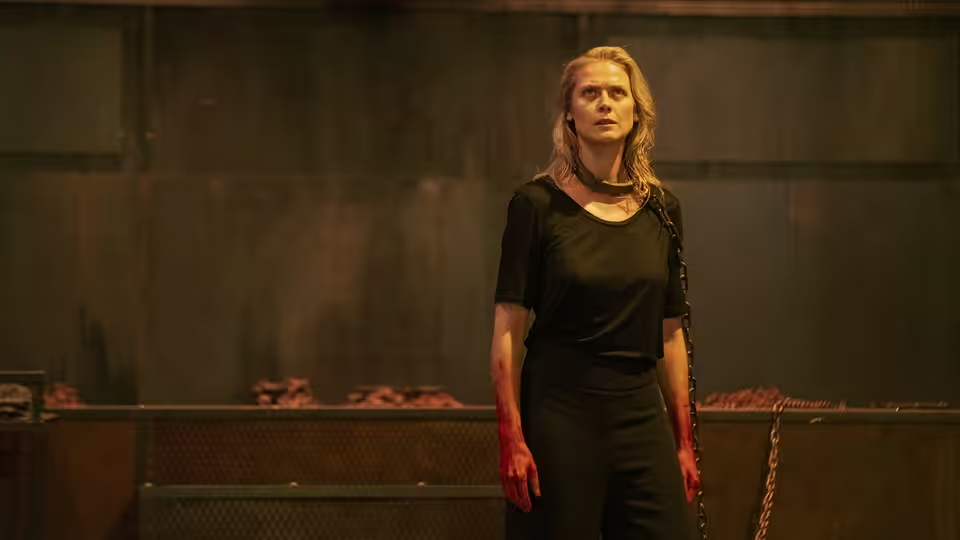
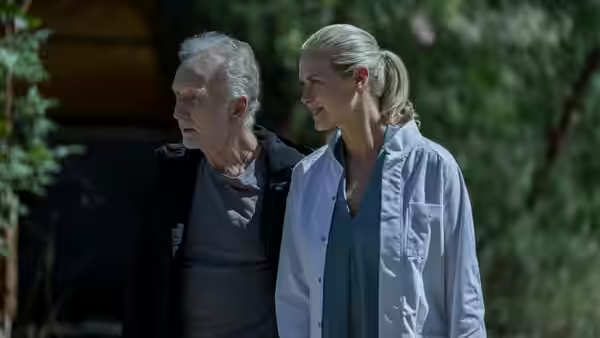
The clinic is run by Cecilia Pederson (Synnøve Macody Lund), all soft Scandinavian reassurance, with a team who each had a part to play in the performance: Mateo (Octavio Hinojosa Martínez), Valentina (Paulette Hernández), Diego (Joshua Okamoto) and Gabriela (Renata Vaca). Once Kramer has them in a warehouse the film becomes what its tagline promises. Anthony R. Stabley’s set is the usual rust and drip with a great deal of medical equipment put to uses the manufacturers did not intend. Nick Matthews shoots the Mexico City streets in a bleached, dusty daylight and the warehouse in the bilious green the series has always favoured. Jimena Tenorio dresses the con artists in clinical whites that look borrowed, which they were.
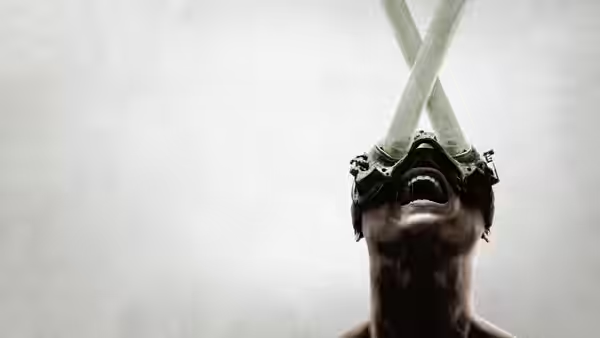
The traps are the nastiest the series has produced, and we say that having sat through all of them. Mateo’s requires a man to perform a piece of surgery on himself against a clock; the eye trap of the opening puts a face against two glass tubes and a pump. We watched the surgery through our fingers and then felt slightly ashamed of ourselves, because the film had built the scene so that we wanted him to manage it, and wanting that is exactly the position Kramer wants us in. Greutert cuts these sequences without the flailing whip-pans the early sequels wore like a uniform. You see the mechanism, you understand the rule, and the camera stays put.
Shawnee Smith’s Amanda is the other pleasure. She and Bell play the pair as a small business, disagreeing over logistics and who does what, and the film’s best laughs come from the two of them bickering while someone screams in the next room. Charlie Clouser’s score clanks and grinds when required and holds the famous theme back until it is wanted. Steven Brand turns up as Parker Sears, a fellow patient, in the second half, and the film is not sure what to do with him beyond the obvious.
The trouble is the last forty minutes. Stolberg and Goldfinger want Kramer understood as well as feared, so he explains himself, at length, to people who have good reasons not to listen. A series built on the idea that Jigsaw is a monster with a philosophy now asks us to think the philosophy has a point. We were not persuaded, and we were bored waiting for the argument to finish, which is not a thing we expected to be during a Saw film.
Against the series’ own record this is the strongest since the first film, and it says something about that record that a clear story and a lead performance count as achievements. The original Saw (2004) was a cheap, nervous puzzle box; this is a slow, confident revenge picture that happens to use the same tools. Those who have never liked these films will not be won over. Those who have will find this the one to see, at home, with the lights off, and with nothing on the plate they would mind never eating again.