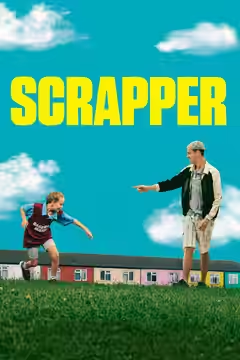
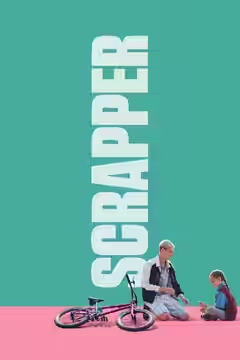
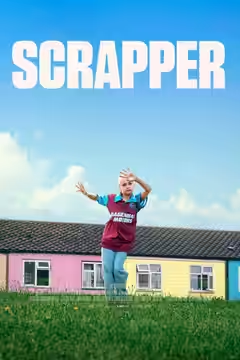
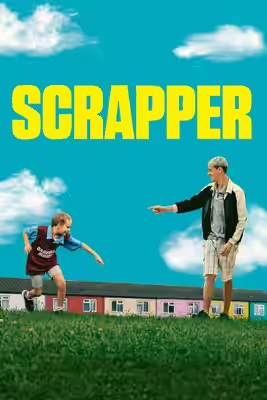
Scrapper poster

Scrapper

2023 · Directed by Charlotte Regan
1h 24mComedyDrama12A
72
Fi1m score
73
Critics · 19
Audience · not yet

Where to watch in the UK

Checked 10 September at 22:29. Prices and availability change; the service’s page is the last word.

Plays from YouTube when you press play; nothing loads from them until then.

Synopsis

Georgie is twelve and lives alone in a council house in east London. Her mother has died, and she has told no one who might do something about it: social services get a phone call from an uncle who does not exist, and the rent is covered by the bikes she steals with her friend Ali and sells on. She has a routine, a locked room upstairs she is slowly filling with scrap, and no interest in help. Then Jason climbs over the back fence. He is her father, he left before she was born, and he has come to see whether she is all right. She would like him to leave. He stays. Charlotte Regan writes and directs; Lola Campbell and Harris Dickinson lead.

Fi1m review

In a sentenceThe spiders talk, the neighbours gossip to camera and the twelve-year-old is the only adult on the estate

Charlotte Regan’s first feature is small, bright and easy to like, with a remarkable child at its centre and a father who has some growing up to do. The whimsy occasionally gets in the way, but the two of them carry it.

Charlotte Regan’s first feature is about a twelve-year-old who has decided she does not need anybody. Georgie (Lola Campbell) lives alone in a council house in east London after her mother’s death, steals bikes with her friend Ali (Alin Uzun) to keep the rent paid, and fends off social services with a recording of an uncle who does not exist. Then a man in a tracksuit climbs over the back fence. This is Jason (Harris Dickinson), the father who left before she was born, and the film is the two of them working out whether they want each other. It is small, bright, 84 minutes long and easy to like, and we liked it.

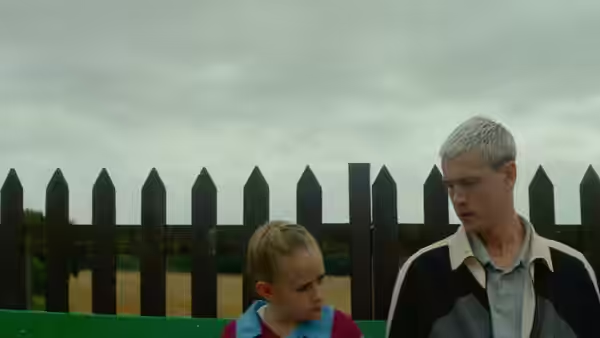
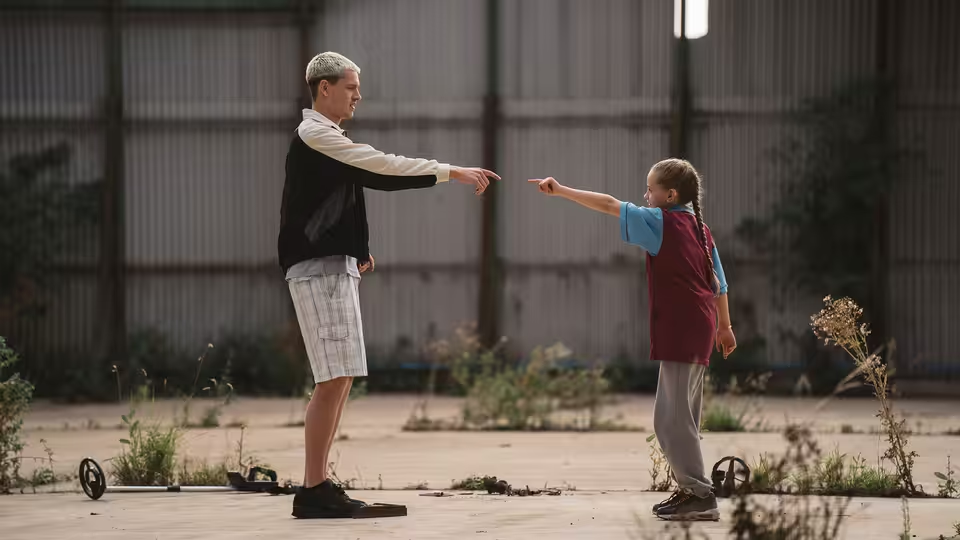
Campbell had not acted before and you would not guess. She plays Georgie with her chin up and her arms folded, a child who has taught herself to talk like a landlord, and she is funniest when she is being most serious. Asked who is looking after her, she names an uncle called Winston Churchill and does not blink. Dickinson, bleached and boyish, plays Jason as a man who has never been in charge of anything and is alarmed to discover he would like to be. He is good at being told off by a child. Regan’s script keeps their scenes short and lets them bicker in the kitchen like people who have known each other for years rather than days.

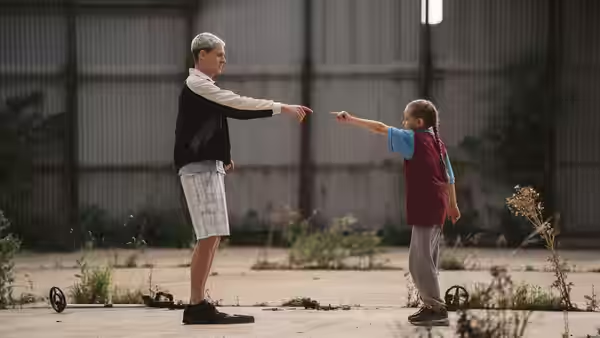
Molly Manning Walker shoots the estate in flat summer light with plenty of sky, and Elena Muntoni has the terraces painted in sherbet pinks and yellows, so the place looks like something a child has coloured in rather than the grey estate British films usually give us. Oliver Cronk keeps Georgie in an oversized football shirt and puts Jason in a tracksuit that is trying a little too hard. Spiders in the corners of rooms discuss her in subtitles. Neighbours talk to camera in pairs about what they make of her. Billy Sneddon and Matteo Bini cut these interruptions in fast and get out again, and Patrick Jonsson’s score stays light and plucked and never tells us when to cry.

The whimsy is the film’s signature and also where it wobbles. The spiders are funny for exactly as long as they should be. The talking neighbours are funny the first time and then start to look like a director who does not trust a scene to stand up on its own. Around the middle the film runs short of things for Georgie and Jason to do together and sends them off to do quirky things instead, and for ten minutes or so it coasts. A few critics have found all this grating, and we can see why, though we think they miss how much of it is Georgie’s own way of looking rather than Regan showing off.

We laughed at Winston Churchill, out loud, and again when Jason tries to explain to Georgie what a dad is for and finds he does not know. And there is that room upstairs that Georgie keeps locked and is slowly filling with scrap. What she is building in there we will not describe, but when the film finally shows us it caught us harder than the sunny surface had led us to expect, and Campbell plays the moment without a line. It is the one place the film’s grief and its playfulness are in the same shot.

The story goes where stories about absent fathers go. Anyone who has seen one will not be surprised by the destination, though they may be surprised by how gently the film arrives there and by how little it asks Jason to earn along the way. Regan is kinder to him than we might have been. That fits a film told from a child’s height, but it leaves the last stretch feeling lighter than the material underneath it.

Ken Loach’s Kes (1969) is the film British stories about working-class children still get measured against, and it was made in grey. Regan has looked at the same kind of street and decided it can be pink without the rent getting any easier to pay. Take a child of about Georgie’s age if you have one, or a parent if you still have one. It carries a 12A and runs 84 minutes, and it does not waste any of them.

Critical consensus AI synthesised

73
Positive
14
Mixed
3
Negative
2

Most critics like Scrapper, and nearly all of them, including the few who do not, agree on why it works when it does: Lola Campbell, a newcomer, and Harris Dickinson as the father who turns up uninvited, and the ease between them. Praise for Regan’s debut clusters around its colour and invention, the way it lets a twelve-year-old’s imagination interrupt a working-class setting, and around a grief story that stays light without going soft. The reservations gather in the same place. Several reviews find the whimsy twee or too cute, and the comparisons to Wes Anderson are not always meant kindly. The spread is wider than the score suggests. Slant Magazine argues the clash of realism and quirk undermines the film’s ideas about class and loss; The Hollywood Reporter finds the quirk strained and often irritating; The Times says the film never lands the emotional blow it reaches for. A few others simply find the errant-father story familiar.

The i Paper
25 August 2023 · Christina Newland
90*

The Sundance breakout is a lean, vivid working-class drama that balances social realism with imagination and low-key humour. It delivers a heart-piercing father-daughter story full of loving detail and gruff emotion.

Read the full review →
Empire
24 August 2023 · Ella Kemp
85*

The debut feature is a colourful, hopeful story of grief and father-daughter reconnection that avoids kitchen-sink clichés. It balances humour and tenderness with emotional intelligence and wit.

Read the full review →
RogerEbert.com
25 August 2023 · Sheila O'Malley
85*

The critic praises the film's fluid tone blending whimsy, pathos, and humor in a story of a self-reliant girl and her immature father reconnecting after her mother's death. She highlights the authentic lead performances and inventive style as making for an impressive directorial debut.

Read the full review →
Evening Standard
24 August 2023 · Charlotte O'Sullivan
80*

The film is a poignant Sundance prize-winner with dazzling performances from the young lead and director's fresh voice. It mixes whimsy and realism but has some twee and implausible moments.

Read the full review →
Little White Lies
24 August 2023 · 4/4/4 · Hannah Strong
80

The critic finds it a charming, effervescent story about grief, praising the delightful chemistry between Campbell and Dickinson.

Read the full review →
Radio Times
★★★★ · Max Copeman
80

The critic calls it an impressive debut with a charming comedy-drama, eccentric script, playful direction and striking chemistry between leads.

Read the full review →

Cast

Stills

Awards

European Film Academy Young Audience Award, 2023

Won
European Film Academy Young Audience Award

Sundance Film Festival World Cinema Dramatic Grand Jury Prize, 2023

Won
Sundance Film Festival World Cinema Dramatic Grand Jury Prize

If you liked this, try…

Kes poster

Kes

1969 · Loach’s boy and his kestrel; the grey original every estate childhood answers to

Paper Moon poster

Paper Moon

1973 · Bogdanovich’s con man and the small girl who is better at his job than he is

Nobody Knows poster

Nobody Knows

2004 · Kore-eda’s children raise themselves in a Tokyo flat; quieter, sadder, no spiders

Rocks poster

Rocks

2019 · Sarah Gavron’s east London schoolgirl left holding her brother; the realist cousin

Petite Maman poster

Petite Maman

2021 · Céline Sciamma on grief and parents, told entirely at a child’s height