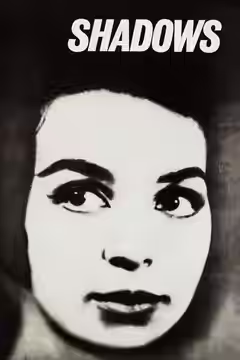
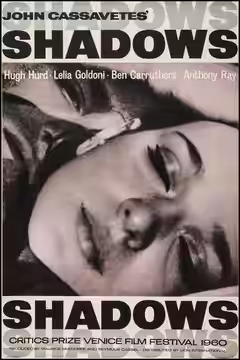
John Cassavetes’s loose, intimate drama rewards patience with funny, affecting performances. The wandering pace is a real limitation, but Shadows is worth an evening for the people, even when the story stalls.
John Cassavetes gives the actors in Shadows time to find their way through an exchange, and that patience mostly pays off. We recommend this loose, intimate drama for its performances, with a warning that its wandering pace can become a trial. The film asks us to take an interest in people before it offers the reassurance of a firm direction. When the conversation catches, that seems a reasonable request.
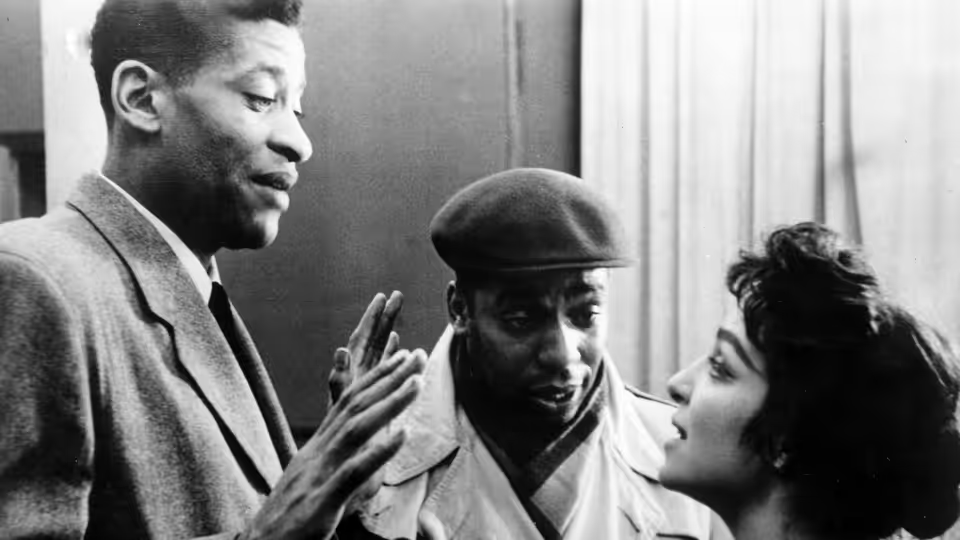
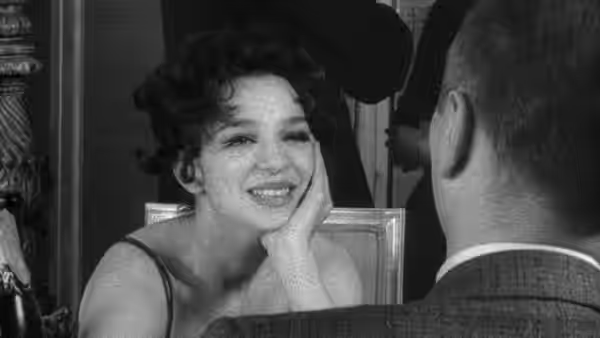
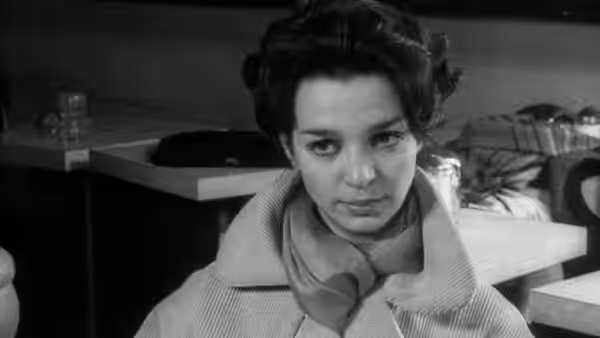
Ben Carruthers as Ben, Lelia Goldoni as Lelia and Hugh Hurd as Hugh make the lack of polish feel worthwhile. Their acting permits uncertainty without constantly underlining it for us, and the humour benefits from the same restraint. We were touched by that willingness to seem awkward: the performances leave room for feelings that have not yet become easy to explain. A smoother delivery would have made these people simpler, and considerably less interesting to spend time with.
John Cassavetes’s direction is sensitive to the point at which an exchange can become funny or uncomfortable without anybody quite intending it. The dialogue has bite, but the film does not depend on everyone having a well-prepared answer. That helps its intimacy. Its looseness is less rewarding when an exchange has exhausted our interest and the actors still seem to be searching for a reason to continue.
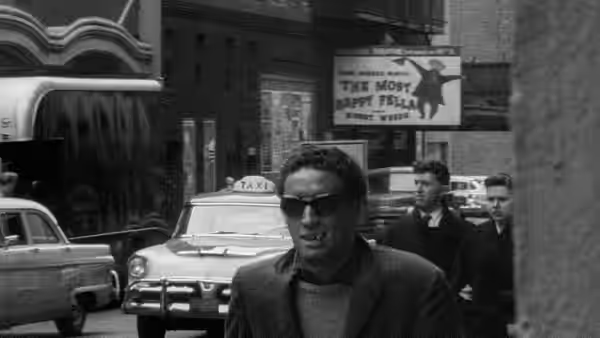
Erich Kollmar’s cinematography suits this unvarnished approach, keeping our attention with the people. The urban energy comes through without making the setting the main attraction. Production designers Randy Liles and Bob Reeh contribute to that unobtrusiveness; their work feels useful to the performances and makes no competing demand on our attention. It is a modest kind of effectiveness, and the film benefits from it.
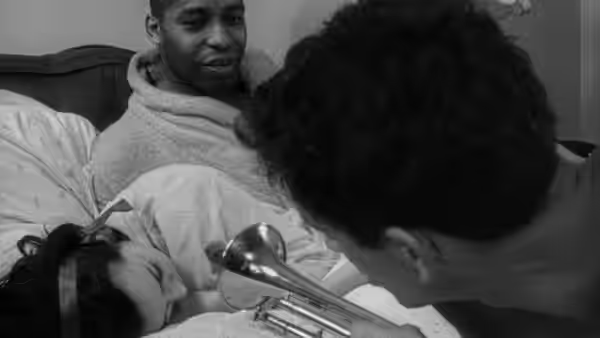
Charles Mingus’s music is a welcome part of the film’s restlessness. It fits the shifts in mood without making the drama feel more orderly than it is. This is a sympathetic musical contribution, though it cannot supply momentum whenever the dialogue slackens. We still notice the stretches in which the actors have less to work with.
Editors John Cassavetes and Maurice McEndree preserve the sense that an exchange is being discovered as it happens. Their tolerance for unevenness gives the good passages room to develop, but it also makes the less engaging ones harder to excuse. The recurring fault is a reluctance to move on. At 87 minutes, the film has little room for stretches that merely repeat an effect it has already achieved.
For a drama built around conversation, these are significant limitations, and a tighter cut would not necessarily have damaged the actors’ freedom. Still, the funny and affecting passages provide enough reason to accept a few that drift. The film lets us watch behaviour without rushing to explain what every hesitation means, which is an appealing quality in an intimate drama. Choose it for the performances, and allow for conversations that run longer than they need to.