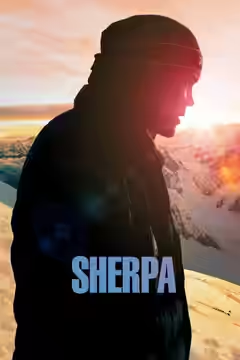
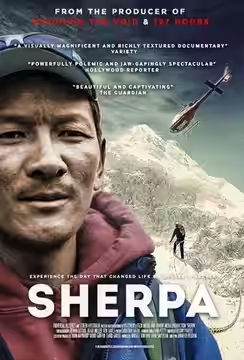
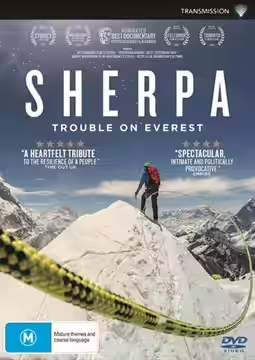
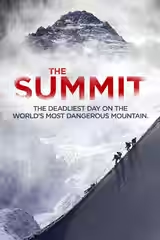
Jennifer Peedom went to Everest to film a climbing season from the Sherpas’ side of the rope and came back with a film about a disaster. It is clear, angry and finely shot, and a little too easy on itself where the paying climbers are concerned.
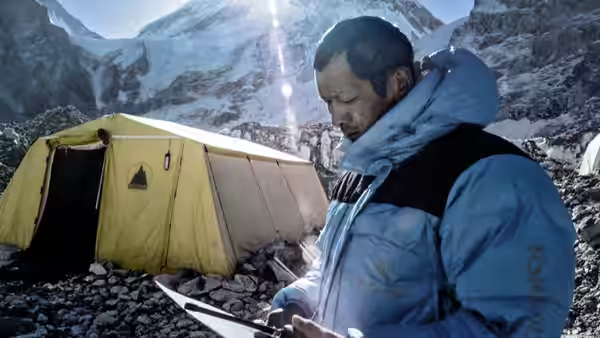
Jennifer Peedom went to Everest in the spring of 2014 to make a film about work. Her subject was Phurba Tashi, who has been to the summit twenty-one times and leads the Sherpa team for Russell Brice, the New Zealander whose company guides paying clients up the mountain. The idea was to show what a season looks like from the end of the rope that does the carrying. Then, on 18 April, a block of ice fell into the Khumbu Icefall and killed sixteen men, and Peedom found herself holding a camera at the centre of the worst thing that had happened on the mountain in living memory. Sherpa is the most useful film about Everest we have seen, and the first that is not about getting to the top.
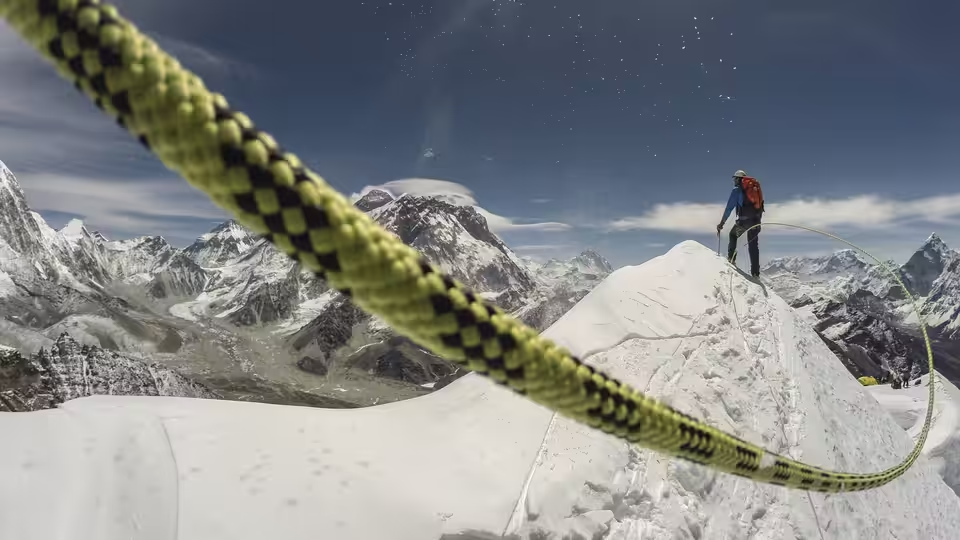
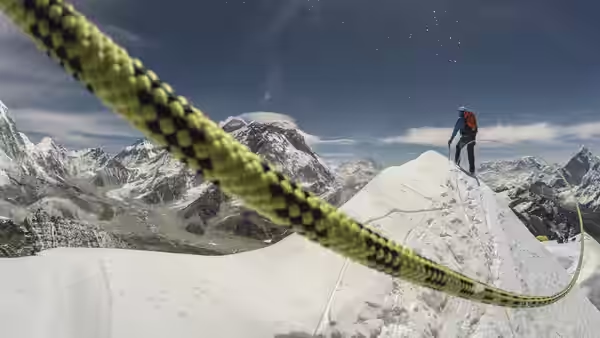
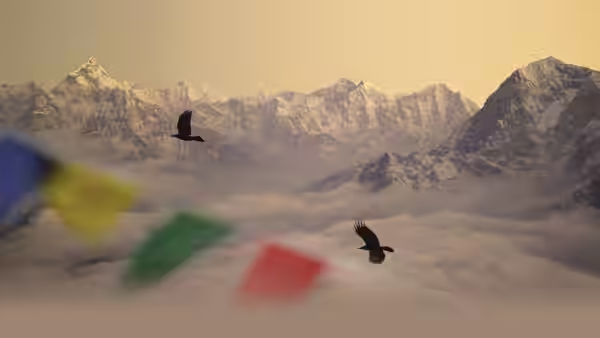
The three cinematographers, Hugh Miller, Renan Öztürk and Ken Sauls, shoot the mountain the way the men who work on it see it. There are time-lapses of base camp at night, the tents glowing orange under a sky full of stars, and before dawn a line of headlamps crawling up through the icefall. There are the ladders: lengths of aluminium lashed end to end across a crevasse, and a man in crampons walking over them with a load on his back, the blue drop beneath his boots in frame the whole time. Clients cross this a few times in a season; the Sherpas cross it over and over, fixing the route, hauling oxygen, hauling tents. Christian Gazal cuts these passages slowly and lets them sit, so that by the time anything goes wrong we understand exactly what the icefall is and who spends their mornings in it.
When it does go wrong, the film goes quiet. There is radio chatter, Brice’s voice trying to count his people, and then helicopters, and then bodies on long lines beneath the helicopters, swinging over the tents on their way down. We were horrified, and what did it was how still the camera held. Nobody runs towards anything. Later, in a meeting, one of the clients asks Brice whether the Sherpas’ “owners” can be talked to, and we felt a clean, cold anger we had not expected a documentary to give us. The film does not comment on the line. It does not have to.
Brice gets a fair hearing, which is to the film’s credit. He has built a business on these men and he plainly cares about them, and he plainly does not understand what they are asking for when they start to ask for it. Peedom gives him time to be reasonable, and to be frightened for his livelihood, and to be wrong. Tim Medvetz, one of his clients, is allowed the same courtesy. The film is on the Sherpas’ side, and it says so, but it does not pretend the other side is made of villains.
It is, though, a little pleased with itself about the Westerners. When a client says something foolish Gazal cuts to a reaction, and we felt the editing nudging us. The opening history lesson, which reaches back to Tenzing Norgay and the 1953 ascent and the long habit of Western climbers taking the credit, is rushed through in a few minutes and deserved more. Pasang Tenzing Sherpa, who seems the most articulate man at base camp, gets less screen time than he earns. And in the second half, as the season turns into a dispute between the Sherpas, the expedition companies and the Nepalese government, the film loses a little of its clarity about who is deciding what, and when.
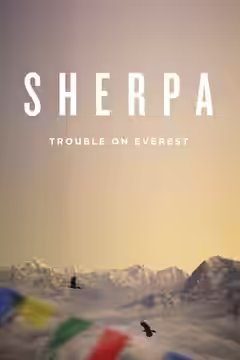
Mountain films are usually about one person’s will: a climber, a summit, a question of whether he will make it. This one is about the people hired to make that will possible, and about what they are paid for the risk, and what their families think of it. Phurba’s wife and children are in the film, and they do not want him on the mountain, and the camera does not argue with them. The tagline on the poster is “Some live to climb. They climb to live.” It is the rare tagline that is also the argument.
See it before any other Everest film, and preferably before deciding to go there yourself. It is 96 minutes, certificate 15, and the ladders will stay with you.