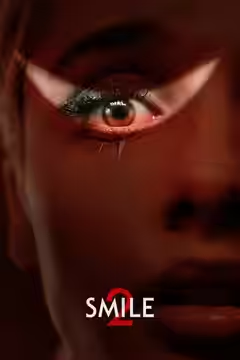
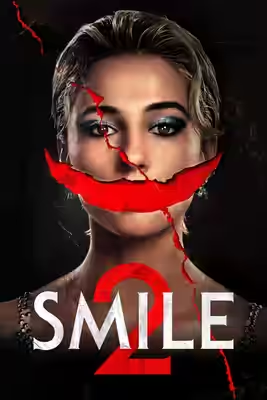
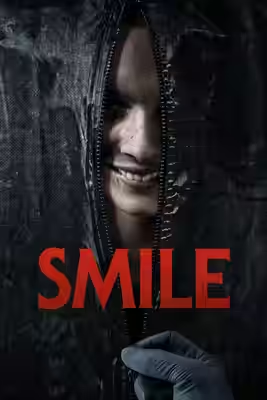
Parker Finn’s sequel moves the grinning curse from a psychiatrist’s office to a pop star’s comeback tour, and Naomi Scott gives it more than it deserves. It is loud, long and frightening in bursts, and it plays the same trick until we stopped flinching.
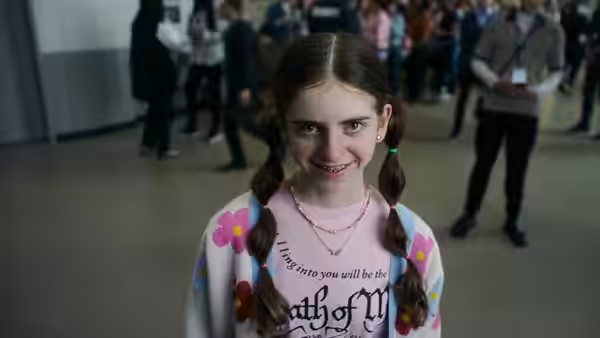
Parker Finn’s first Smile (2022) sent a psychiatrist to watch a patient die grinning, then let the grin follow her home. The sequel keeps the curse and changes the victim. Skye Riley (Naomi Scott) is a pop star days from a comeback tour, sober since the car crash a year ago that killed her boyfriend, and managed by her own mother. Finn, who wrote it as well as directed, has noticed that a woman paid to smile for a living, and photographed every time she fails to, is the ideal host for a thing that lives in smiles. It is a good idea. The film runs 127 minutes and opens with a hand-over from the first one, Kyle Gallner’s Joel returning briefly to carry the curse across.
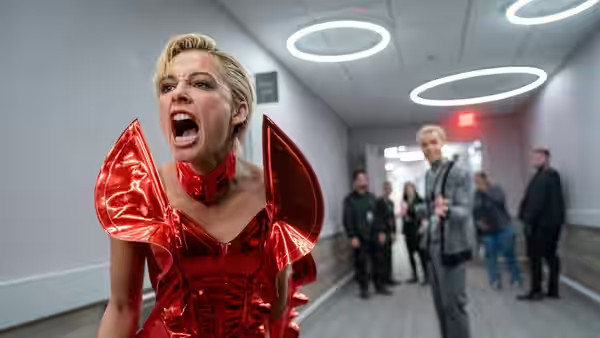
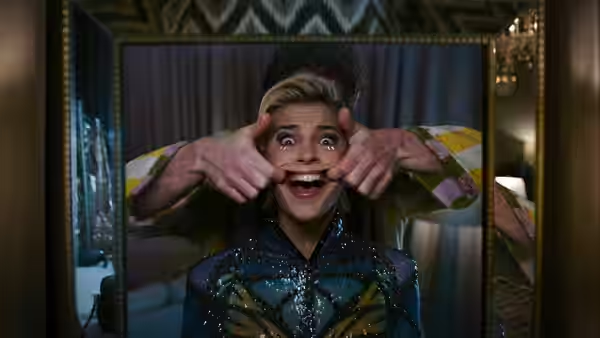
Scott is the reason to see it. She sings the songs, dances the routines and plays a woman whose every hour has been booked by someone else, so that when the visions begin she has nowhere private to fall apart. Her Skye is brittle, rude and often unpleasant, and the film lets her be. On a chat show, asked by Drew Barrymore about the crash, she gives an answer that has plainly been rehearsed a hundred times, and Scott lets us count them. Later, alone, she screams, and we believed every second of it.
Charlie Sarroff shoots a good deal of the film upside down, sliding the camera across ceilings and hanging the city over Skye’s head, and the first time he does it we felt the floor go. He does it at least five times. Lester Cohen builds her flat as a white glass box high above the street, every surface reflecting her, so there is usually a second Skye in the frame doing something the first one is not. Cristóbal Tapia de Veer’s score does what his television music does: voices hiccup and yelp, a bass note buckles under them, and the whole thing sounds as if it is laughing at her, and it is mixed loud. Alexis Forte puts her in silver on stage and grey hoodies off it.
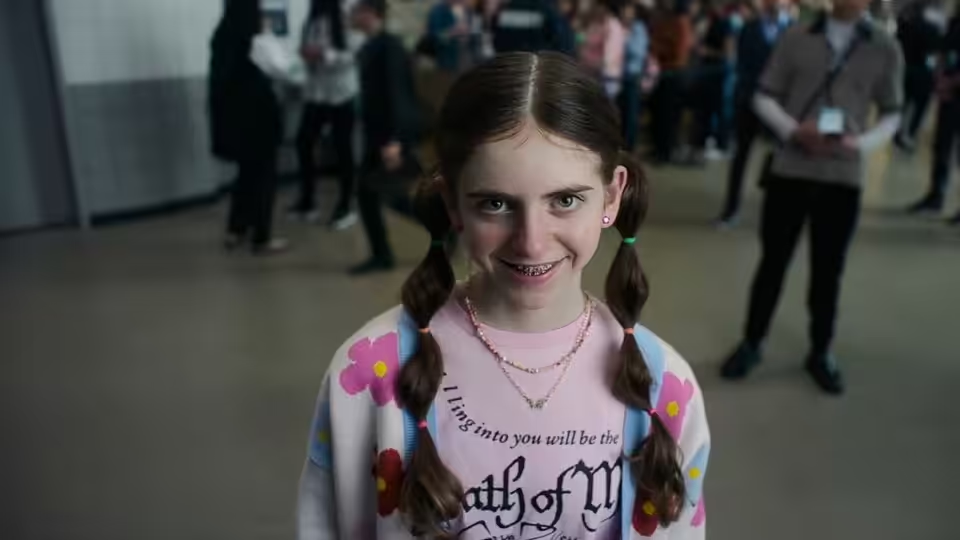
The best sequence is a single long take in that flat. Skye’s backup dancers appear one by one out of the dark, in costume, and come towards her in formation, moving the way dancers move but slightly wrong, and Sarroff’s camera backs away with her. Nobody shouts. Nothing jumps. We were properly frightened, the good kind, the kind where you notice your own hand on the armrest. The shot runs unbroken for what felt like two minutes before anything touches her.
He does not trust it often. Finn’s other trick is the fake-out: a face fills the frame, the score bangs, Skye wakes up, and it was a dream, or a vision. Elliot Greenberg cuts to these on a metronome. The third time we saw it coming; by the tenth we were counting rather than watching, and around the ninety-minute mark we noticed we had stopped flinching and started checking the time. That made us cross, because the first hour had earned better. The shape of the story is the first film’s too, down to the man in a dim room (Peter Jacobson) who has studied the thing and explains its rules and a plan for beating it. The rules are the same as last time, and so is most of the plan.
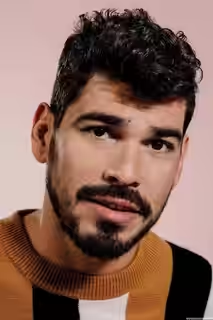
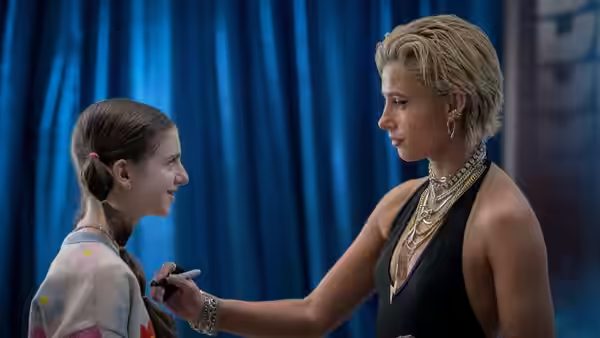
Rosemarie DeWitt plays Elizabeth, the mother who is also the manager, and there is a film in that relationship which the script keeps glancing at and not making: a woman who nearly lost her daughter to pills and now schedules her like product. Dylan Gelula, as the old friend Skye pushed away, gives the film its only warmth and gets about three scenes to do it in. Raúl Castillo and Miles Gutierrez-Riley hover at the edges with phones. Barrymore plays herself and is good at it.
The first Smile was small and hit hard. This one is large and hits often, which is not the same. See it with company and, at home, with the volume down, for Scott, for the dancers and for a score that will have you looking over your shoulder. It carries an 18 certificate and uses it.