Seth MacFarlane’s first film is a one-joke comedy, and the joke is a good one: the teddy bear swears, and Mark Wahlberg takes it entirely in his stride. It is often funny for an hour and has no idea how to end.
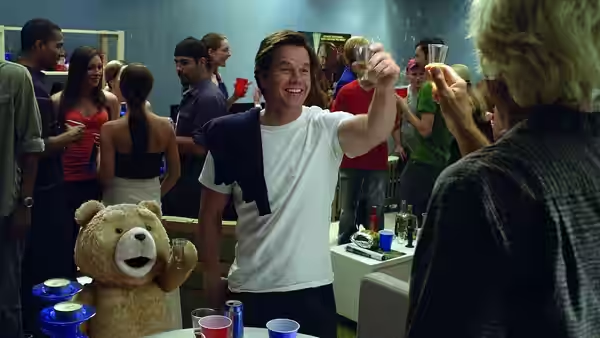
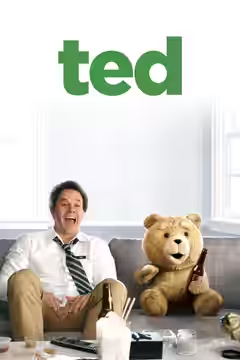
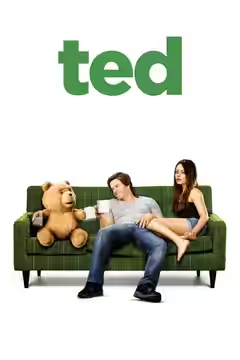
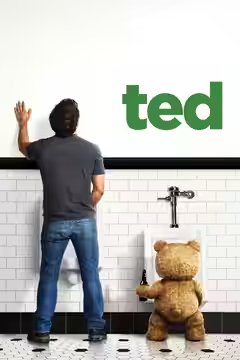
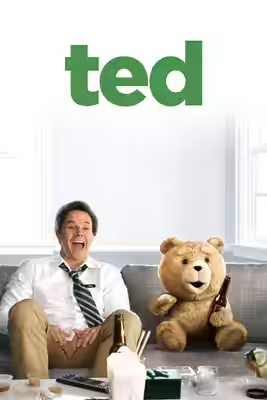
Seth MacFarlane’s first film as a director has a premise you could put on a beer mat: the teddy bear came to life, and he grew up into a stoner. John Bennett (Mark Wahlberg) is a grown man working a car rental desk, still sharing a sofa and a bong with Ted (voiced by MacFarlane), while his girlfriend Lori (Mila Kunis) waits for him to become someone she could marry. That is the whole idea, and MacFarlane, writing with Alec Sulkin and Wellesley Wild, knows it. Ted is a sitcom stretched to 107 minutes, and for about seventy of them it is a good one.
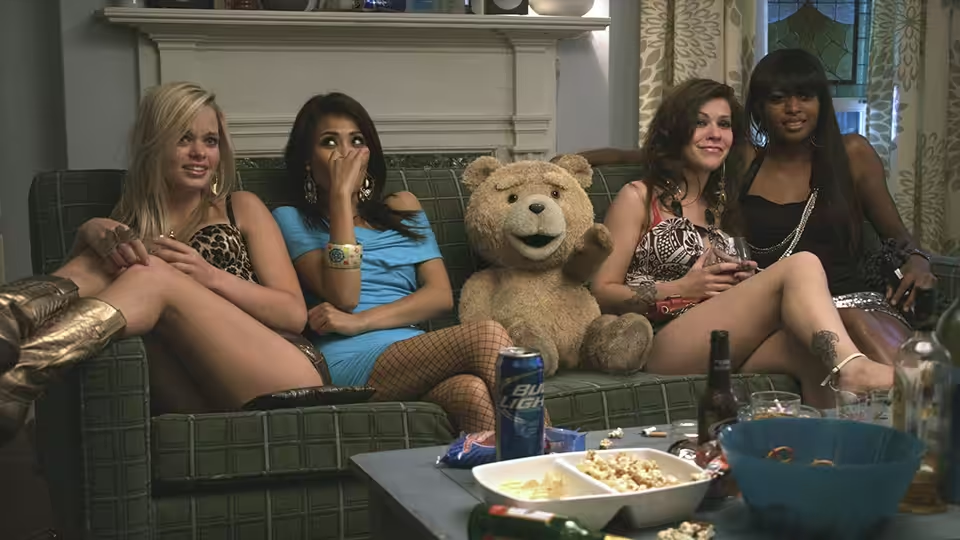
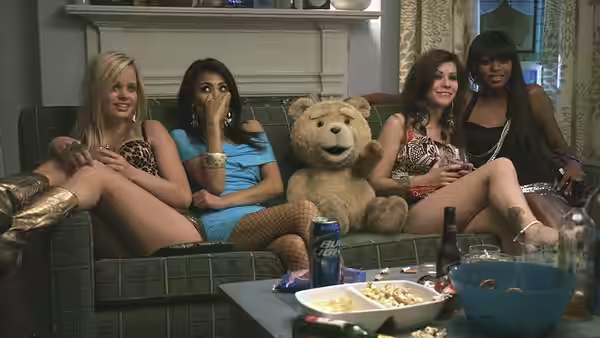
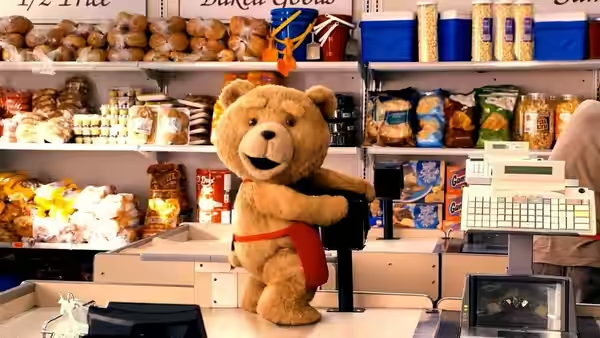
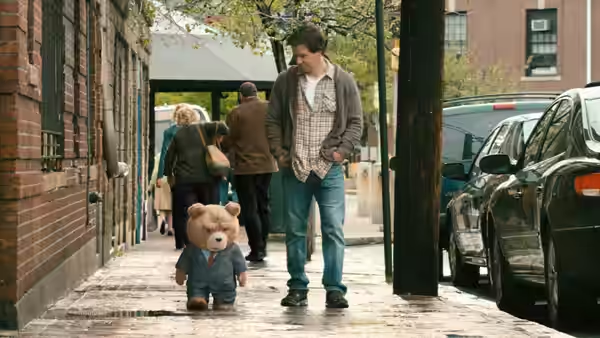
The bear works. He is scuffed and faintly grubby, the fur worn thin at the paws, and he sits on furniture with the weight of something that has been sat on. When Wahlberg wrestles him across a hotel room, hurling him at the walls and being beaten with the furniture in return, the two bodies connect in a way that fooled us completely, and we laughed harder than we have at any fight in a comedy for some time. Part of that is the effects. Most of it is Wahlberg, who plays a man being thrashed by a toy with total conviction and no wink to the camera.
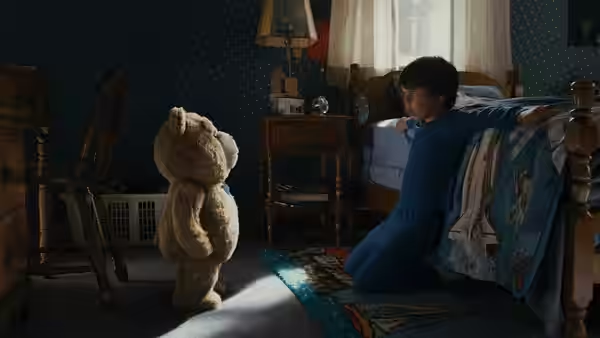
MacFarlane voices Ted in a Boston growl, and the best lines are the throwaway ones: a run of guesses at a woman’s name that gets worse with every attempt, a bedtime song about thunder that the two still sing as adults. We laughed, and then felt slightly ashamed of ourselves, which is the effect the film is after and gets. Patrick Stewart narrates the prologue in the voice of a man reading a Christmas story to children, and the gap between the voice and what it is saying is the film’s best joke, done once, early.
It does not look like a film. Michael Barrett lights every room the same, bright and even and shadowless, so that a flat in Boston and a hotel suite and a car park all seem to share one ceiling. Stephen J. Lineweaver’s flat for John and Ted is a set you could walk onto in a studio, with a sofa facing the camera. Jeff Freeman cuts away to flashbacks and fantasy inserts the way MacFarlane’s cartoons do, and on a cinema screen the habit looks nervous, as if the scene in front of us could not be trusted to hold. Walter Murphy’s score reaches for warm strings whenever John and Ted have a moment, and we noticed the strings before we noticed the moment.
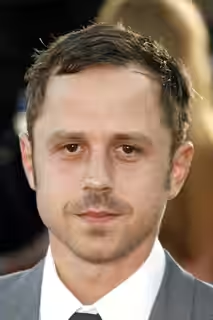
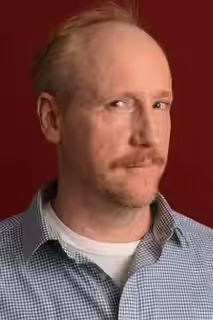
Kunis is given a job, a complaint and nothing else; she spends the film being reasonable at men who are not listening. Joel McHale’s Rex is slick and gets two good scenes. Giovanni Ribisi, as Donny, a father who wants to buy Ted for his son and dances alone to a pop video on his television, is the one supporting player who is properly unsettling, and the film does not have enough for him either. Norah Jones turns up as herself. Patrick Warburton and Matt Walsh share a workplace and a handful of lines between them.
Then the last half hour arrives and the film stops being a comedy and becomes a chase. We will not describe it. We can say that it is the part of a film like this that exists because somebody insisted on a plot, and that it contains no joke the first hour would have kept. We were bored, which is a strange thing to be at a film that forty minutes earlier had us helpless.
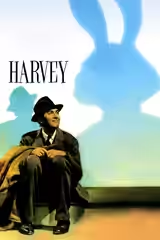
Against the standard of its own first hour it is a letdown. Against the big-screen comedies around it, it is funnier than most and more sincere than many, and the sincerity is the surprise: the film means it about John and the bear, even when it cannot find a way to show it. Harvey (1950) got a man and his invisible friend to the end without a car chase, which suggests it can be done.
See it with someone who will laugh at the bear and forgive the rest. It carries a 15, and earns it inside the first ten minutes.