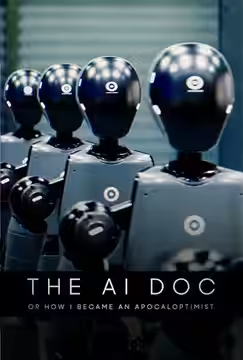
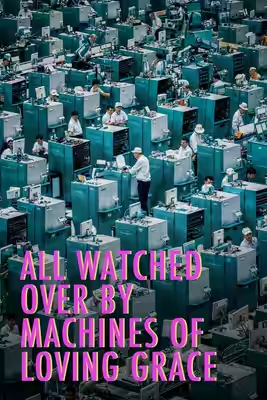
Daniel Roher has the access and the good faith, and his tour of the people building, studying and fearing artificial intelligence is never dull. It is also never quite an argument, and his own worry is asked to do work the interviews never do.
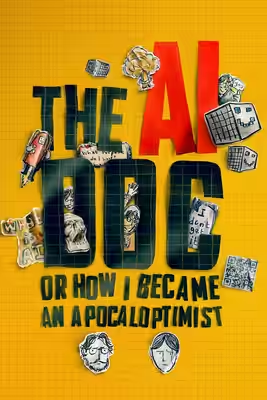
Daniel Roher made Navalny, a film about one man and one enemy. Here he takes on a subject nobody can point a camera at. He is about to become a father, he tells us early and often, and he is frightened of what artificial intelligence will do to the world his child inherits, so he and co-director Charlie Tyrell spend 105 minutes asking the people who would know. The result is an honest, well-connected primer that is more tour than argument. It is worth an evening if you know little about the subject. If you read a newspaper, you will be ahead of it for long stretches.
The access is the film’s great asset. Sam Altman sits down for it. So do Dario and Daniela Amodei and Yoshua Bengio. Peter Diamandis, Liv Boeree and Ajeya Cotra take their turns. The stretch with the company chiefs is the best thing in the film, and it is where we felt something we had not expected. It was not fear of any particular prediction. It was the calm. These are people who say, more or less on the record, that the thing they are building could be a catastrophe, and who then explain why they are building it faster. Roher lets that sit, and for a few minutes the film is properly unsettling.
Emily M. Bender, Timnit Gebru and Karen Hao are the film’s dissenters, and its most bracing company. Their case is that the machines are less the problem than the companies, the money and the stories told to raise it. They have the sharpest lines in the film. The film treats them as one more colour on the wheel, given their turn between a doomer and an optimist, when the honest response would have been to stop and let them argue with Altman. They never share a frame.
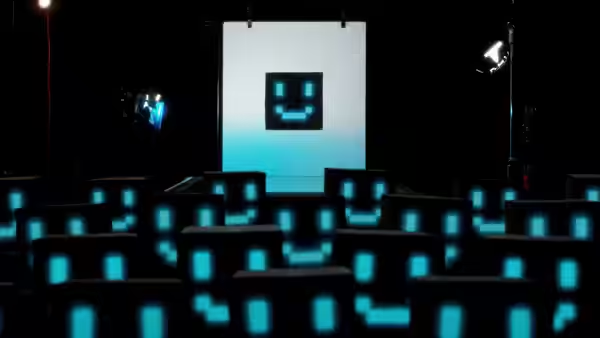
Lowell A. Meyer and Jenni Morello shoot the interviews cleanly and then the film buries them. Daysha Broadway and Davis Coombe cut fast, with graphics, archive and animation layered over nearly everyone who speaks, and Matt Robertson and Marius de Vries keep a pulse going under it all so that no thought is allowed to land in silence. For the first hour this reads as energy. After that it reads as nerves, a film worried that we might drift off if a clever person is left alone on screen for more than twenty seconds. A documentary with a story credit, for Josef Beeby, tells you how firmly the material has been shaped.
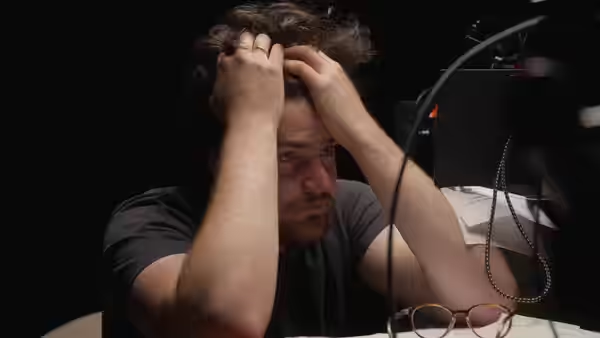
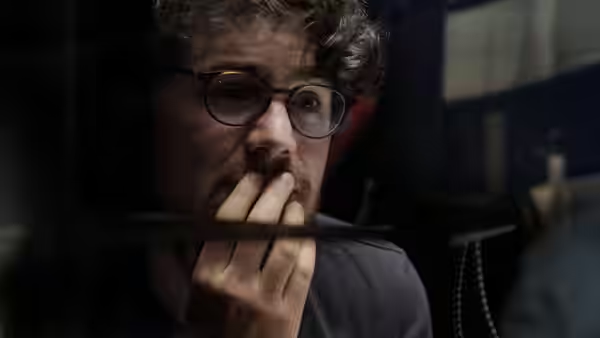
Then there is Roher himself. He is on camera as our surrogate, the ordinary anxious man asking the experts, and the device is honest as far as it goes. The trouble is that his worry is offered as if it settled something. The film returns to the coming baby whenever the argument gets hard, and asks his feelings to stand in for a conclusion nobody on screen has supplied. The tagline says the future is not automatic. The film never gets round to saying who, specifically, should do what.
We were never bored. We were, by the end, a little impatient with a film that had put a dozen serious people in front of us and then declined to let any of them win. Navalny worked because Roher knew what he thought and had the nerve to show it. This one interviews everyone, agrees with each of them for about four minutes, and leaves the arguing to us. See it with someone who has not been paying attention; they will come out better informed. Then have the argument the film would not.