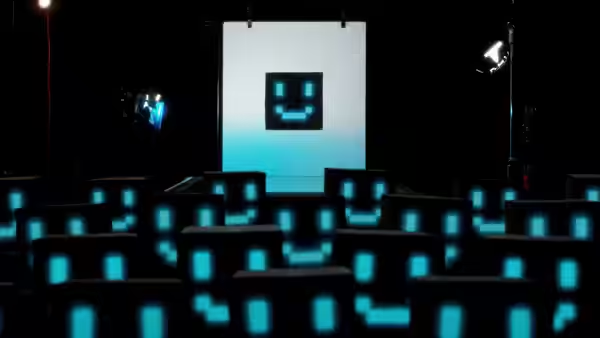
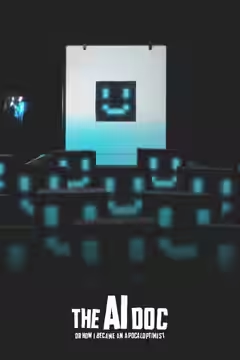
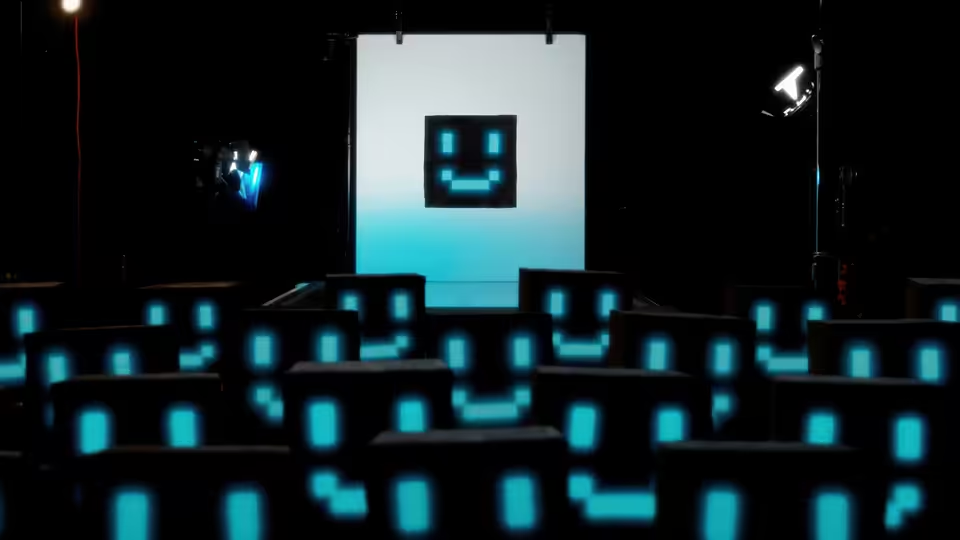
A dark auditorium with rows of glowing blue pixel smiley faces facing a large screen
Film review

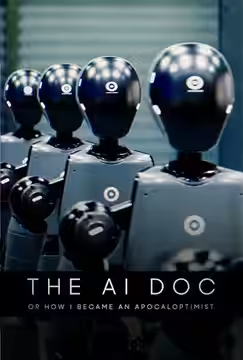
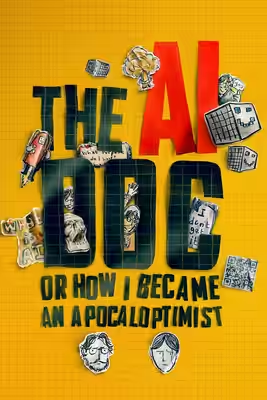
The AI Doc: Or How I Became an Apocaloptimist

2026 · Directed by Daniel Roher, Charlie Tyrell · 1h 45m

In a sentenceEveryone building the thing agrees it might end the world, and the director keeps checking how he feels about it

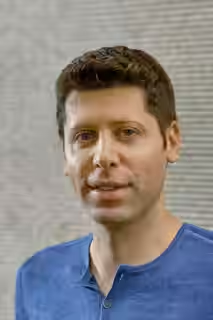
Daniel Roher, a documentary maker expecting a child, wants to know what kind of world it will grow up in and whether artificial intelligence will wreck it. He puts himself on camera and goes to ask. Sam Altman and Dario and Daniela Amodei talk about the systems they are building and what could go wrong with them. Yoshua Bengio, Liv Boeree and Ajeya Cotra set out how worried to be and why. Peter Diamandis has his say. Emily M. Bender, Timnit Gebru and Karen Hao argue that the more pressing danger is the companies and the hype. Roher carries his questions from one interview to the next, with the baby’s arrival as his deadline.

Plays from YouTube when you press play; nothing loads from them until then.

Fi1m review

Daniel Roher has the access and the good faith, and his tour of the people building, studying and fearing artificial intelligence is never dull. It is also never quite an argument, and his own worry is asked to do work the interviews never do.

Daniel Roher made Navalny, a film about one man and one enemy. Here he takes on a subject nobody can point a camera at. He is about to become a father, he tells us early and often, and he is frightened of what artificial intelligence will do to the world his child inherits, so he and co-director Charlie Tyrell spend 105 minutes asking the people who would know. The result is an honest, well-connected primer that is more tour than argument. It is worth an evening if you know little about the subject. If you read a newspaper, you will be ahead of it for long stretches.

The access is the film’s great asset. Sam Altman sits down for it. So do Dario and Daniela Amodei and Yoshua Bengio. Peter Diamandis, Liv Boeree and Ajeya Cotra take their turns. The stretch with the company chiefs is the best thing in the film, and it is where we felt something we had not expected. It was not fear of any particular prediction. It was the calm. These are people who say, more or less on the record, that the thing they are building could be a catastrophe, and who then explain why they are building it faster. Roher lets that sit, and for a few minutes the film is properly unsettling.

Emily M. Bender, Timnit Gebru and Karen Hao are the film’s dissenters, and its most bracing company. Their case is that the machines are less the problem than the companies, the money and the stories told to raise it. They have the sharpest lines in the film. The film treats them as one more colour on the wheel, given their turn between a doomer and an optimist, when the honest response would have been to stop and let them argue with Altman. They never share a frame.

Lowell A. Meyer and Jenni Morello shoot the interviews cleanly and then the film buries them. Daysha Broadway and Davis Coombe cut fast, with graphics, archive and animation layered over nearly everyone who speaks, and Matt Robertson and Marius de Vries keep a pulse going under it all so that no thought is allowed to land in silence. For the first hour this reads as energy. After that it reads as nerves, a film worried that we might drift off if a clever person is left alone on screen for more than twenty seconds. A documentary with a story credit, for Josef Beeby, tells you how firmly the material has been shaped.

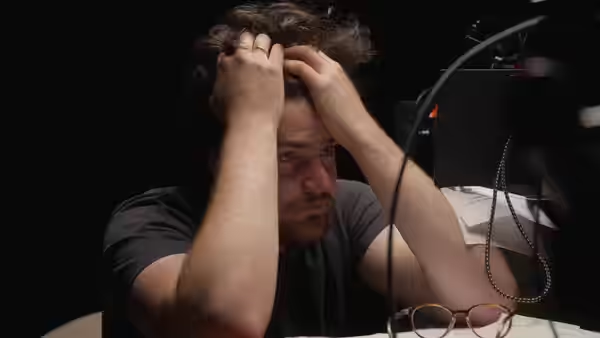
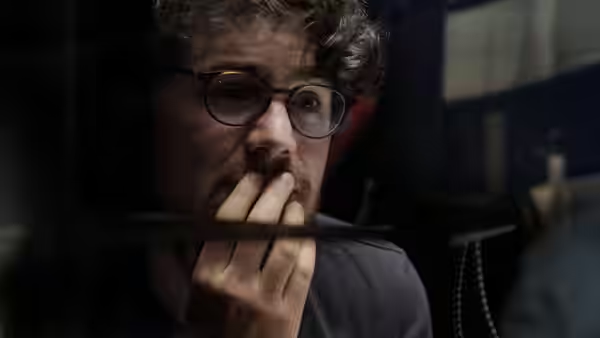
Then there is Roher himself. He is on camera as our surrogate, the ordinary anxious man asking the experts, and the device is honest as far as it goes. The trouble is that his worry is offered as if it settled something. The film returns to the coming baby whenever the argument gets hard, and asks his feelings to stand in for a conclusion nobody on screen has supplied. The tagline says the future is not automatic. The film never gets round to saying who, specifically, should do what.

We were never bored. We were, by the end, a little impatient with a film that had put a dozen serious people in front of us and then declined to let any of them win. Navalny worked because Roher knew what he thought and had the nerve to show it. This one interviews everyone, agrees with each of them for about four minutes, and leaves the arguing to us. See it with someone who has not been paying attention; they will come out better informed. Then have the argument the film would not.

Critical consensus AI synthesised

57
Positive
5
Mixed
1
Negative
3
IndieWire
27 January 2026 · festival review · Christian Zilko
70*

The review highlights Roher's good-faith effort to grapple with nuance on AI's vast implications rather than simplifying the debate. It positions the film as an admirable, timely attempt to engage seriously with the topic despite its challenges.

Read the full review →
The Guardian
27 January 2026 · festival review
70*

The review presents the documentary as a personal exploration of AI anxieties through interviews with experts across doomer, optimist and critical perspectives. It highlights the film's balanced 'apocaloptimist' stance and call for international regulation and transparency.

Read the full review →
The Hollywood Reporter
28 January 2026 · festival review · Caryn James
70*

The critic praises the film's personal, first-person structure with Roher as surrogate and its dynamic, kaleidoscopic visuals that keep the talking-heads format lively and engaging. She notes the conclusion feels somewhat willful, driven more by the director's desire for hope than by the evidence presented.

Read the full review →
The New York Times
26 March 2026 · Alissa Wilkinson
50*

The critic finds the film tries to cover too much, ending up more confusing than clarifying, though parts are fascinating, particularly the interviews with AI CEOs.

Read the full review →
Los Angeles Times
27 March 2026 · Robert Abele
30*

The review criticizes the film as a well-intentioned but aggravating soup of information that lacks nuance and treats viewers like children with its simplistic approach and flashy style.

Read the full review →
Screen Daily
28 January 2026 · festival review
30*

The critic finds the documentary toothless and lacking real perspective or inquisitiveness, with inconclusive and unpersuasive results from its interviews with AI experts. Roher's personal framing as an expectant father fails to deliver meaningful balance between gloom and hope.

Read the full review →

Straight answers AI written, from our review

Is The AI Doc: Or How I Became an Apocaloptimist worth watching?
The AI Doc: Or How I Became an Apocaloptimist is worth watching if you know little about artificial intelligence and want a well-connected primer, and we scored it 56. Daniel Roher gets Sam Altman, the Amodeis and their sharpest critics on camera, but never lets them argue, and his own worry about his coming child is asked to stand in for a conclusion. Newspaper readers will be ahead of it for long stretches.
How long is The AI Doc: Or How I Became an Apocaloptimist, and what is it rated?
The AI Doc: Or How I Became an Apocaloptimist runs 1h 45m. It is a documentary film.
Where can I watch The AI Doc: Or How I Became an Apocaloptimist in Ukraine?
The AI Doc: Or How I Became an Apocaloptimist is streaming on Netflix in Ukraine, and it is also available to rent from Apple TV from ₴4.99. Availability is checked daily; the links above go straight to each service.

Cast

If you liked this, try…

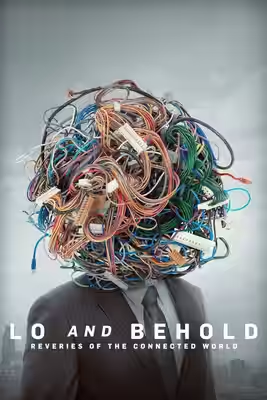
  1. Lo and Behold, Reveries of the Connected World (2016) · not reviewed yetHerzog asks the same questions of the internet and enjoys the silences Roher fears.

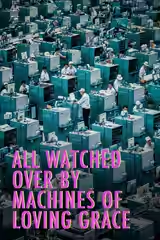
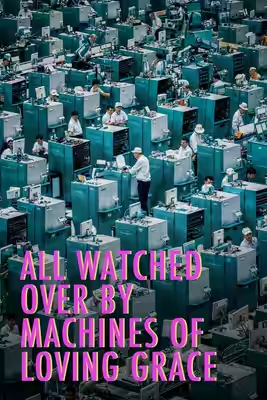
  2. All Watched Over by Machines of Loving Grace (2011) · not reviewed yetAdam Curtis on why we keep handing the world to systems; furious and funny.

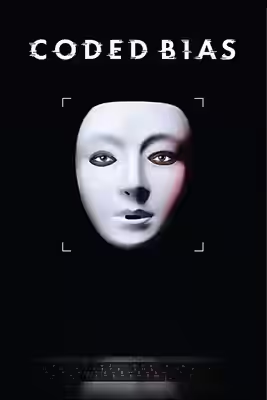
  3. Coded Bias (2020) · not reviewed yetGebru’s argument given a whole film, with faces the machines could not see.

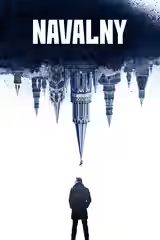
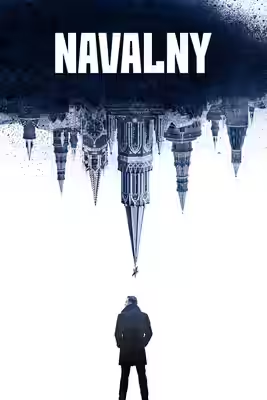
  4. Navalny (2022, Fi1m 78)Roher with one subject and a clear enemy; everything this film lacks.

  5. Colossus: The Forbin Project (1970) · not reviewed yetThe doomers’ scenario played straight, in 1970, with no animation to soften it.

Free account

Know what to watch tonight

Two lists that know where things are streaming, collections you can share, your own score beside ours, and Discover that remembers what you have seen.

  • Want to see, sorted by what is streaming now
  • Seen, with your score out of ten
  • No adverts, ever