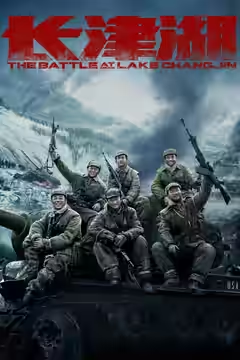
Chen Kaige, Tsui Hark and Dante Lam Chiu-yin stage forceful battles, but the patriotic insistence wears down the drama. At 178 minutes, this is a poor war film with too little interest in its soldiers as people.
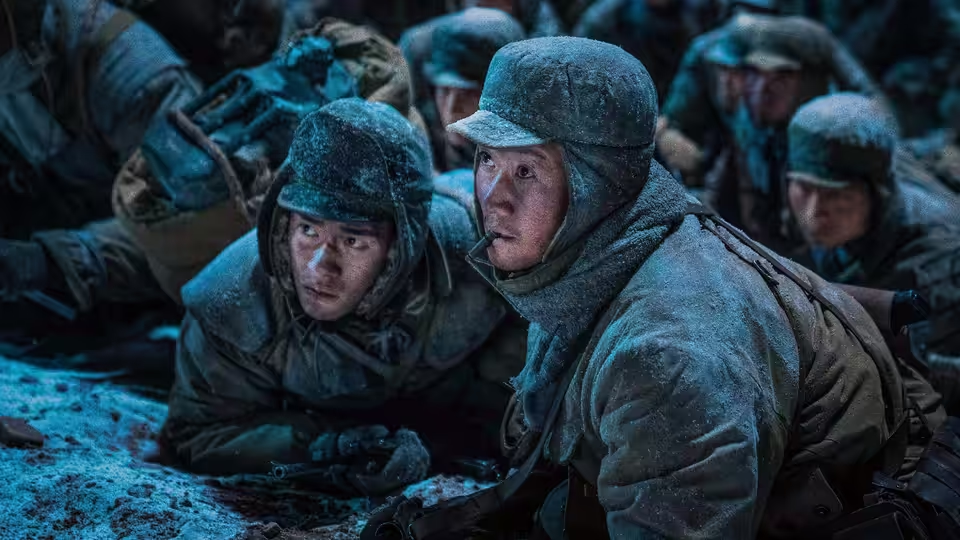
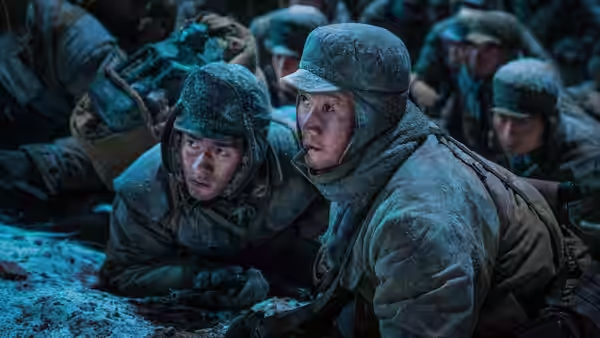
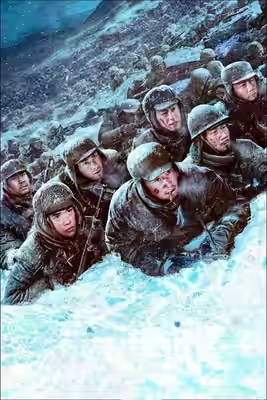
The Battle at Lake Changjin wants the size of its battles to tell us how much its soldiers deserve our gratitude. Chen Kaige, Tsui Hark and Dante Lam Chiu-yin direct, and their commitment to large-scale combat supplies the film with its strongest passages. It is a poor war drama, however, because so little of that effort goes into making the soldiers interesting. The patriotic message is clear almost to the exclusion of everything else. At 178 minutes, the shortage of dramatic interest becomes a serious test of patience.
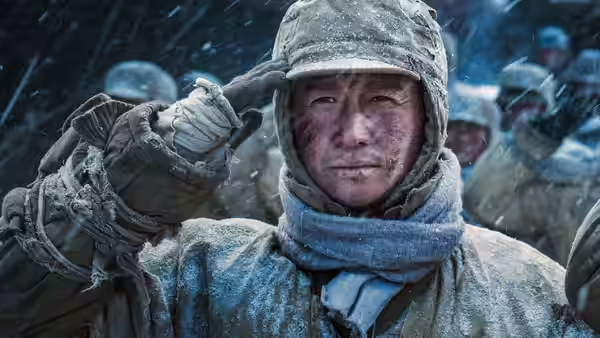
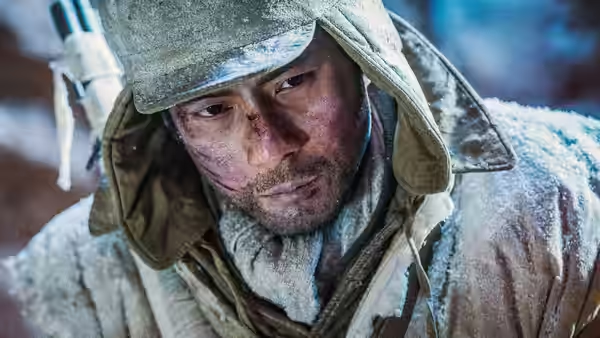
Huang Jianxin and Lan Xiaolong’s screenplay gives the cast too few opportunities to complicate that message. Wu Jing plays Wu Qianli, Jackson Yee plays Wu Wanli, and Duan Yihong plays Tan Ziwei, but the writing does little to distinguish the men beyond their participation in the fighting. We felt little for them, because their courage is insisted upon while their personalities remain thin. There is effort in the performances, and the actors deserve better material. The script keeps returning to patriotic duty when an awkward, individual response would make these people easier to care about.
Tiger Gao, Kenny Tse and Peter Pau share the cinematography credit with Horace Wong Wing-Hang, Ding Yu and Luo Pan. The battle photography conveys the scale of the fighting, and the action has enough force to hold our attention on its own. These passages give the film an excitement that the surrounding drama seldom manages. The computer-generated effects are less reliable, sometimes making the danger look unconvincing. That unevenness matters in a film which asks the physical impact of combat to provide so much of the reason to keep watching.
The editing never makes the long running time feel necessary. There is plenty of activity, but the battles do not produce enough dramatic momentum to carry us through the thinly written material between them. Elliot Leung and Wang Zhiyi supply the music, which cannot give these characters the emotional weight the screenplay has failed to establish. After a while, the film’s repeated insistence on how much we should care becomes wearying in itself. The action can still regain our attention, but it has to keep doing the work that the dialogue and performances should share.
Patriotism is hardly an unusual starting point for a war film, and taking a side need not prevent good drama. The difficulty here is the lack of room for anything that might disturb the approved view of its soldiers. Their fears and failings could have made their courage more persuasive without requiring a different allegiance. Instead, the simplistic treatment makes the film predictable even when the action is busy. There is little uncertainty about how we are supposed to regard anyone, which limits what even the more accomplished battles can achieve.
Anyone coming chiefly for the combat will find passages worth their attention, and it would be unfair to dismiss the skill involved in staging them. The film’s failings are frustrating precisely because that skill is present, alongside a cast given too little worth playing. A shorter running time would help, although it would not solve the thin characterisation or the relentless instruction in what to feel. Unless battle staging is enough to sustain an evening, we would choose something else.