Bertrand Bonello turns a Henry James novella into a three-era romance about a woman who wants to stop being afraid, and Léa Seydoux carries all of it. It is bold, handsome and too long, and the Los Angeles stretch nearly sinks it. We recommend it anyway.
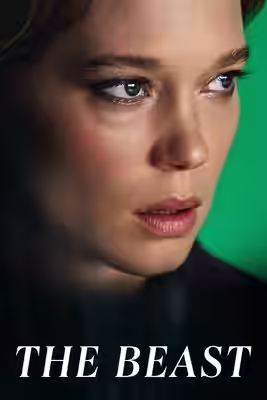
Henry James wrote a short novel about a man who waits all his life for a catastrophe and lets everything else pass while he waits. Bertrand Bonello has taken that idea, given it to a woman, and spread it across three lifetimes. Gabrielle (Léa Seydoux) is a pianist in Paris in 1910, an actress minding a house in Los Angeles in 2014, and a woman in Paris in 2044 who is offered a procedure that will clean the fear out of her DNA, and everything else with it. In each life she meets Louis (George MacKay). The Beast is bold, handsome, well acted and about half an hour too long, and we recommend it to anyone with the patience.
It opens on a green screen. Seydoux stands in a plain dress while a voice off camera tells her where the beast is, how it moves and when to scream, and she screams at nothing. Josée Deshaies holds her in a flat green space with no floor and no horizon, and the shot goes on long enough to stop being a joke and start being frightening. Gabrielle knows something terrible is coming, and so do we, and neither of us knows what it is.
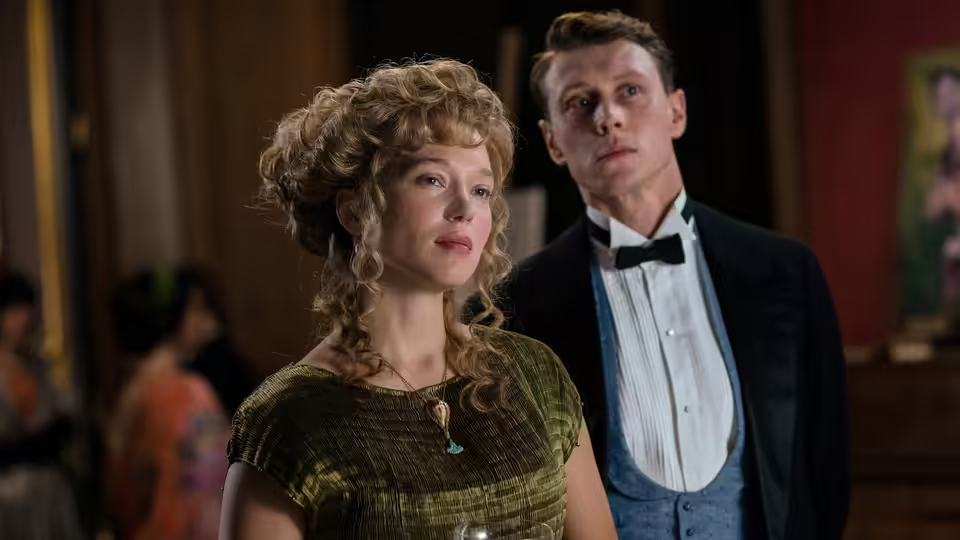
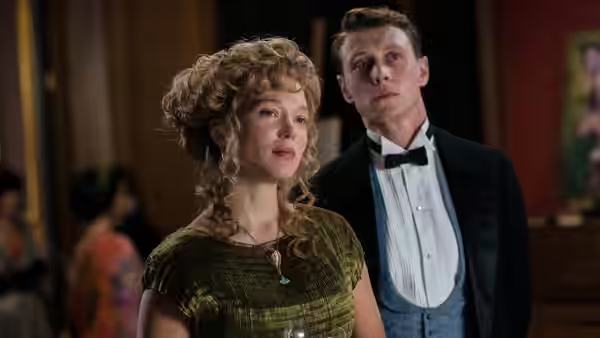
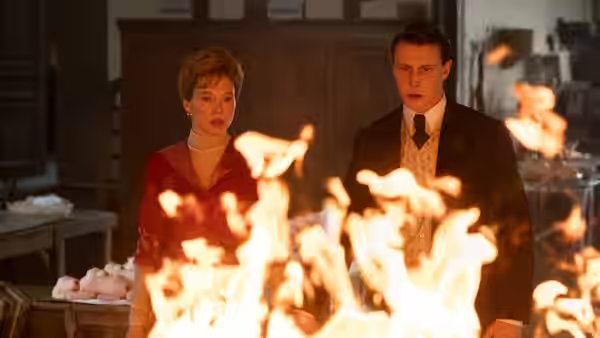
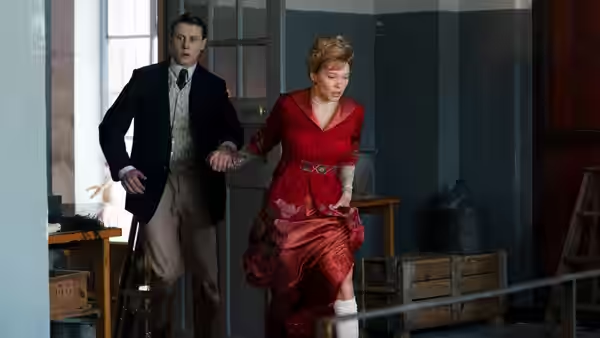
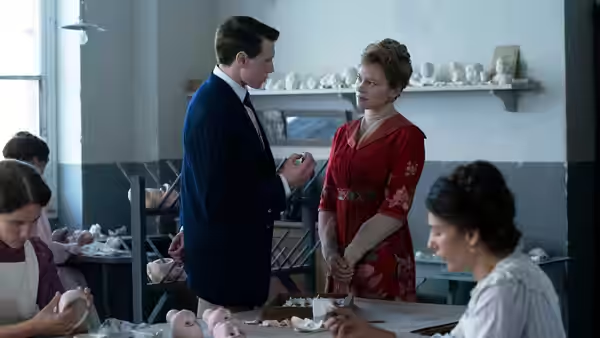
The 1910 section is the one most people will like. Gabrielle is married to Georges (Martin Scali), who makes celluloid dolls, and she meets Louis at a party where the couturier Paul Poiret (Pierre-François Garel) is showing gowns. Katia Wyszkop’s factory, with its rows of blank faces and its vats, is the best set in the film, and Pauline Jacquard puts Seydoux in dresses she seems to be carrying rather than wearing. MacKay plays Louis in French, gently, as a man who wants to be told he is needed. Seydoux plays Gabrielle as someone who would like to be in love if she could stop bracing for the blow.
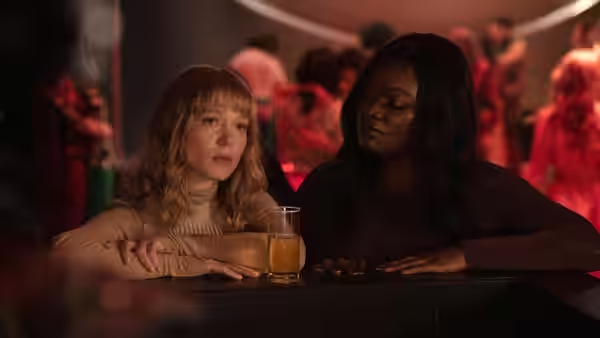
Then the film moves to Los Angeles and changes shape. Gabrielle is minding a glass house, with a friend, Dakota (Dasha Nekrasova), on the phone, and Louis is now a young man filming himself in his car, explaining what women owe him. The speeches are taken from the manifesto of a real killer, and MacKay delivers them flat and reasonable. We were frightened, more than we wanted to be: there is a long stretch of Gabrielle alone at night, with alarms and cameras and wide black windows that Deshaies refuses to light, and we noticed we had stopped breathing. The trouble is that this is a stalker thriller, and Bonello knows how those are shot, so he shoots one, and for forty minutes the film does what other films do.
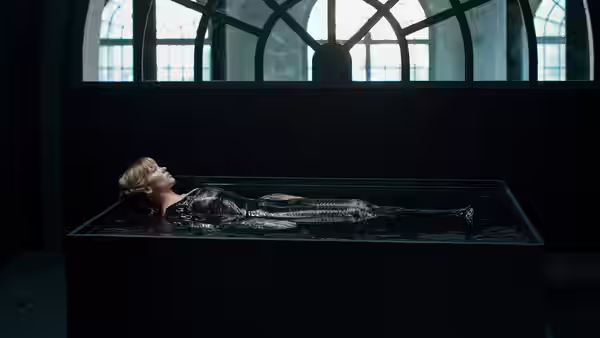
2044 is the coldest part and the truest. Paris has been handed to machines, which have decided feeling is inefficient, and Gabrielle is issued a companion doll, Poupée Kelly (Guslagie Malanda), polite, patient and impossible to like. Bonello and Anna Bonello score it with low synthesiser and long silences, and one Roy Orbison song keeps surfacing across the eras like a tune the film cannot shake off. Anita Roth’s cutting lets the periods leak into one another, so a glance in a ballroom is answered by a face in a laboratory.
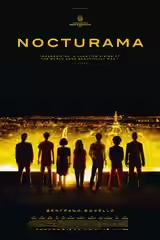
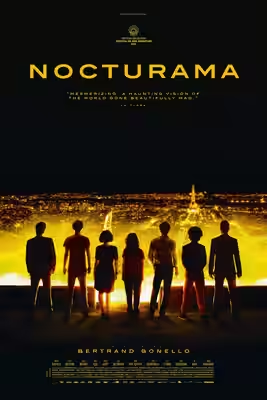
Bonello has been here before. Nocturama was about young people who could not say what they believed, and Saint Laurent was a biography that declined to explain its subject. Here he has more plot than usual and is less sure what to do with it. At 146 minutes the film could lose most of the Los Angeles middle and be stronger; most critics, who like it a little more than we do, have said as much more kindly. Nobody disputes Seydoux, who makes the same fear read differently in a corset, a swimming pool and a machine.
The last quarter of an hour pulls the three lives together; we will not describe how. It made us sit still, and the final scene is the strongest thing in the film. See it in a cinema if you can, because at home the middle hour invites the phone. And listen for the Orbison song. You will not hear it the same way afterwards.