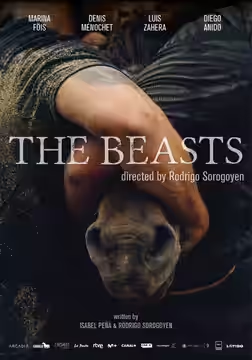
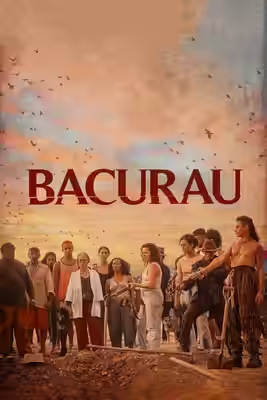
Rodrigo Sorogoyen’s feud between a French couple and the Galician brothers next door is patient, frightening and fair to both sides. It is long, and its second half asks for a different kind of attention. Give it; Marina Foïs is worth it.
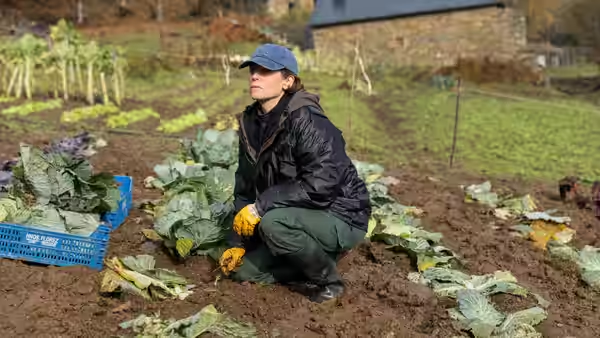
Antoine and Olga are French, in their fifties, and have moved to a hamlet in the hills of Galicia to grow vegetables and do up the ruined houses around them. Next door are the Anta brothers, Xan and Lorenzo, who have farmed the same slope all their lives and never left it. A wind-farm company has offered the village money for its land, and Antoine has voted no. The brothers wanted the money. That is the whole quarrel, and Rodrigo Sorogoyen builds 138 minutes out of it. This is a very good film, patient and frightening, and it is fair to people it would have been easier to condemn. It is also long, and it changes shape halfway through in a way that will lose some viewers.
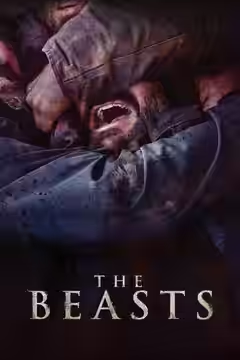
It opens with men wrestling wild horses to the ground with their bare hands, filmed close and slow by Alejandro de Pablo so that you hear the breathing before you see the fear. We flinched, and Sorogoyen means us to; the image hangs over everything that follows. De Pablo shoots the rest in wide, grey-green frames with mist sitting in the valley, and he likes to keep the camera still while people walk towards it. It is lovely country, and the film makes it look like somewhere nobody would find you.
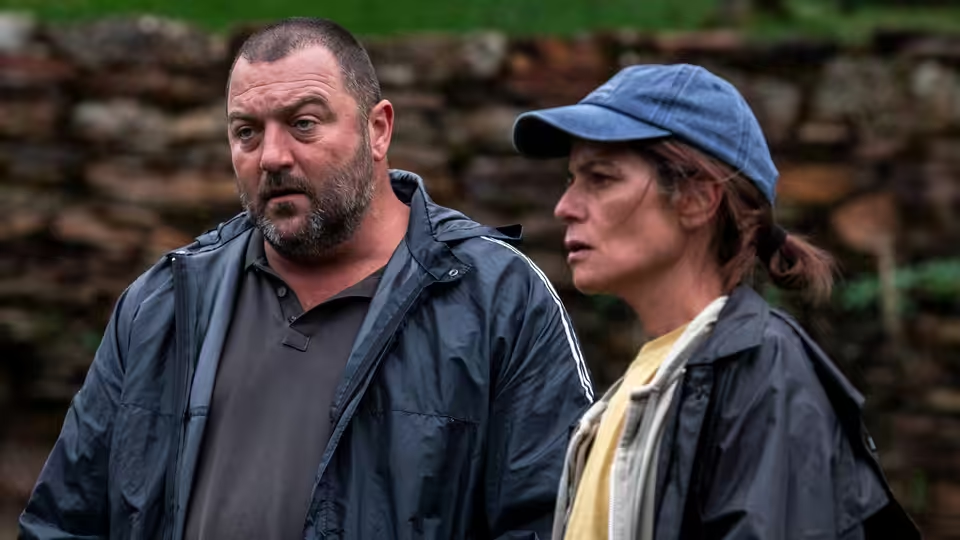
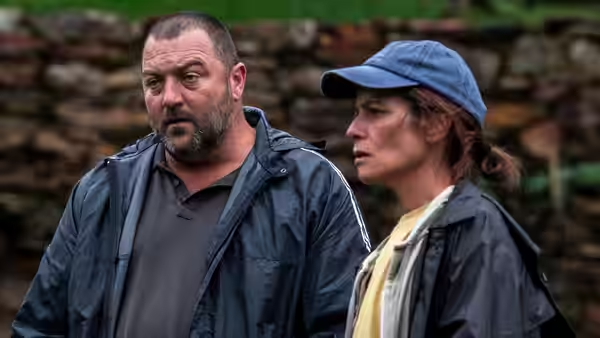
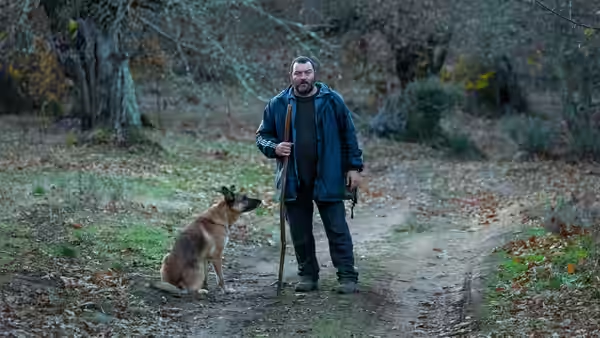
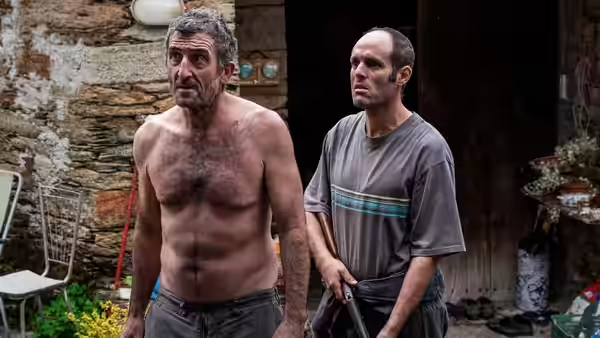
Denis Ménochet plays Antoine as a big, decent, stubborn man who thinks that being right will be enough. He films the brothers when they threaten him and walks over to have it out with them when he should not. Luis Zahera’s Xan is the best thing in the film. He is small, wiry and never stops talking, and he hates Antoine with a hatred that has had years to settle. There is a scene in the village bar, held in one long take, where Xan explains what the wind money would have meant: what his life has been, what the land is worth, what a Frenchman with a pension and a plan cannot understand about either. We caught ourselves nodding along for a minute or so. Then we remembered what he had been doing to Antoine’s well. The film had let him talk us round, and it meant to.
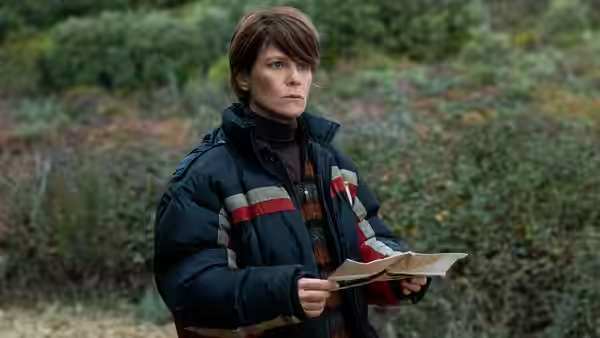
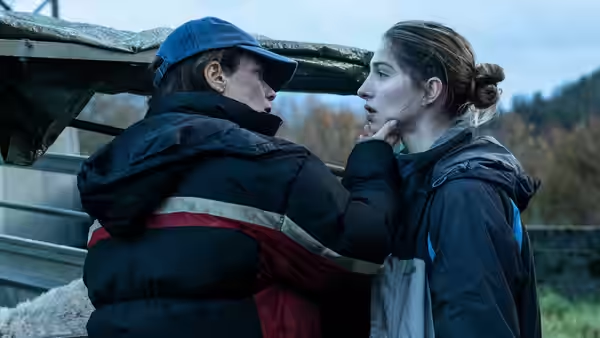
Diego Anido plays the younger brother, Lorenzo, who is slower than Xan and does what he is told. Anido never lets him become a joke; his silences are the most alarming thing on the hill. Marina Foïs, as Olga, spends the first hour at the edge of scenes, feeding animals and asking her husband to leave it alone. She does little and you watch her anyway. When the film turns to her, and it does, she carries it without once raising her voice.
José Tirado’s production design states the argument before anyone speaks. The couple’s house is stone, whitewashed and patched with care; the Antas’ house is stone, dark and left exactly as it was. Paola Torres puts Antoine in the fleece and wellingtons of the life he wanted, and Xan in the same jumper for two hours. Olivier Arson’s score is used sparingly, a low pulse that arrives once the talking has stopped, and Alberto del Campo cuts as if he trusted the actors more than the plot, which he was right to. It is still fifteen minutes too long, mostly in the second half.
About that second half. Isabel Peña and Sorogoyen’s script changes its protagonist and its pace, and we will not say how. Several critics felt the tension went out of the film at that point, and we understand the complaint: the first hour is a thriller and the second is something quieter. We think the quieter film is the better one. It is about what it costs to stay somewhere, and Foïs makes staying look harder than any fight.
Sorogoyen’s The Realm was a political thriller that never stopped moving. This one barely moves at all, and it is the more unsettling for it. It is drawn from a real case, which the film does not lean on, and it takes both sides seriously enough that you will leave arguing about who started it. See it in a cinema if you can; the hills need the width. And do not, whatever you do, watch it the night before viewing a house in the country.