Jeff Nichols’s biker film is beautifully dressed and lit, and Jodie Comer and Tom Hardy give it more life than the script does. But the man at its centre is a pose rather than a person, and the film keeps us at the length of a tape recorder’s cable.
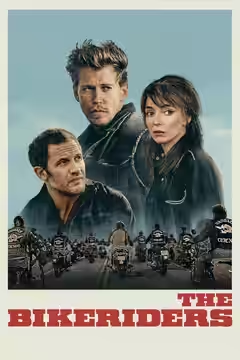
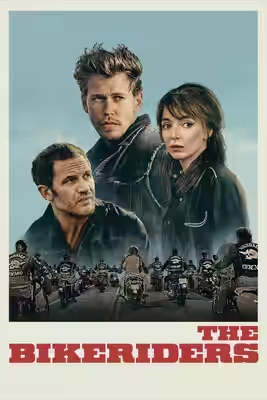
Jeff Nichols has taken Danny Lyon’s 1968 book of photographs, The Bikeriders, and built a story around the men in them, renaming the club the Vandals. Kathy (Jodie Comer) walks into a Chicago bar in 1965 to fetch a friend, meets Benny (Austin Butler) and is married to him within weeks. Over the next several years she talks into the tape recorder of a photographer called Danny (Mike Faist) about what the club was, what it became, and what it did to her marriage. The film is handsome, it is well acted at the edges, and it has a hole where its leading man should be.
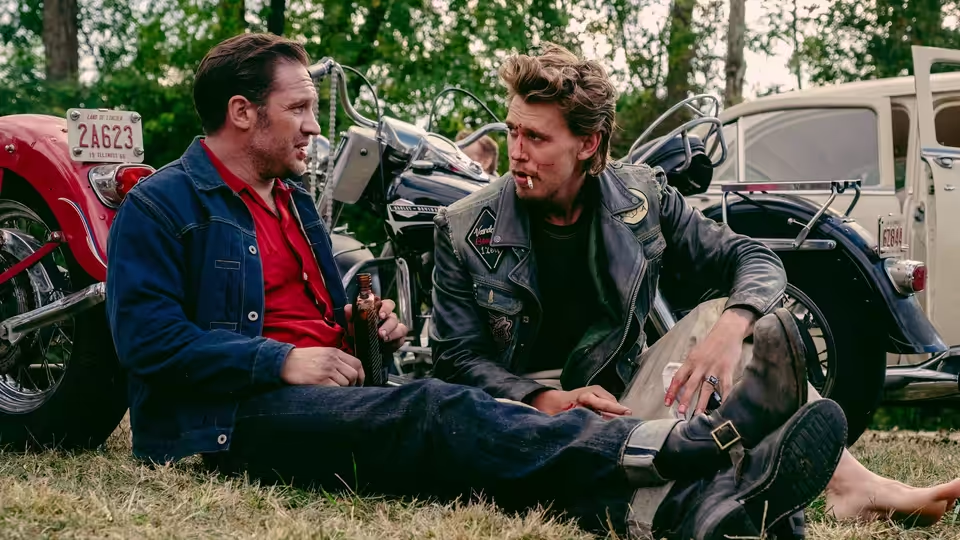
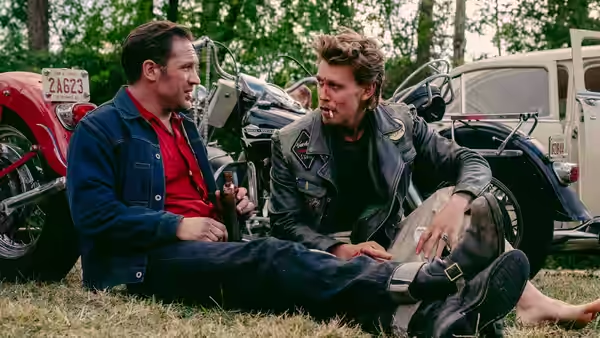
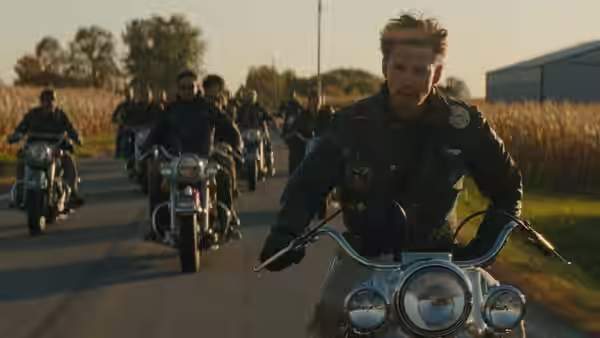
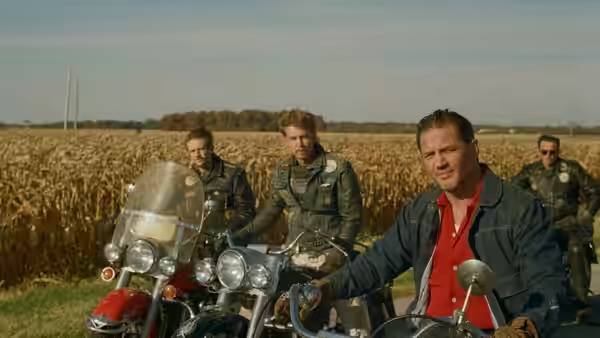
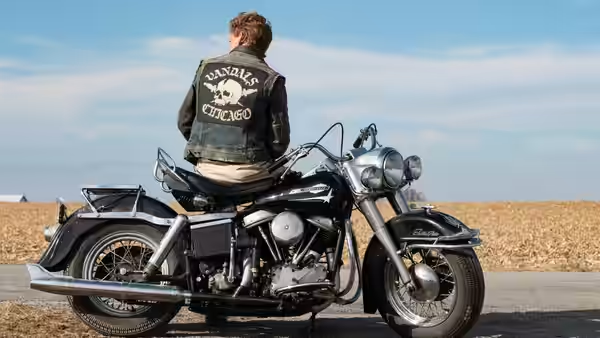
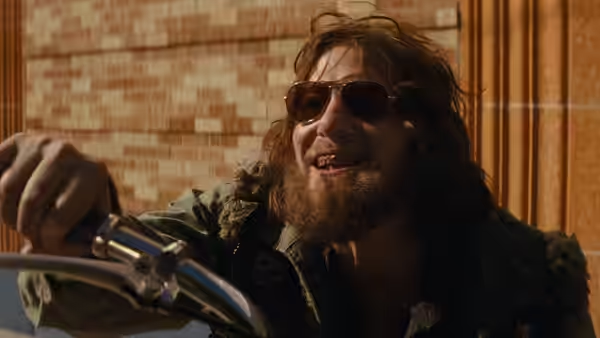
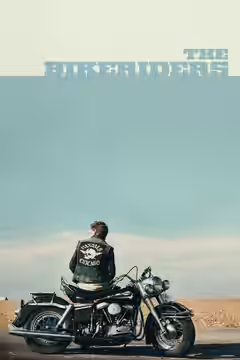
The look is the first pleasure and it lasts. Adam Stone shoots in browns, ambers and cigarette smoke, and when the men line up on their bikes he holds the frame still so that the shot could be one of Lyon’s pictures. Erin Benach’s costumes do most of the character work the script skips: cut-off denim over leather, the Vandals patch on the back, dark with oil and never washed. Chad Keith’s bars are low and lit from behind the counter. David Wingo’s score stays out of the way and lets period songs carry the riding scenes. Julie Monroe cuts to the rhythm of Kathy’s talk, jumping a year when she does.
Comer is the reason to watch. Her Kathy speaks fast and flat and through the nose, amused at herself and at the men, and she notices everything they miss. She is the only character who changes her mind on screen. Hardy plays Johnny small and soft, a man who invented a job for himself and lies awake afraid someone will take it. When he offers a challenger the choice of fists or knives, he says it like a man reading a menu he did not write. Michael Shannon’s Zipco gets one long speech, half grievance and half comedy, and Shannon plays both at once without tipping his hand.
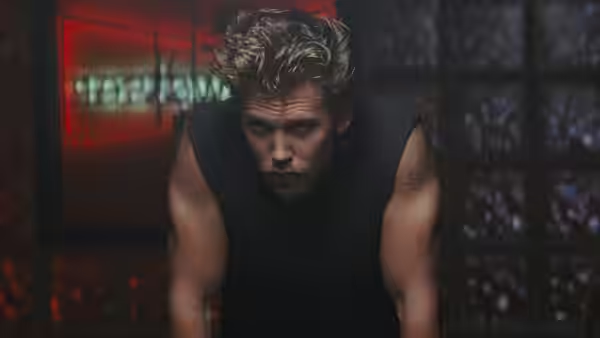
The trouble is Benny. He is written as the man everyone wants: Kathy wants a husband, Johnny wants an heir, the club wants a mascot. Benny wants to ride and will not say anything else. Butler plays this as stillness, a lowered chin and a cigarette. We need to know why Kathy stays, why Johnny bothers, and the film gives us a face and a jacket. Comer talks about him for two hours and we ended up knowing her far better than the man she was describing.
We felt something once, and it was early. In the first scene two strangers in a bar tell Benny to take off his colours, he declines, and what they then do to his foot made us pull our own feet up onto the sofa. It is the only time the danger reaches us without Kathy standing between us and it. Every fight and funeral after that arrives with her voice already telling us how it turned out, and the effect is of watching a photograph album with a good guide. The second half follows the club’s change into something uglier, which we will not describe; anyone who has seen a rise-and-fall picture will know the shape of it.
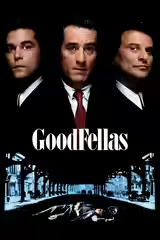
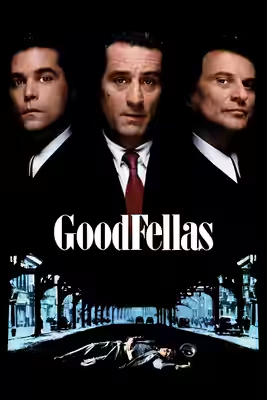
The comparison most critics reach for is Goodfellas (1990), and it is fair as far as structure goes, narration over a decade of a club going bad. Scorsese let Henry Hill talk and still put us at the table. Nichols keeps us at the kitchen table with Danny, and the tape recorder is always audibly running.
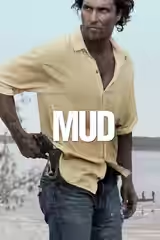
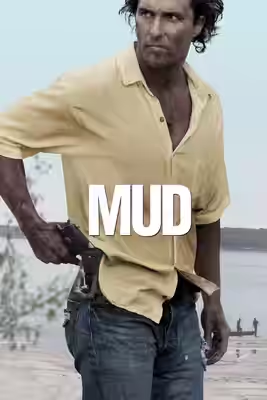
Against Nichols’s own films this is the odd one out. Take Shelter (2011), Mud (2012) and Loving (2016) were each about one person and one fear, filmed close. This has the biggest cast he has handled and the least interior, and the men come and go without our learning what is between their ears.
It is worth an evening, for Comer, for Hardy, for the clothes and the bikes and the light. Watch it at home, where Kathy’s voice sounds like someone talking across your own table. It runs 116 minutes and carries a 15.