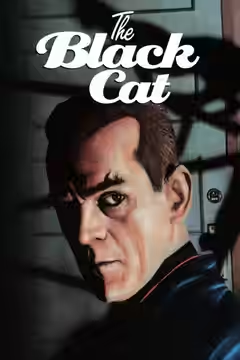
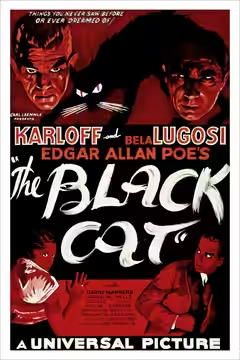
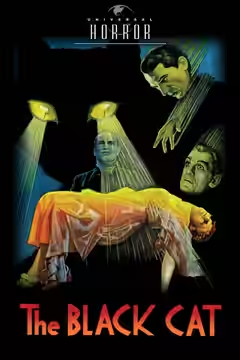
Boris Karloff and Bela Lugosi make Edgar G. Ulmer’s horror worth an evening, with considerable help from a deeply unwelcoming mansion. The story is muddled, but the performances and interiors keep it disturbing.
The Black Cat is a compelling horror film with an untidy story and an unusually convincing place to be frightened in. Edgar G. Ulmer gives Boris Karloff and Bela Lugosi a Modernist mansion whose appearance is almost as unsettling as their performances. At 65 minutes, it gets a great deal of discomfort out of a small amount of time. We recommend it, provided a few doubtful connections in the plot will not spoil the evening.
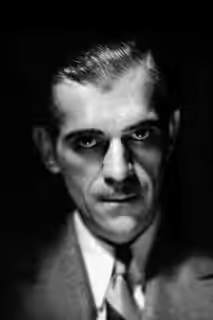
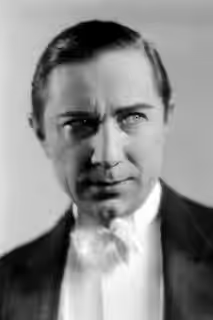
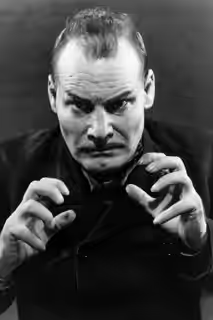
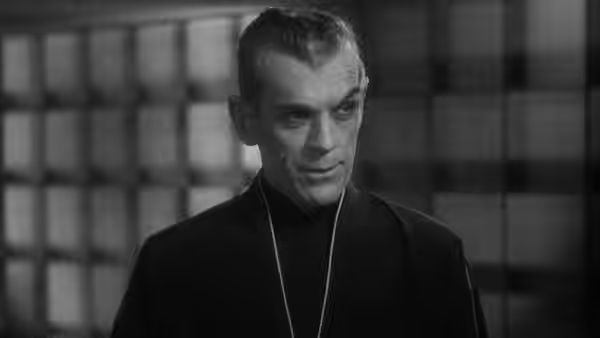
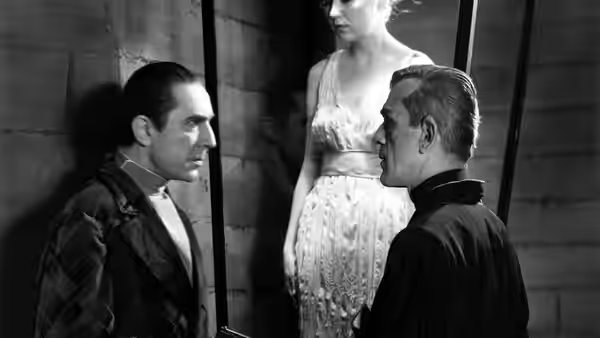
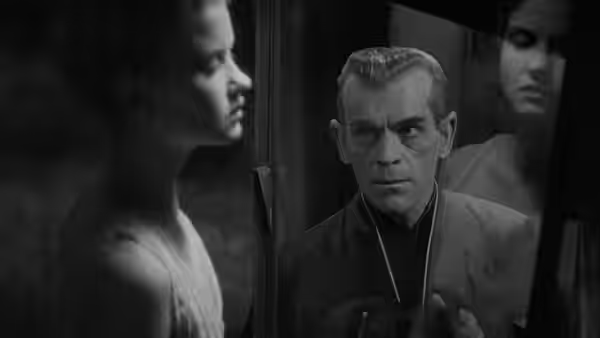
Boris Karloff plays Hjalmar Poelzig, while Bela Lugosi is Dr. Vitus Werdegast, and their shared presence gives the film its strongest reason to exist. Both make derangement feel dangerous without making it seem beyond human understanding. We believe in the damage these men might do, which matters when the plot becomes difficult to follow. There is pleasure in watching performers commit so fully to people whose company we would take considerable trouble to avoid.
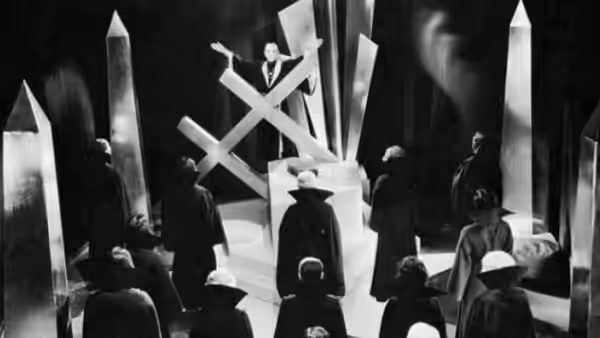
The production design deserves a substantial share of the credit. The Art Deco interiors and the fortress buried beneath the mansion make the whole building feel difficult to get out of, even before we consider the company. We felt hemmed in by those stark rooms and the knowledge of what lay underneath. The modern architecture is especially effective because it allows so little of the comforting distance that a picturesque ruin might give us.
John J. Mescall’s cinematography makes those interiors worth studying rather than treating them as expensive-looking scenery. Our attention keeps returning to the building, and examining its stark rooms sustains our interest whenever the story wavers. Heinz Eric Roemheld’s music is less distinctive to our ears, though it helps sustain the oppressive mood. We remember the rooms more clearly than the music, particularly the disturbing prospect of a fortress beneath a domestic building.
The weakness is the writing. Peter Ruric and Tom Kilpatrick’s screenplay does not always make its connections clear, and the actors occasionally have to supply conviction that the story has failed to earn. Ray Curtiss’s editing cannot quite persuade us that everything belongs together, although the short running time limits how long any confusion can linger. A horror film can leave plenty unexplained, but here some of the uncertainty gets in the way of understanding why people do things.
The choice of setting makes a useful departure from the more reassuring furniture of Gothic horror. There is little comfort in recognising the familiar shape of a modern house when the people occupying it seem so dangerously disturbed. The two leading performances keep that threat personal, giving us something more troubling than an architectural curiosity. The director is particularly good at sustaining this discomfort, even through the less persuasive stretches of the story.
The reservations matter, but they do not cancel the pleasure of seeing performers and surroundings so well matched. There is enough conviction in the faces and enough unease in the building to carry the film through its muddle. Anyone looking for a neatly worked thriller should approach with caution. For an evening of sinister company in disagreeable rooms, we would gladly return.