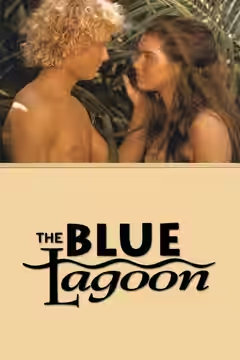
Néstor Almendros photographs a Fijian lagoon so well that you can nearly forgive what happens in front of it. Randal Kleiser’s version of the Stacpoole novel is sweet-natured, handsome and close to empty; see it for the water, not the words.
Randal Kleiser’s film of Henry De Vere Stacpoole’s novel has an idea that is at least worth an evening’s argument. Take two Victorian children, strand them where no adult can reach them, and watch what love and sex look like when nobody has explained either. Douglas Day Stewart’s script sets this up cleanly in twenty minutes. The trouble is that the film is as innocent as its characters. It does not know anything either, and it has 104 minutes to fill.
The first twenty are the best. The ship is all fog and tar and ropes, the fire below decks is lit by its own flames, and Leo McKern’s Paddy Button rows two frightened children out into open water while swearing cheerfully at the sea. McKern is the only actor here giving a performance in the ordinary sense. He teaches the children to spear fish and bury their dead, gets drunk on a salvaged cask, and tells them with real menace to stay off the far side of the island. When the film loses him it loses its only grown-up and its only joke, and it never finds another of either.
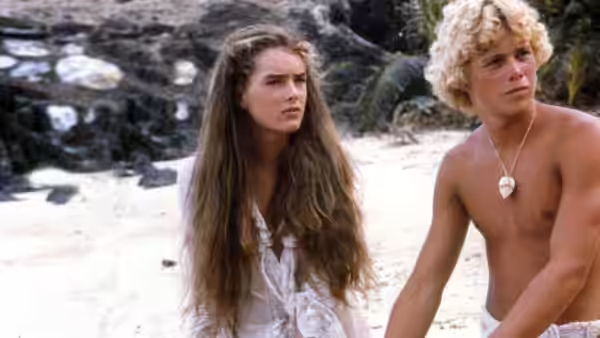
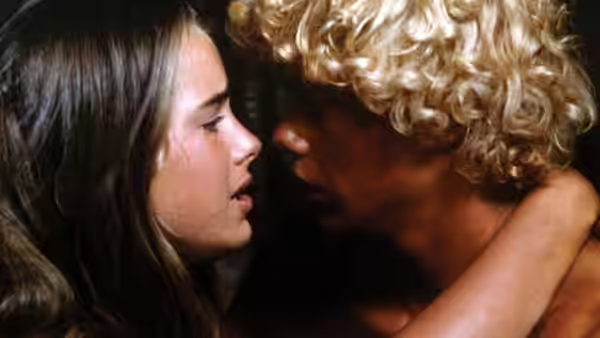
Then the children grow up, and the film’s problem arrives in two swimsuits. Brooke Shields and Christopher Atkins look exactly as the story needs them to look, and that is most of what they do. Stewart gives them dialogue made of questions about bodies, which is meant to be touching and plays like a public information film with better scenery. Atkins grins through it. Shields has one expression for wonder and another for alarm and is asked for very little else. They are not bad so much as unguided, and Kleiser, who had just made Grease, seems to have trusted that the island would do the acting for them.
We laughed, more than once, at lines delivered with total sincerity about where babies come from, and then we felt uncomfortable about laughing, and then uncomfortable for a different reason. The camera lingers on these two very young people in a way the story does not ask for. The film wants to be about innocence, and it keeps interrupting itself to admire what innocence looks like from behind. That is the thing we could not get past, and no amount of lovely water washed it off.
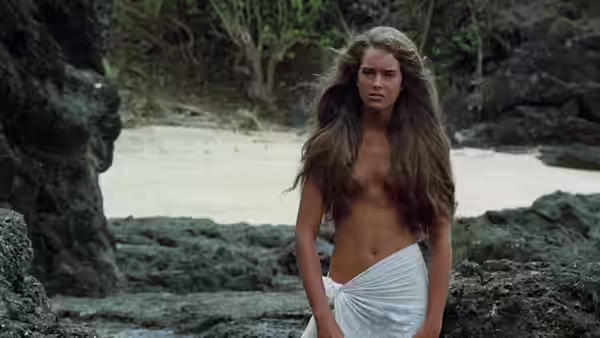
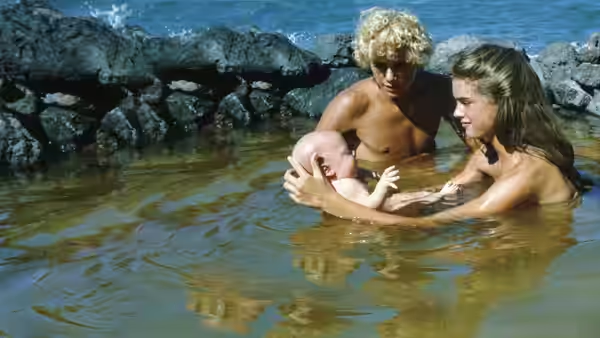
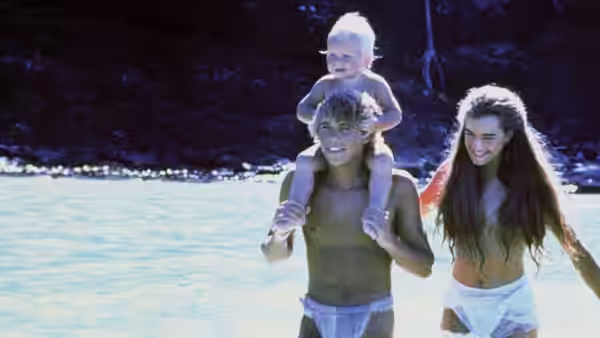
The water is lovely, though. Almendros shoots the lagoon in soft morning light, the surface a pale green you can see the bottom through, and his underwater passages, with the children turning slowly among the fish, are calm in a way the rest of the film is not. He holds wide shots long enough for the island to feel like a place rather than a set. Jean-Pierre Dorléac’s costumes shrink sensibly from sailor’s clothes to rags to almost nothing, and the progression tells the passing of time better than the script does.
Basil Poledouris scores every sunset with strings that rise whether or not anything has happened, and after an hour we stopped hearing them as music. Robert Gordon cuts the middle of the film as a run of short scenes that are all the same scene: swimming, building, growing taller, swimming again. It is not that nothing happens. It is that the same thing happens, in a slightly different light, for forty minutes.
What the two of them arrive at, left entirely to themselves, is a hut, a hearth and a quarrel about who does the cooking, and the film appears to think this proves something about human nature. We think it proves that nobody involved could imagine any other way to live. The castaway story has been used to ask hard questions about what people are when the rules are gone. This one answers before anybody asks.
It is a 15 certificate, and the reason is on screen for much of the running time, which parents may want to know. Watch it for Almendros, with something to read on your lap for when the strings start up. Most critics have been harder on it than we have, and we understand why; we are only being kind to the light.