Alec Baldwin makes a persuasive little tyrant, and the animation has more wit than the plotting. But The Boss Baby stretches a good sibling-rivalry joke into an overcomplicated, tiring family comedy.
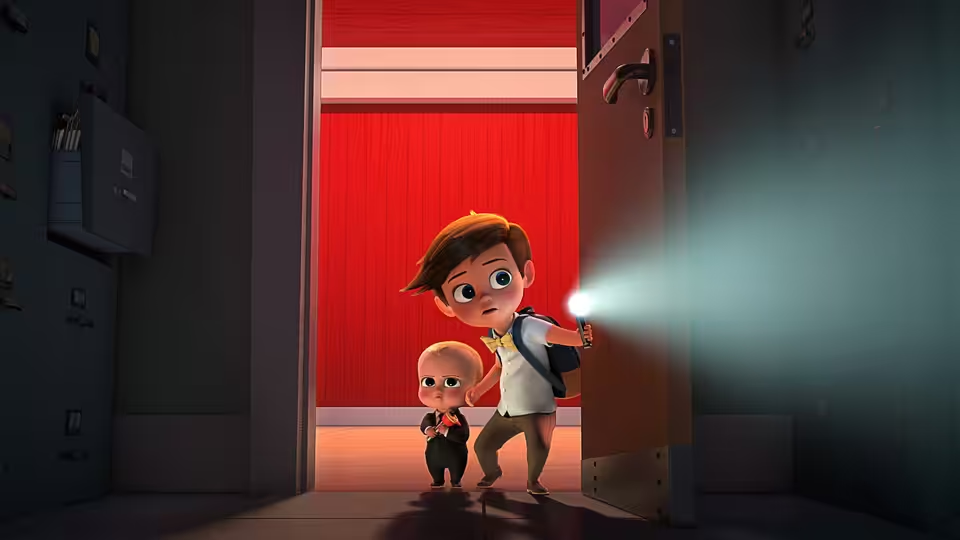
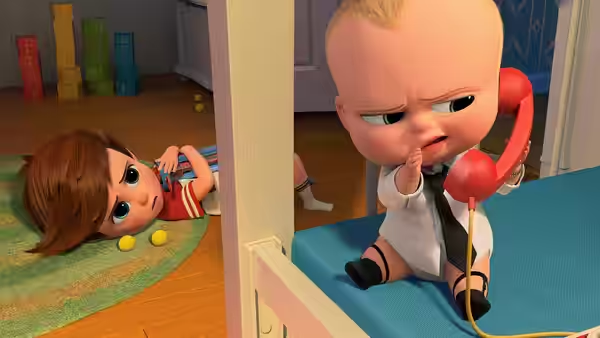
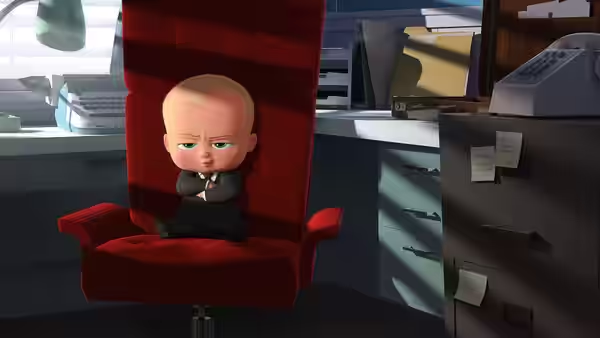
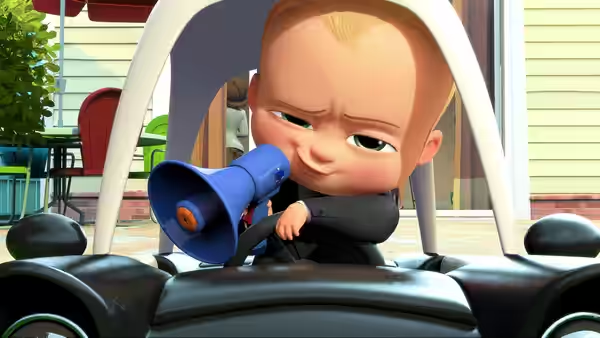
The Boss Baby has a workable joke: a new baby behaves like the person who owns the place, which is roughly how an older sibling experiences the arrangement. Tom McGrath gets a fair amount of comedy out of giving that intruder a suit and Alec Baldwin’s voice. We laughed at the solemn corporate manner coming from someone who still needs looking after. The trouble is that this modest joke has to support an increasingly complicated adventure, and the film becomes tiring well before its 97 minutes are up.
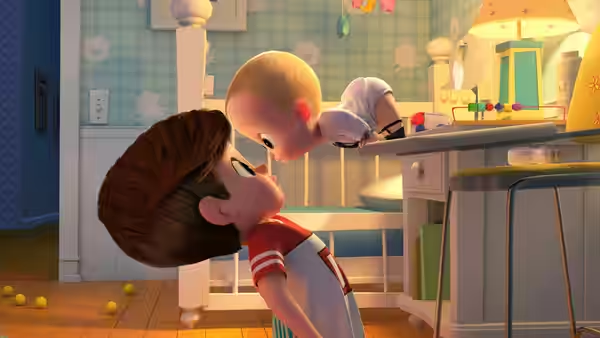
Miles Bakshi voices Tim, whose resentment gives the early scenes a feeling children can recognise without having it explained to them. Being asked to welcome a rival for your parents’ attention is a considerable demand, however small the rival happens to be. McGrath allows that grievance to be funny without making the child seem monstrous, and the brothers’ friction gives the comedy something worth caring about. Jimmy Kimmel and Lisa Kudrow voice Dad and Mom, but the more promising relationship is the one between the children.
Baldwin understands how little he needs to push the central gag. The confidence in his delivery makes the baby’s expectation of obedience funny without every line needing a separate joke attached. There is pleasure in hearing such authority emerge from such an unlikely source, and he sustains it longer than the writing deserves. Michael McCullers’s script keeps returning to the contrast between infant needs and adult authority, even when the joke has already landed.
David James’s production design gives the animation an appealingly old-fashioned look, while the colourful fantasy passages offer welcome changes of pace. The suited infant is a useful visual joke before he even opens his mouth, and the film understands the value of that incongruity. It is less restrained about how often it asks us to enjoy it. The fantasy passages have a freedom that the more laborious plotting could have used, letting colour and exaggeration carry some of the comedy.
The wider business involving babies and puppies competing for affection is where the film starts making unnecessary work for itself. Treating love as something that can run out makes sense from a jealous child’s point of view, and Tim’s resentment gives that idea a foothold. Expanding it into a corporate struggle requires explanations that are much less interesting than the brothers’ quarrel. McCullers keeps adding business when another exchange between the children would have served better, and the attempts at tenderness struggle to regain our attention.
James Ryan’s editing keeps the chases moving, but the pace offers little relief once the broader plot takes over. The succession of action and crude jokes leaves less space for the brothers to be funny together. The music by Steve Mazzaro and Hans Zimmer supplies further energy to sequences that hardly lack it. Its liveliness is welcome in itself, though the film could afford to stop encouraging us to be excited quite so insistently.
A family comedy needs enough variation to keep its central joke useful, particularly when adults will understand it before the children do. Here, the early sibling grievance offers more possibilities than the busy adventure makes room for. There are laughs, but too much of the evening is spent waiting for the film to get back to what produced them. If the suited baby does not amuse you straight away, there is little reason to wait for the plot to improve matters.