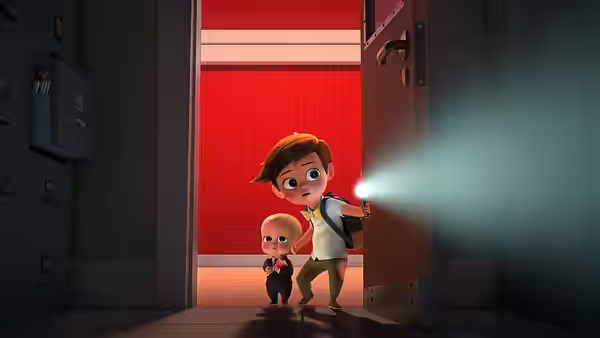
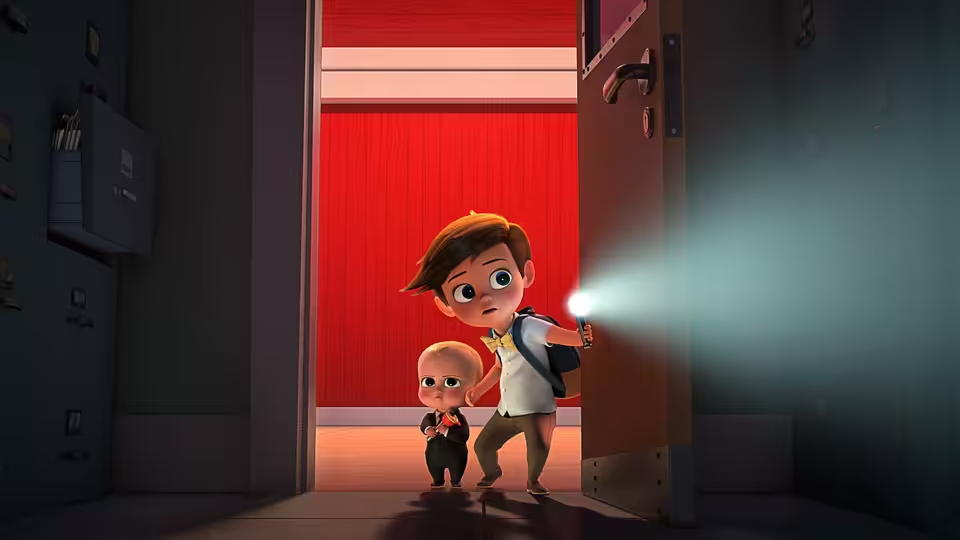
Tim and Boss Baby peer through an open doorway into a red-lit room
Film review

The Boss Baby

2017 · Directed by Tom McGrath · 1h 37m

In a sentenceA baby in a suit is funny for longer than expected, though considerably less than 97 minutes

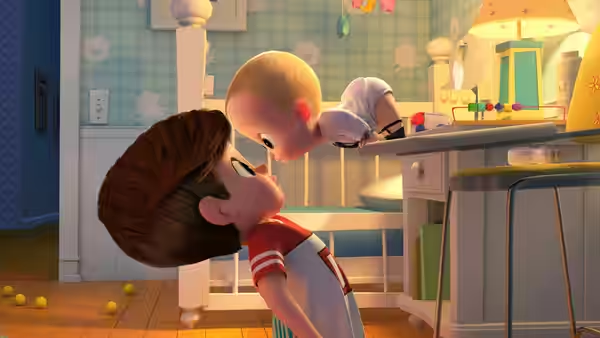
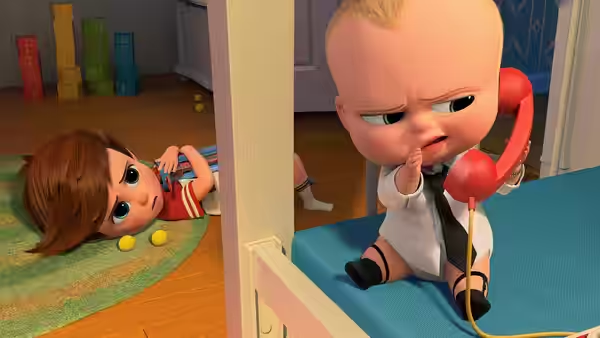
Tim (Miles Bakshi) gets a new baby brother, Boss Baby (Alec Baldwin), and life at home changes. Dad (Jimmy Kimmel) and Mom (Lisa Kudrow) have another child to look after, while Tim has to share their attention. His brother wears a suit and behaves like a corporate boss, making demands on a household Tim would prefer to have to himself. Tim wants his place in the family back; the new arrival expects to be in charge. Their sibling rivalry also belongs to a larger competition for affection, with puppies threatening to take attention away from babies.

Plays from YouTube when you press play; nothing loads from them until then.

Fi1m review

Alec Baldwin makes a persuasive little tyrant, and the animation has more wit than the plotting. But The Boss Baby stretches a good sibling-rivalry joke into an overcomplicated, tiring family comedy.

The Boss Baby has a workable joke: a new baby behaves like the person who owns the place, which is roughly how an older sibling experiences the arrangement. Tom McGrath gets a fair amount of comedy out of giving that intruder a suit and Alec Baldwin’s voice. We laughed at the solemn corporate manner coming from someone who still needs looking after. The trouble is that this modest joke has to support an increasingly complicated adventure, and the film becomes tiring well before its 97 minutes are up.

Miles Bakshi voices Tim, whose resentment gives the early scenes a feeling children can recognise without having it explained to them. Being asked to welcome a rival for your parents’ attention is a considerable demand, however small the rival happens to be. McGrath allows that grievance to be funny without making the child seem monstrous, and the brothers’ friction gives the comedy something worth caring about. Jimmy Kimmel and Lisa Kudrow voice Dad and Mom, but the more promising relationship is the one between the children.

Baldwin understands how little he needs to push the central gag. The confidence in his delivery makes the baby’s expectation of obedience funny without every line needing a separate joke attached. There is pleasure in hearing such authority emerge from such an unlikely source, and he sustains it longer than the writing deserves. Michael McCullers’s script keeps returning to the contrast between infant needs and adult authority, even when the joke has already landed.

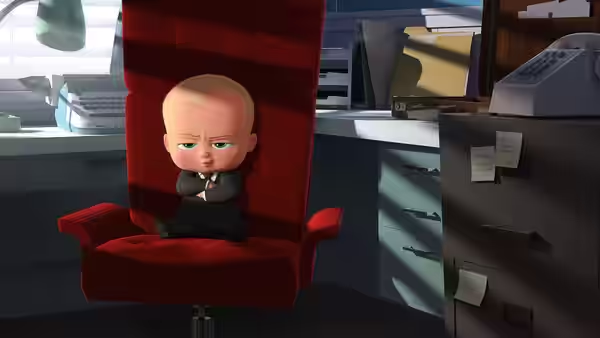
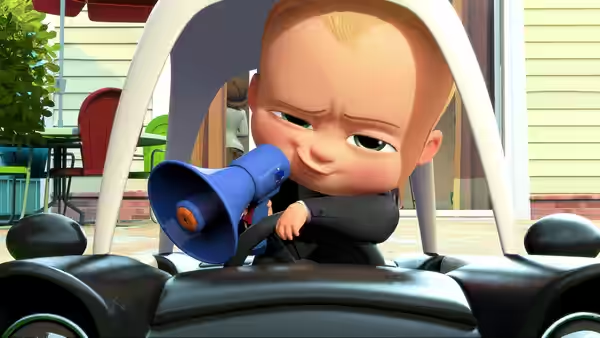
David James’s production design gives the animation an appealingly old-fashioned look, while the colourful fantasy passages offer welcome changes of pace. The suited infant is a useful visual joke before he even opens his mouth, and the film understands the value of that incongruity. It is less restrained about how often it asks us to enjoy it. The fantasy passages have a freedom that the more laborious plotting could have used, letting colour and exaggeration carry some of the comedy.

The wider business involving babies and puppies competing for affection is where the film starts making unnecessary work for itself. Treating love as something that can run out makes sense from a jealous child’s point of view, and Tim’s resentment gives that idea a foothold. Expanding it into a corporate struggle requires explanations that are much less interesting than the brothers’ quarrel. McCullers keeps adding business when another exchange between the children would have served better, and the attempts at tenderness struggle to regain our attention.

James Ryan’s editing keeps the chases moving, but the pace offers little relief once the broader plot takes over. The succession of action and crude jokes leaves less space for the brothers to be funny together. The music by Steve Mazzaro and Hans Zimmer supplies further energy to sequences that hardly lack it. Its liveliness is welcome in itself, though the film could afford to stop encouraging us to be excited quite so insistently.

A family comedy needs enough variation to keep its central joke useful, particularly when adults will understand it before the children do. Here, the early sibling grievance offers more possibilities than the busy adventure makes room for. There are laughs, but too much of the evening is spent waiting for the film to get back to what produced them. If the suited baby does not amuse you straight away, there is little reason to wait for the plot to improve matters.

Critical consensus AI synthesised

56
Positive
5
Mixed
9
Negative
7

The reviews lean towards mixed, with Alec Baldwin’s voice performance attracting the most consistent praise, even from critics who dislike the film. His corporate manner and comic timing give the suit-wearing baby much of its appeal. The animation also earns approval for its expressive characters, retro styling and colourful fantasy sequences. Supporters find a lively family comedy with enough verbal and visual jokes to make its unlikely premise work.

The divide is wide over how long that appeal lasts. Reservations cluster around an overcomplicated plot, repetitive jokes and frantic action that crowds out the sibling relationship. Deadline celebrates the pace and finds the comedy funny across age groups; the Los Angeles Times finds the script lazy and strained despite Baldwin’s contribution. Emotional warmth convinces some critics but feels unearned to others. Vulture offers a distinct reading, finding sharp political satire in the corporate behaviour and competition for affection.

The Hollywood Reporter
12 March 2017 · Michael Rechtshaffen
85*

The critic finds the film a delightful, clever, and tender animated comedy. Baldwin’s commanding voice performance and the animation’s nostalgic visual style stand out for praise.

Read the full review →
The i Paper
5 April 2017 · ★★★★ · Matthew Turner
80

Turner finds the film witty, delightful and inventive, praising its appeal as a family comedy despite its silly premise. He singles out Alec Baldwin’s pitch-perfect voice performance and the steady stream of verbal and visual gags.

Read the full review →
Vulture
31 March 2017 · Emily Yoshida
70*

Yoshida finds the film an unusually incisive political metaphor for Trump-era America. She singles out the Boss Baby’s corporate behavior and the puppies-versus-babies attention economy as especially sharp satire.

Read the full review →
Screen Daily
12 March 2017 · John Hazelton
64*

The page identifies this as a review, but its verdict is not visible in the accessible text. The standfirst notes Alec Baldwin voices the title character and calls him vaguely Trump-ish.

Read the full review →
The New York Times
30 March 2017
64*

The page could not be read, so the critic’s verdict is unavailable. No specific praise or complaint can be verified from the accessible content.

Read the full review →
The AV Club
30 March 2017 · C+ · Katie Rife
63

Rife finds the film clever at first but increasingly exhausting and manic as it expands beyond its sibling rivalry premise. She praises the emotionally effective opening and lovely animation, while criticizing the later chase sequences and crude humor.

Read the full review →

Straight answers AI written, from our review

Is The Boss Baby worth watching?
The Boss Baby offers some laughs for families amused by its suited infant, but we find it too tiring to recommend without reservations and score it 56. Alec Baldwin’s solemn authority and the recognisable sibling jealousy work better than the overcomplicated adventure, which crowds out the brothers’ comedy.
How long is The Boss Baby, and what is it rated?
The Boss Baby runs 1h 37m. It is an animation and comedy film.
Where can I watch The Boss Baby in Norway?
The Boss Baby is streaming on Amazon Prime Video and Disney+ in Norway, and it is also available to rent from Amazon Prime Video and Apple TV from kr 29.00. Availability is checked daily; the links above go straight to each service.
How does The Boss Baby compare to Look Who's Talking?
The Boss Baby has a sharper visual joke, but we recommend Look Who’s Talking as the more amiable evening’s entertainment. Both give an infant an adult voice; the former becomes bogged down in a corporate adventure, while the latter benefits from John Travolta and Kirstie Alley’s company, despite its predictable jokes.
Is The Boss Baby based on a true story or a book?
The Boss Baby is based on a book by Marla Frazee, rather than a true story. No prior reading is needed: the film establishes Tim’s resentment at sharing his parents’ attention and the joke of a baby who behaves like a corporate boss.
What should I watch after The Boss Baby?
After The Boss Baby, try Look Who's Talking (1989, Fi1m 71): Another infant with an adult voice and firm opinions about the grown-ups. Then My Neighbour Totoro (1988, Fi1m 89): A gentler account of childhood imagination, with sisters worth spending time beside; and Ernest & Celestine (2012, Fi1m 84): Expressive animation and a friendship allowed to develop without constant commotion.

Cast

Awards

Academy Awards, 2017

Nominated
Best Animated Feature

Annie Award for Best Animated Feature, 2017

Nominated
Annie Award for Best Animated Feature

If you liked this, try…

  1. Look Who's Talking (1989, Fi1m 71)Another infant with an adult voice and firm opinions about the grown-ups.

  2. My Neighbour Totoro (1988, Fi1m 89)A gentler account of childhood imagination, with sisters worth spending time beside.

  3. A Town Called Panic (2009) · not reviewed yetDomestic chaos pushed further, with absurdity that needs little explanation.

  4. Ernest & Celestine (2012, Fi1m 84)Expressive animation and a friendship allowed to develop without constant commotion.

  5. The Mitchells vs. the Machines (2021, Fi1m 76)More family friction, with enough warmth to justify the frantic animation.

Free account

Know what to watch tonight

Two lists that know where things are streaming, collections you can share, your own score beside ours, and Discover that remembers what you have seen.

  • Want to see, sorted by what is streaming now
  • Seen, with your score out of ten
  • No adverts, ever