Soderbergh’s small comedy about a painter and the woman hired to paint like him is good whenever it is just McKellen and Coel in a room. The children are drawn in crayon and the scheme does not quite add up, but the room is worth an evening.
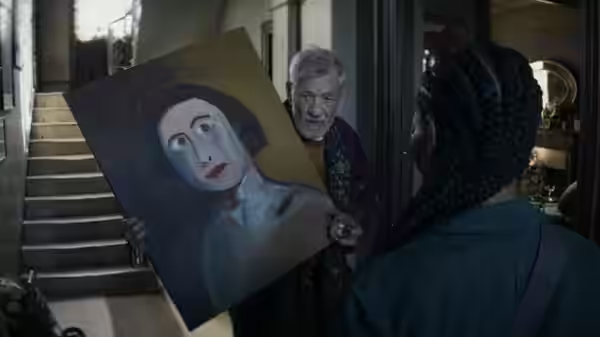
Steven Soderbergh has made another small film, shooting and cutting it himself, and most of it happens inside one house. Julian Sklar (Ian McKellen) is a painter who has outlived his own reputation and is living off it in a London townhouse that has not been dusted this century. His children, Sally (Jessica Gunning) and Barnaby (James Corden), would like to turn his name into money before he dies and takes it with him. Lori Butler (Michaela Coel) is the restorer they find to do the painting. Ed Solomon’s script dresses this up as a heist and then, once Lori is through the door, loses interest in the heist and settles in to watch two people talk.
That is the right decision, and the film is good because of it. It is also thin because of it. The plot is a hook to hang the actors on, and when the actors are off screen you can see the hook.
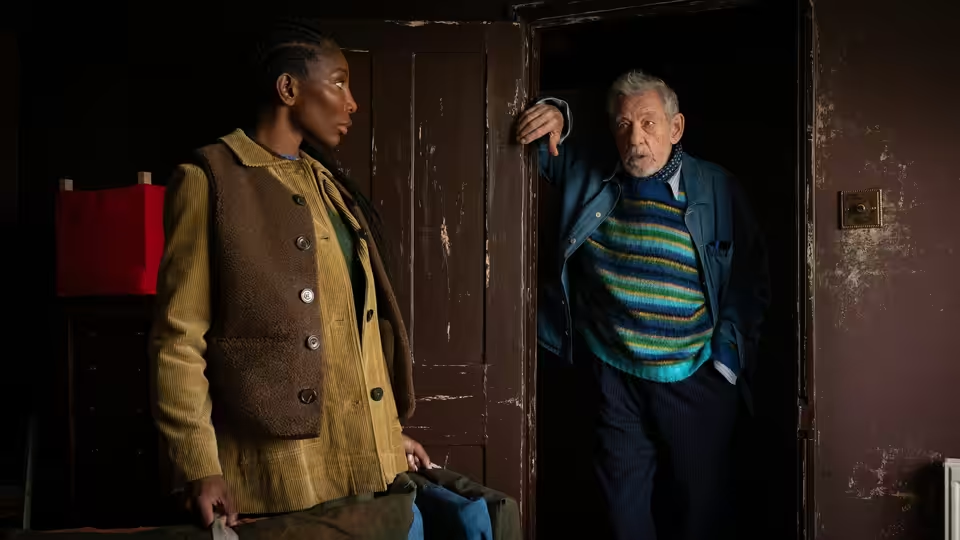
McKellen is having the time of his life, and it is a pleasure to watch him have it. Julian is vain, cruel and funny, a man who has been performing himself for so long he cannot remember how he used to sound, and McKellen plays him at full volume without ever letting the volume become the joke. He times an insult so the laugh arrives a beat before the hurt does. Coel does the opposite. Lori is frank, unimpressed and slow to speak, and where McKellen fills the house with noise, Coel waits for a gap and then says the one thing that lands. The two of them are mismatched on purpose and the mismatch is the film.
What surprised us was how much we came to mind about them. Somewhere in the second half, without our noticing when, the sparring stopped being a contest and became two people who had each spent a life making things and were not sure it had been worth it. We had come for the comedy and found ourselves oddly moved by two failures comparing notes. It is the actors who did that, and a small handful of Solomon’s better lines, and not the story, which by then has more or less stopped.
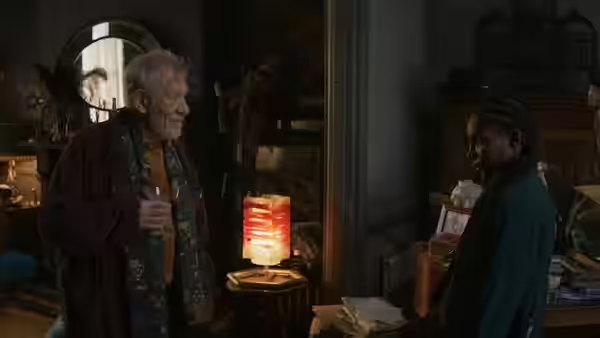
Soderbergh, as his own cinematographer, keeps the camera in the house and mostly at the level of the people in it. Antonia Lowe has built Julian a home that looks lived in rather than dressed, canvases stacked against walls and rooms that have given up being tidy, and it is a good place to spend time. For about an hour. At 100 minutes the walls begin to press in, and Soderbergh’s editing, usually his sharpest tool, cannot quite hide that scenes are recurring in the same three rooms. David Holmes, who has scored a good deal of Soderbergh’s work since Ocean’s Eleven, is here again and is used sparingly.
The children are the weak part. Gunning and Corden are asked to play greed with no shading, and they play it as written, which means every scene they are in is a scene we are waiting to get out of. The scheme they set in motion is also never fully thought through; questions about who is fooling whom, and how any of this would survive a phone call to a lawyer, are raised and then left on the table. One critic has called it half a film. We would not go that far, but we understand the complaint. Solomon wrote No Sudden Move for Soderbergh, a plot that clicked shut like a case; this one is left open on purpose, and the purpose is not always clear.
It is a good film about two people and a slight film about everything around them. See it for McKellen and Coel, and do not expect the crime to be the point. It will lose almost nothing on a sofa, since it is two people in a room to begin with, and the 15 certificate is for the language, which is Julian’s and frequent.