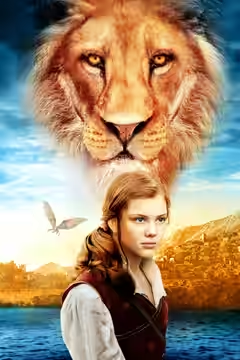
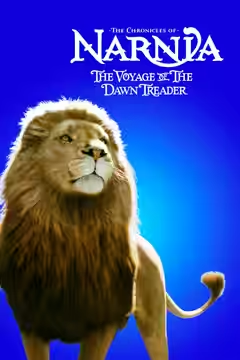
Michael Apted’s Narnia is a pleasant cruise with a good boy and a good mouse aboard, and no reason to be at sea. The swords and the mist are inventions, and they feel like it. Fine for a wet Sunday; the book deserved more.
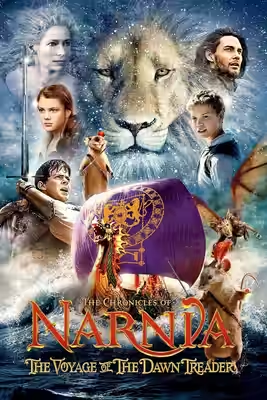
Michael Apted takes over the Narnia films for the third voyage, and he has drawn the hardest of the books to film. C. S. Lewis’s The Voyage of the Dawn Treader has no villain and barely a plot; it is a ship going east and stopping at islands, and the islands are the point. Christopher Markus, Michael Petroni and Stephen McFeely have given it a plot anyway: seven swords to be collected and a green mist to be seen off. The result is a tidy, good-natured 113 minutes that is never dull and never once worries you, and we think the book’s shapelessness was worth more than the film’s shape.
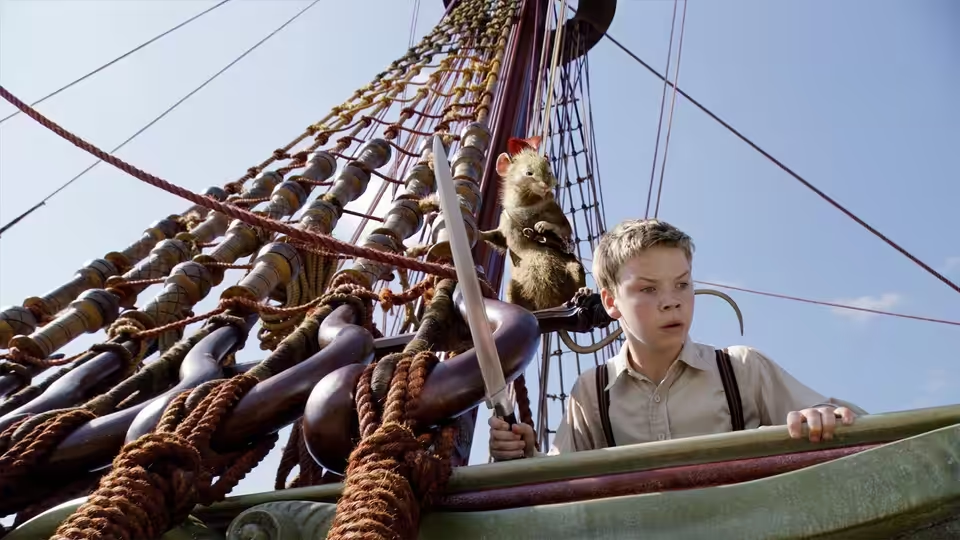
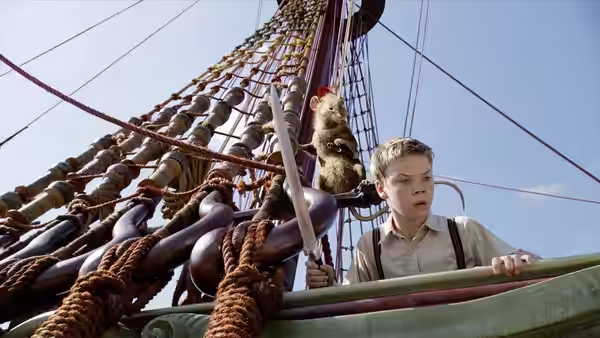
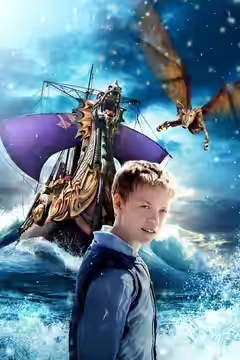
Will Poulter is the best thing in it, and it is not close. Eustace Scrubb is written as a prig who records everything in a diary and resents everyone he meets, and Poulter plays him with a jutting chin and a voice pitched a note too high, like a boy who has read how grown-ups complain and is practising. He is funny from his first scene. We laughed, and then noticed we were only laughing when he was on screen.
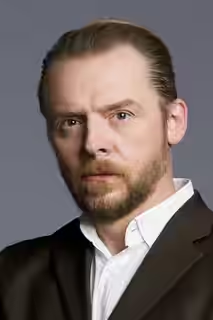
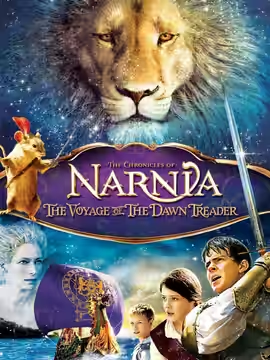
Reepicheep is the other reason to stay. Simon Pegg voices the mouse as a small, courteous knight who is slightly too pleased with himself, and the animators give him a rapier, a feather and a face that can do wistful. He wants to sail to the end of the world and says so plainly, and he is the only character aboard whose want is his own rather than the script’s.
Everybody else is collecting things. The seven swords are not in Lewis and they play like a shopping list. The green mist drifts in whenever the writers need a threat and drifts out when they have finished with it, and because it has no rules we never learned what it could do. Rick Shaine cuts the voyage as a run of arrivals: an island, a trial, a sword, the next island, each stop over before we know what the place is like. The slave market on the Lone Islands ought to be frightening and is cleared up in minutes with a sword fight nobody is in danger of losing.
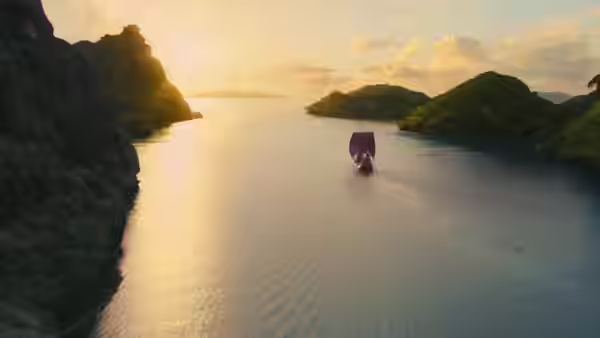
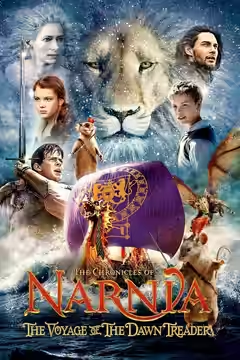
The ship is lovely, and it is the one thing the money bought that Lewis would recognise. Barry Robison’s Dawn Treader has a gilded dragon’s head for a prow, a purple sail and a deck you could walk around in your head afterwards, and Dante Spinotti lights it in a warm, late-afternoon gold whenever it is under way. Isis Mussenden keeps the Narnians in rich greens and leather and the English children in grey wool, which is the right joke. David Arnold’s score swells on every landfall, and there are a great many landfalls.
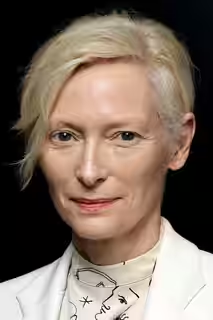
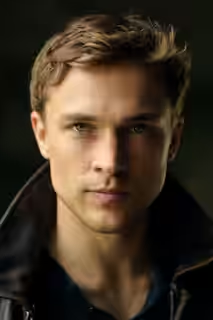
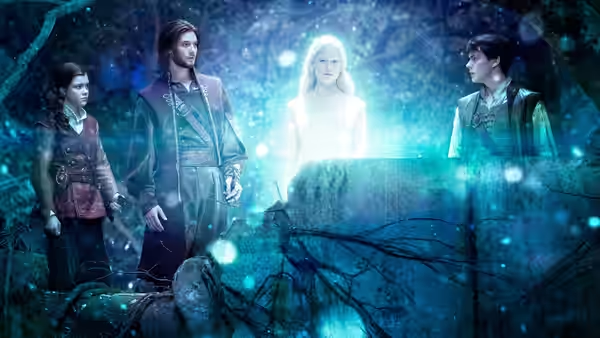
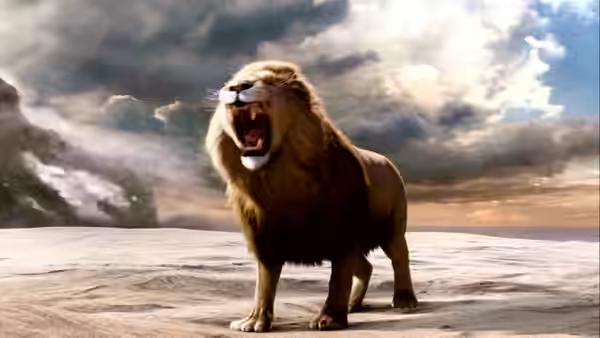
The Pevensies have become a problem the series did not see coming. Georgie Henley and Skandar Keynes have grown into capable, solemn teenagers, and the script gives Lucy a wish to be beautiful and Edmund a wish to be king and resolves both with a speech. Ben Barnes’s Caspian is handsome and underemployed. Tilda Swinton’s White Witch returns for a minute or two of whispering out of the mist, and Liam Neeson’s Aslan arrives to explain what everything meant, which, since the film has already explained it, feels like being told twice.
Andrew Adamson, who directed the first two films and produces this one, staged his battles as if they mattered. Apted films the fights as something to get through, and the camera is often in the wrong place to tell you who is winning. Most critics have been harder on the film than we are. We think the charge of cynicism is unfair, because Poulter, Pegg and that ship are plainly the work of people who liked the book. The charge of lazy plotting sticks.
It is a PG, and a gentle one, and a child of eight will have a decent time with it. Adults who loved the book should know that the last stretch of the quest is handled in a hurry, and that its best moments are the ones with nothing to collect.