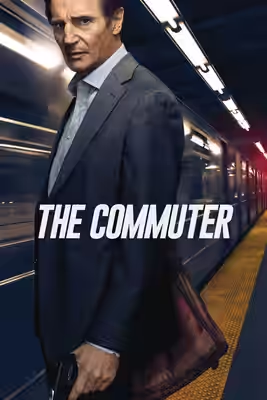
Jaume Collet-Serra’s train-bound thriller is enjoyable nonsense, carried by Liam Neeson’s commitment and inventive use of cramped carriages. The conspiracy is harder to follow than it deserves to be, but the action usually earns our patience.
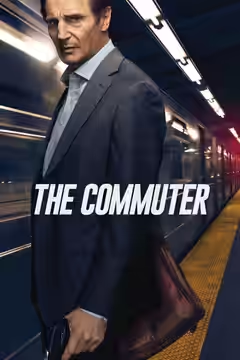
The Commuter is an enjoyable thriller with a complicated plot that scarcely rewards the attention it demands. Jaume Collet-Serra understands how much suspense a train full of strangers can provide, and how useful Liam Neeson is when an unlikely situation needs taking seriously. We recommend it if the prospect of close-quarters action appeals more than the promise of a carefully worked-out mystery. At 104 minutes, it has enough purpose and movement to keep its foolishness from becoming a chore.
The opening montage establishes Michael MacCauley’s family life and commuting routine with an economy the later explanations could use. Editor Nicolas De Toth makes these ordinary demands feel like a life already in progress. We warmed to Michael because the montage treats his daily routine as something worth noticing. Before the thriller takes over, there is a recognisable person with recognisable obligations, and that gives the action a useful start.
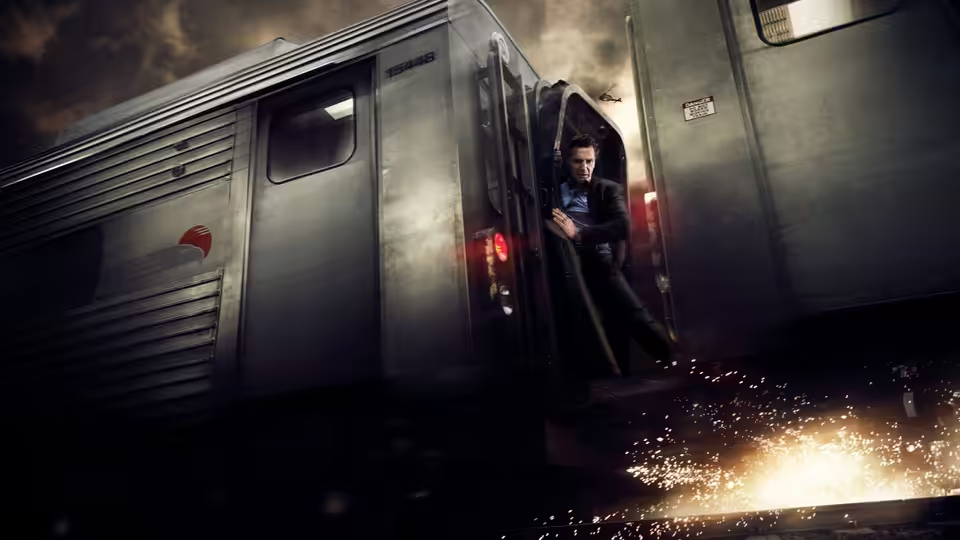
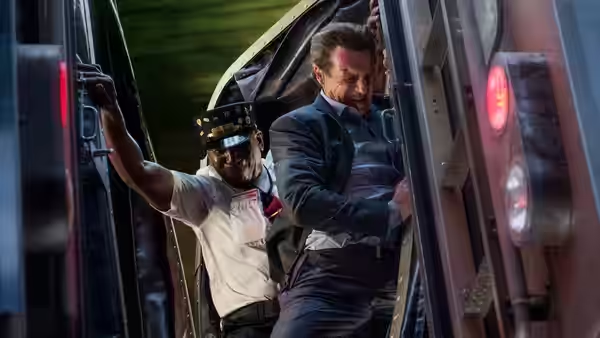
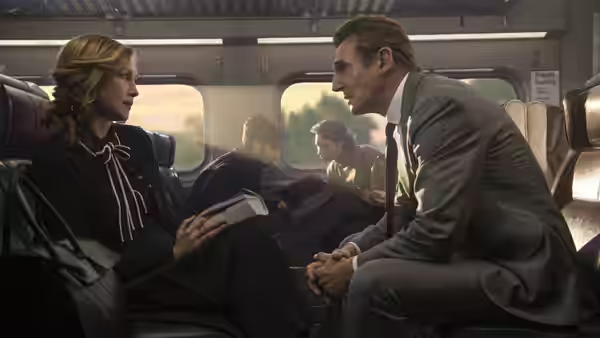
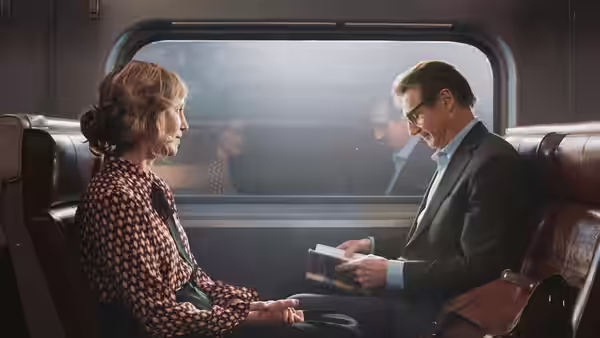
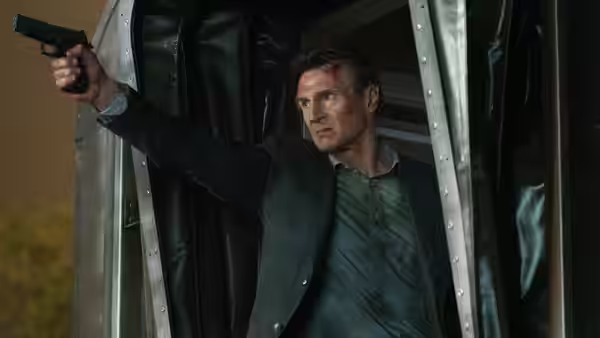
Paul Cameron’s cinematography keeps finding fresh ways to look through the cramped carriages, so the train never becomes a dull backdrop. A carriage is an awkward place for a fight, and Jaume Collet-Serra uses that awkwardness to make the physical encounters feel consequential. Richard Bridgland’s production design helps preserve the sense of an everyday commuting environment, even when it has to accommodate the action. There is pleasure in seeing a setting used this attentively, with its lack of space giving the performers a practical problem to work around.
Liam Neeson gives Michael a decency that survives the script’s increasingly demanding requests. His seriousness makes the physical jeopardy matter, even when the mystery stops making much sense. Vera Farmiga, as Joanna, and Jonathan Banks, as Walt, bring welcome distinction to a supporting cast too often limited to a single useful characteristic. There is enough acting ability here to suggest fuller lives beyond Michael’s problem, but the film seldom makes room for them, leaving capable performers with little opportunity to surprise us.
The screenplay, by Byron Willinger, Philip de Blasi and Ryan Engle, is much less sure about how to organise its conspiracy. Information arrives with a fuss that makes it seem more rewarding than it proves to be, while complications demand attention without providing much surprise. We can accept an outrageous premise, but the film also needs to make its developing situation comprehensible. Too often, the pace hurries us past a difficulty that the writing has not sorted out.
Nicolas De Toth is more persuasive at keeping the action moving than at making room for the story’s explanations. Roque Baños’s score maintains the urgency, though its contribution is less distinctive than the visual work. The later excess also weakens the pressure that came from keeping the problem simple and the space confined. Among ordinary-man-in-danger thrillers, this earns its place through the care taken over the ordinary man and his surroundings. Choose it for Liam Neeson under pressure; do not expect the conspiracy to withstand much questioning afterwards.