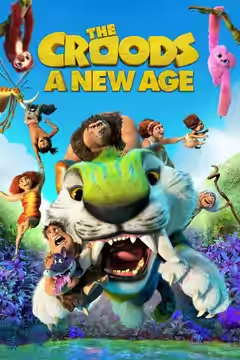
Joel Crawford’s prehistoric family comedy has bright creatures, sharp voice performances and more bustle than it needs. The rivalry between its families is funny enough to make the predictable story worth tolerating.
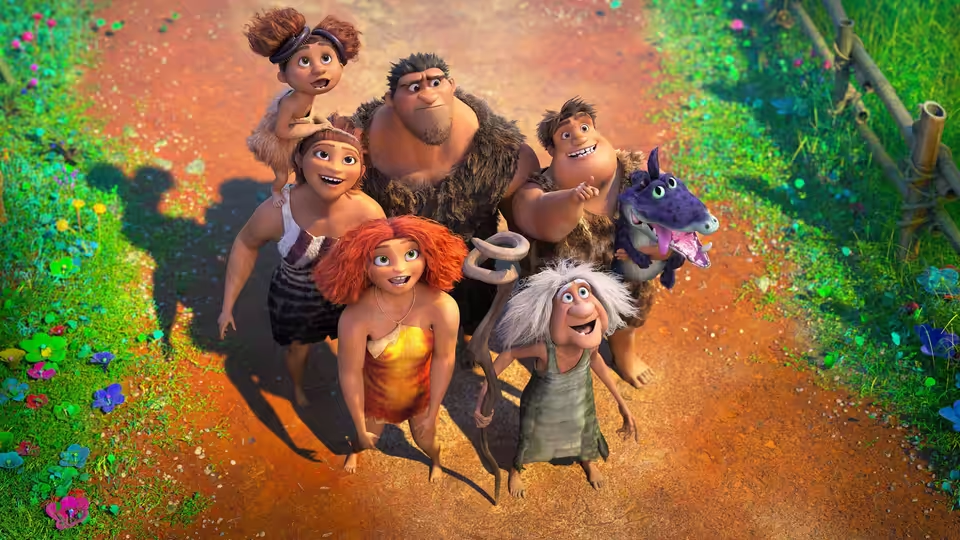
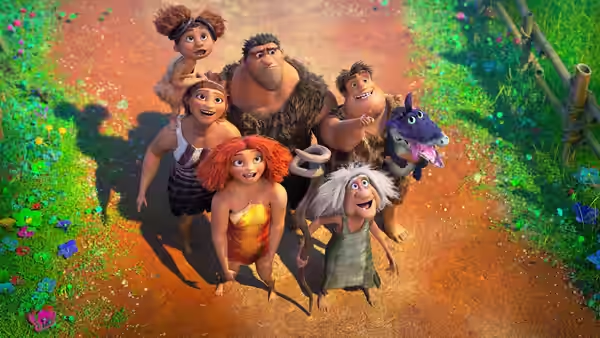
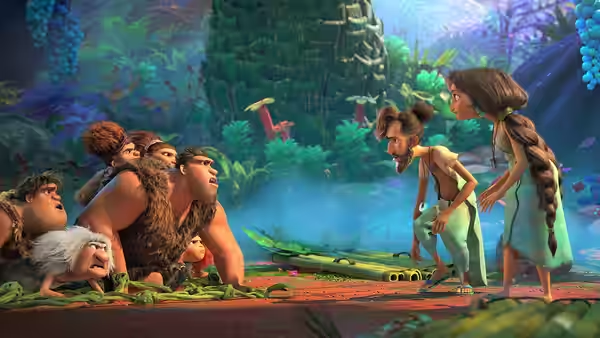
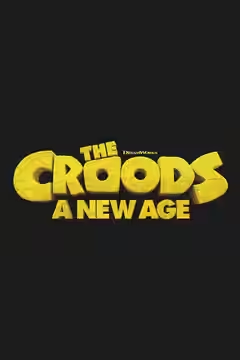
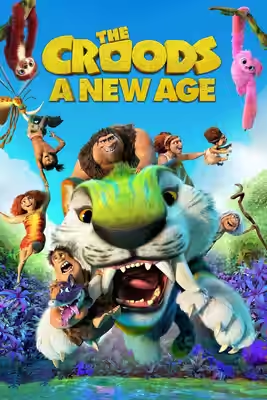
The Croods: A New Age is a cheerfully silly family comedy whose funniest idea is to give its prehistoric characters someone to look down on them. Joel Crawford gets more mileage from the rivalry between the Croods and the Bettermans than from the busy adventure surrounding it. We recommend it for the voice performances and the strange creatures, with fair warning that the pace can be wearing. The families are entertaining enough together to make the constant need for another burst of action seem unnecessary.
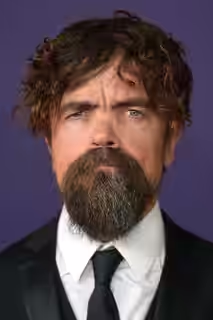
Peter Dinklage gives Phil Betterman the pleased, unhurried delivery of a man who assumes he has already won the discussion. Leslie Mann’s Hope Betterman supplies a different shade of condescension, and both performances let adult irritation into the family fun without making the characters hateful. We laughed most at Peter Dinklage’s self-satisfaction, because he makes Phil Betterman’s certainty of his own good sense sound so unreasonable. The rivalry gives these actors something more rewarding to do than simply raise their voices.
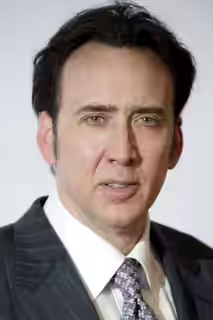
Nicolas Cage is just as useful as Grug, finding a needy, almost plaintive quality beneath the vocal exertion. His broadness suits the animation, but the yearning in the performance makes the family friction matter a little more than the script alone would manage. That is welcome in a film with so many competing demands on our attention. The emotional writing seldom gives its characters enough room, and Nicolas Cage supplies some of the warmth that the rush elsewhere threatens to lose.
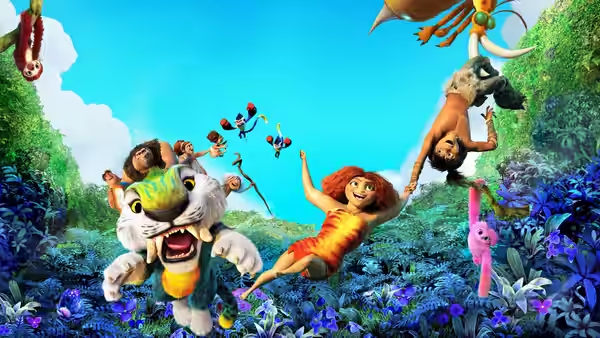
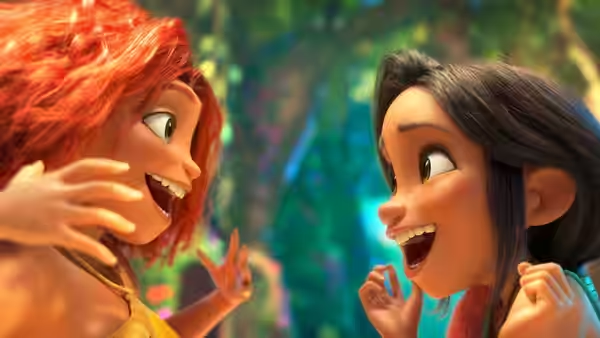
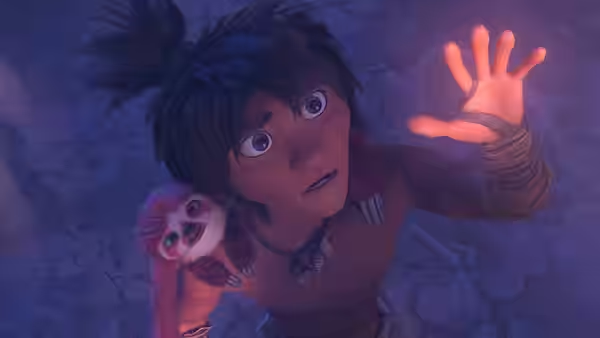
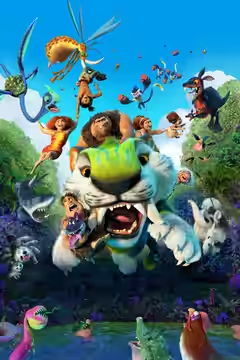
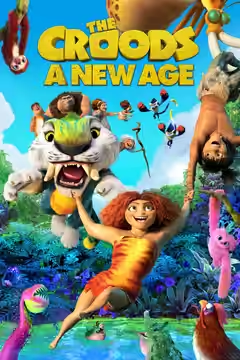
Nate Wragg’s production design supplies another good reason to stay: the peculiar prehistoric animals are amusing before they have done anything. The neon colours and improbable creatures give the eye something to enjoy even when the story is following a familiar route. The expressive animation is particularly well suited to physical comedy, allowing the creatures’ odd shapes to contribute to the jokes. The detailed environments also hold interest, though all that colour becomes less pleasurable when the film keeps demanding that we look somewhere else.
James Ryan’s editing keeps the gags arriving, and enough of them have a proper setup and payoff to show that speed has not replaced care altogether. The problem is how rarely one joke is allowed to finish before the next demand on our attention begins. Mark Mothersbaugh’s music makes little impression beside the colour and commotion; we would struggle to recall it separately from the general bustle. More breathing space would help both the jokes and the action, which too often seem to be competing for the same few seconds.
The screenplay, credited to Dan Hageman, Bob Logan, Kevin Hageman and Paul Fisher, gives the families rather familiar problems. The story is predictable, the supporting characters are unevenly served, and the lessons about unity arrive with more emphasis than they need. Family animation can be plain about kindness without labouring the point. Here, the insistence on making the message clear uses time that might have made the relationships more convincing.
At 95 minutes, it is a modest commitment that sometimes feels longer because it keeps pressing for a response. Even so, the good comic acting and visual invention make the familiar plotting forgivable. We would choose it for an evening that calls for bright, unruly nonsense without much emotional involvement. If constant activity is what exhausts the adults in your household, let them have the quieter choice next time.