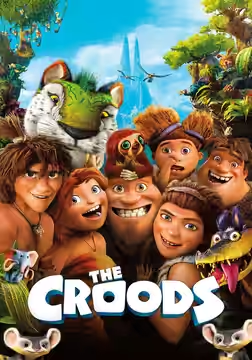
Chris Sanders and Kirk DeMicco have built a forest full of animals nobody has drawn before and then walked a story everybody has seen before through it. For children under ten it is a fine evening. For the adults, it is the scenery.
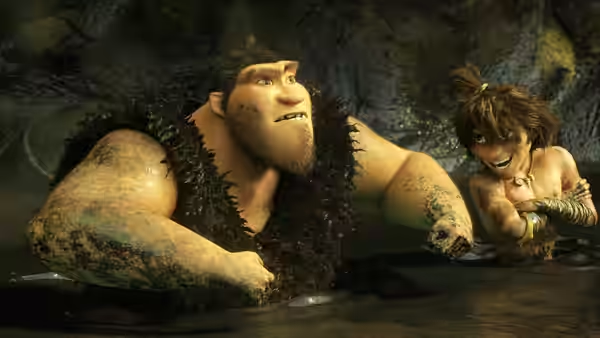
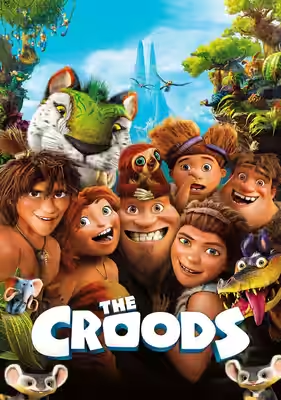
Chris Sanders and Kirk DeMicco write and direct a 99-minute cartoon about a family who have stayed alive by never going anywhere. Grug (Nicolas Cage) has one rule, which is that anything new will kill you, and he is not wrong about the neighbourhood. His daughter Eep (Emma Stone) wants out anyway. Then the ground gives way, the cave is gone, and the family has to walk. What follows is a road picture with a father who would rather have stayed home, and the verdict is easy to state: the places they walk through are worth seeing and the things they say on the way are not.
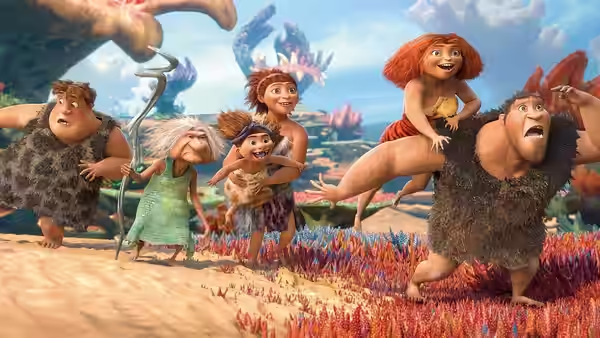
The opening is the best stretch. The family hunts a single egg across a scrubland of rock and dust, and Darren T. Holmes cuts it like a rugby match, each Crood taking the ball and being flattened in turn while Gran (Cloris Leachman) bites an ankle. We laughed, properly, four or five times in that first ten minutes, which is a better rate than most live-action comedies manage. It is physical, fast and told almost without dialogue, and it sets a standard the writing does not keep.
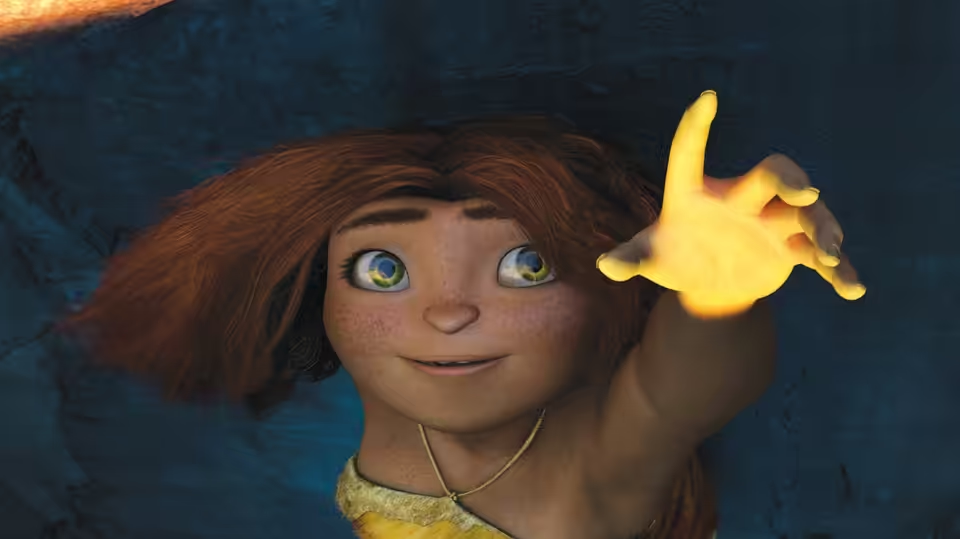
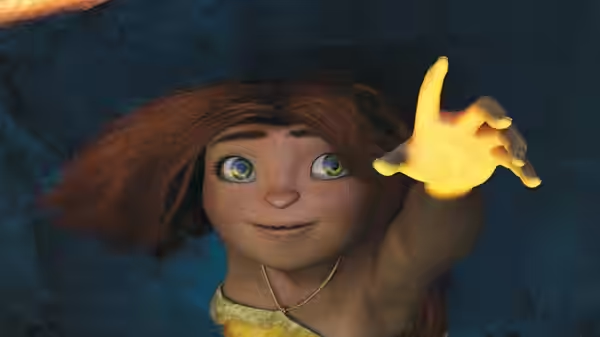
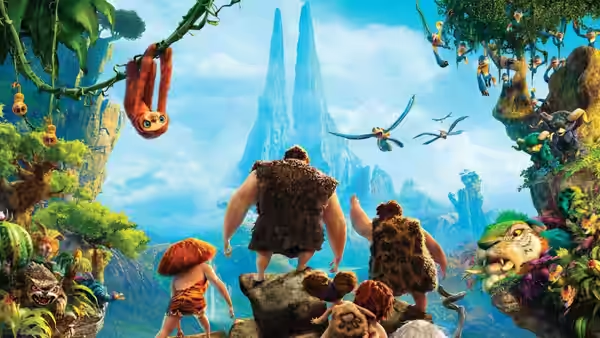
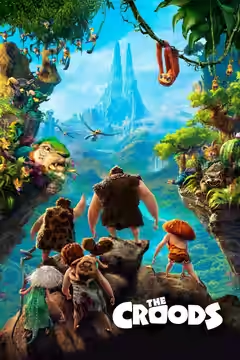
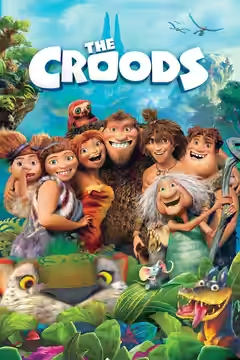
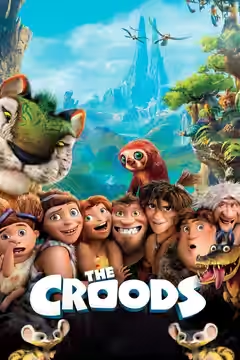
Once the cave collapses, Christophe Lautrette’s production design takes over, and it is the reason to watch. Yong Duk Jhun lights the valley in grey and brown and then the jungle beyond it in pink, turquoise and acid green, so that the family’s first step into it reads as a change of planet. The animals are the designers’ own: a sabre-toothed cat with the colouring of a parrot, a flock of tiny red birds that strip a beast to bone in seconds, a thing like a whale that walks, a land of flowers that eat. Children will want all of them as toys, and we found ourselves looking past the characters to see what was in the trees.
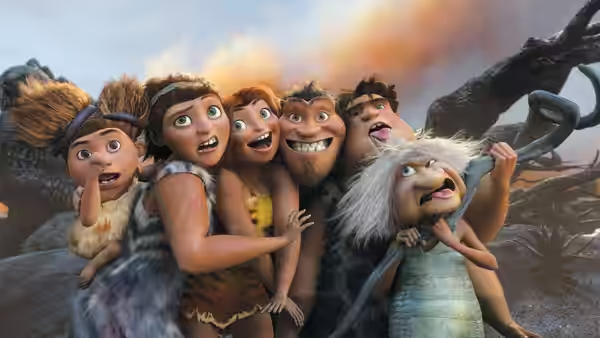
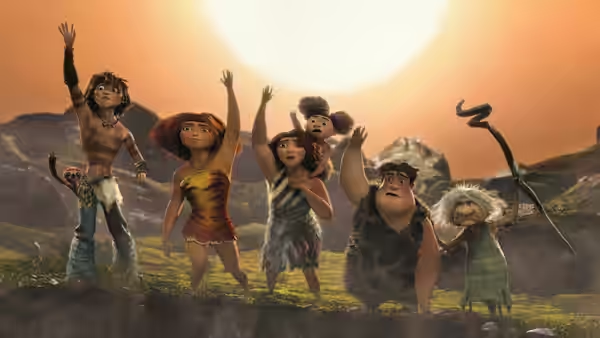
The voices are better than the lines. Cage plays Grug as a worrier with a big chest, a man whose every pronouncement is a warning, and he finds something tender in the way the warnings get quieter as the film goes on. Stone gives Eep a growl and a grin. Ryan Reynolds plays Guy, the boy with fire and ideas, as a salesman who is slightly surprised anyone is buying, and Sanders himself voices Belt the sloth, whose single joke is a three-note sting at moments of peril. Catherine Keener has little to do as Ugga except keep the peace, and does it.
The trouble is the script. John Cleese shares the story credit with the directors, and you will not hear him in it. The whole middle hour is one argument, father against new boy, replayed at each new location with a different animal in the background: Grug says stay put, Guy says keep moving, Eep sides with Guy, and the ground opens. The running gag in which Grug hopes Gran has died, and she has not, is the only line with any edge, and it is used a dozen times. Alan Silvestri’s score is brass for the chases and strings for the lessons, and it tells you how to feel a bar or two before the picture does. By the fourth set piece we were checking the time, which is not something a 99-minute film should allow.
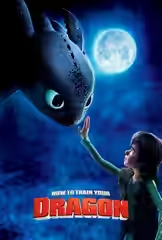
Sanders co-directed How to Train Your Dragon three years earlier, and that film had the same material, a large frightened father and a child who wants more, and treated it with patience. Here the lesson arrives in the first reel and is repeated until the last. Against the Ice Age films, which cover the same ground, The Croods is far prettier and no wittier. And yet a late scene between Grug and Eep, which we will not describe, got to us more than we were ready for, mostly on the strength of Cage’s voice dropping to nothing. We are not sure the film had earned it.
Most critics landed in the middle and so have we. The U certificate is honest, the pace never slackens, and a child of six will be delighted and a child of ten entertained. Grown-ups should sit at the back and watch the forest.