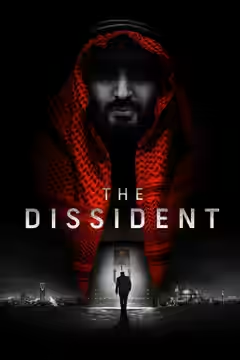
Bryan Fogel lays out the killing of Jamal Khashoggi with a prosecutor’s thoroughness, and the Turkish transcripts alone justify the two hours. He is on shakier ground whenever animated bees and a swelling score step in to tell us how to feel.
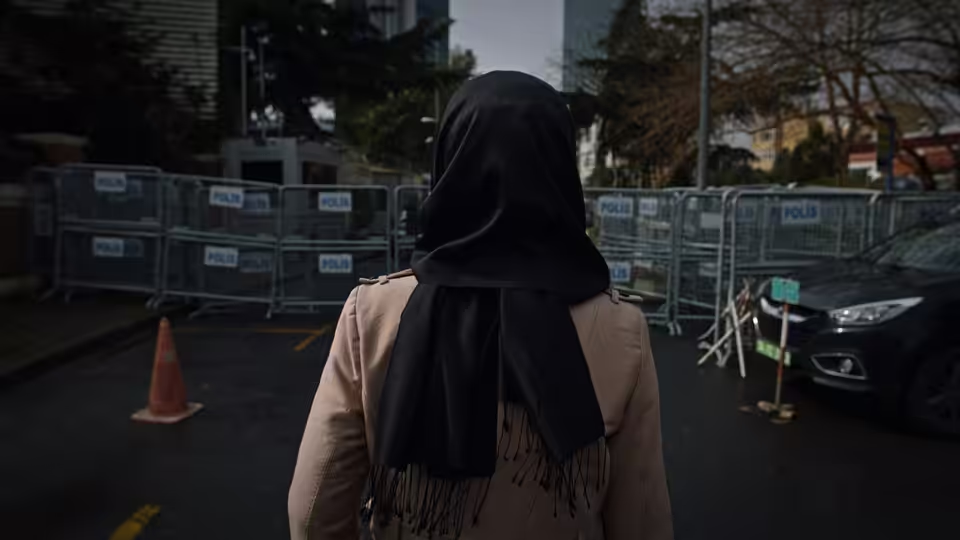
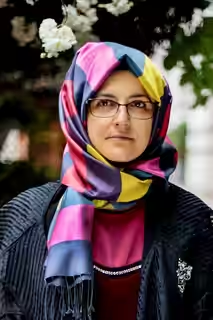
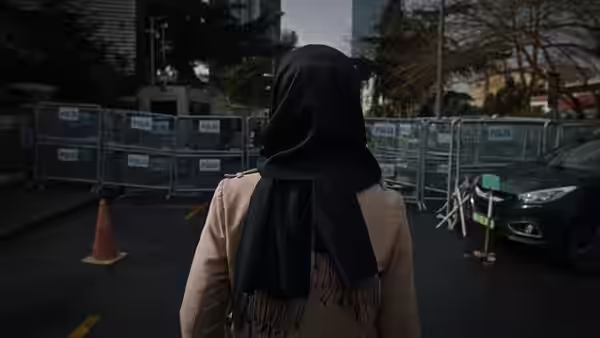
On 2 October 2018 Jamal Khashoggi walked into the Saudi consulate in Istanbul to collect a document he needed in order to marry, and did not walk out. Hatice Cengiz waited for him outside. Bryan Fogel’s documentary sets out what happened inside, who sent the men who were waiting for him, and what the rest of the world chose to do about it, which was not much. It is a thorough, properly angry piece of work, and at its best when it puts the Turkish evidence on screen and lets it sit there. It is less good, and sometimes a little embarrassing, when it dresses that evidence up.
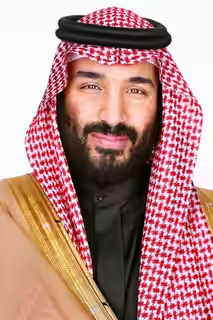
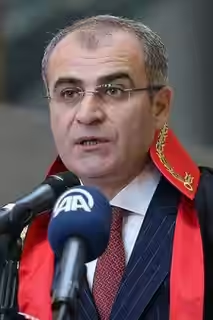
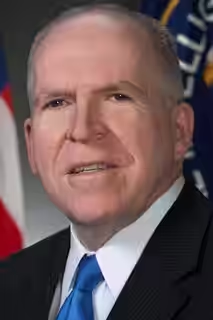
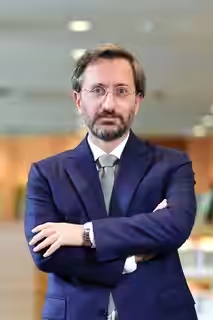
Fogel and his co-writer Mark Monroe run three strands. In Istanbul, the public prosecutor İrfan Fidan and the Turkish officials Fahrettin Altun and Abdulhamit Gul take us through the investigation, alongside Agnès Callamard, who led the United Nations inquiry. In Montreal, the young Saudi activist Omar Abdulaziz talks to a camera about the friend he lost and the government that is still after him. Around both, through archive of Prince Mohammed bin Salman al Saud, Donald Trump and the senator Bob Corker, and an interview with the former CIA director John Owen Brennan, Fogel builds his case about where the order came from. The film does not pretend to be neutral on that question, and we did not want it to be.
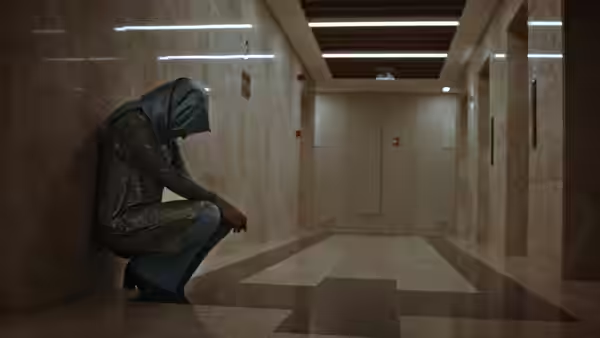
The Istanbul strand is the one that got to us. Fidan and his colleagues describe recordings made inside the consulate, and Fogel puts the transcribed lines on screen a few at a time, white type on black, as the prosecutors talk. We were horrified, and what did it was not the violence, which the film is careful about, but the tone. The consensus is that the men sound like tradesmen discussing a difficult job. Nobody raises their voice. We have watched a good deal of true crime, and little of it has made us feel the way those plain typed sentences did.
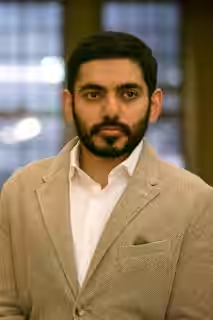
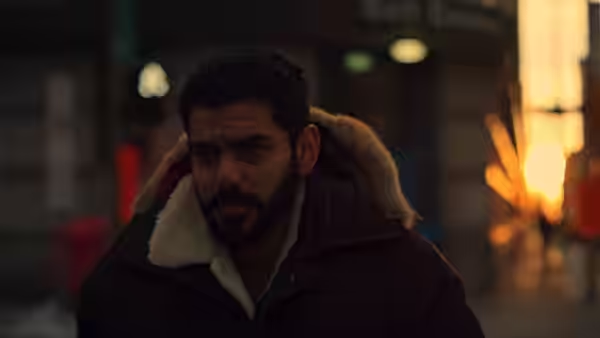
Abdulaziz is the film’s other great asset, and the closest thing it has to a lead. He is funny, frightened and visibly guilty, because Khashoggi had been helping him and the help may have made things worse. Through him Fogel explains the Saudi state’s use of Twitter, the paid accounts the dissidents call flies and the volunteer swarm Abdulaziz and Khashoggi tried to raise against them, and the spyware found on Abdulaziz’s phone. This is the part of the story most people have not heard, and it is told clearly.
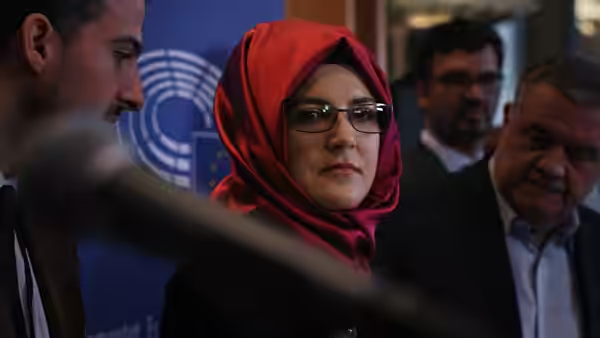
Then there is the dressing. Four editors are credited, Scott D. Hanson, James Leche, Wyatt Rogowski and Avner Shiloah, and the film has the shape of something assembled by committee: points made in the first hour are made again in the second, and the pace, which is quick and clean around the investigation, slackens whenever Fogel steps back to survey the kingdom. The tweets become animated bees fighting animated flies, the spyware becomes a glowing diagram, and the score swells under interviews that needed nothing underneath them. We found ourselves resisting the push, and the push was never needed. Khashoggi himself gets less than he should. His columns and his smile are here, but the complicated man who spent decades close to the court he later criticised stays out of focus. Cengiz, composed and exact, gives us more of him in a few minutes than the archive manages.
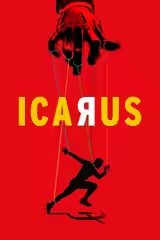
Fogel’s previous film, Icarus (2017), stumbled onto its story halfway through and was better for the surprise. Here he knew the story before he started, and the job was to arrange it. He arranges most of it well. The film is strongest when it behaves like the prosecutor’s case it half wants to be, laying out dates, names and typed sentences, and weakest when it remembers it is also supposed to be a thriller.
Watch it, and watch it with your own phone face down; you will look at it differently afterwards. Certificate 15, 119 minutes, and the last ten of them tell you what the first hundred already proved.