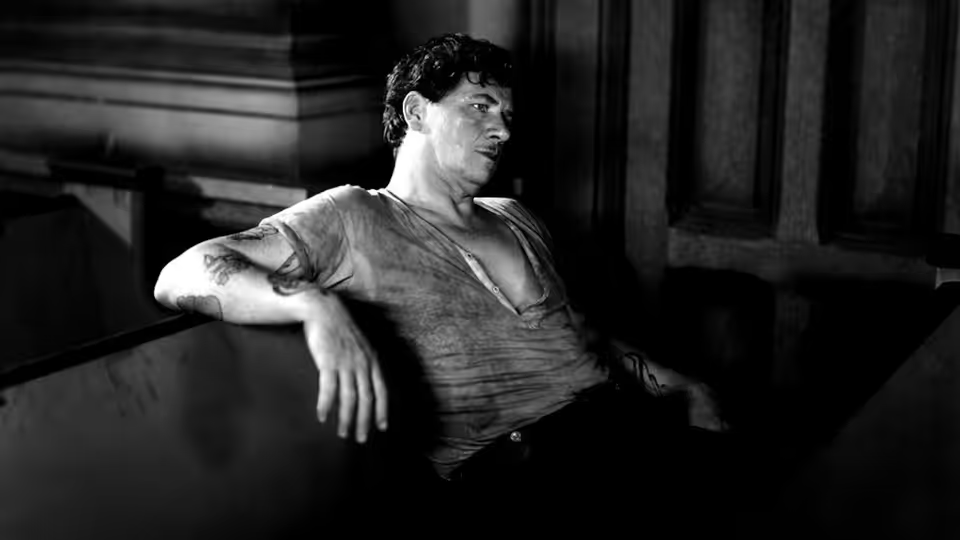
Josef von Sternberg’s waterfront romance is well worth seeing for its smoke-filled images and the women who hold our attention within them. Some of the melodrama is blunt, though the performances kept us interested.
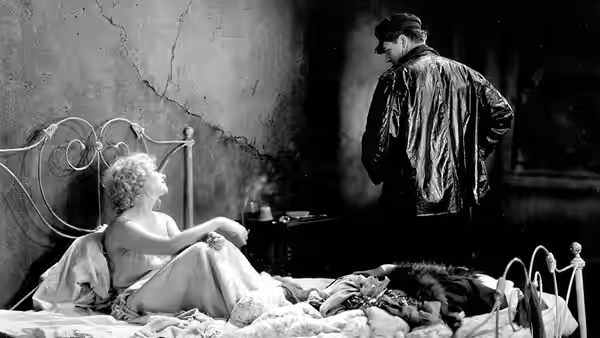
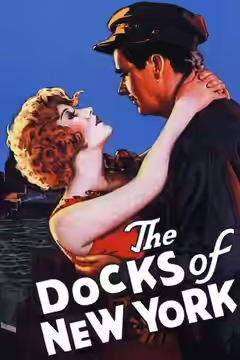
The Docks of New York is a rewarding romantic melodrama, with a little more dramatic emphasis than it needs. Josef von Sternberg gives the waterfront enough smoke and human activity to reward close looking, then makes the people worth that attention. The women are especially well served, retaining our sympathy when the romance becomes more predictable. At 76 minutes, the film leaves room for a surrounding company without allowing that company to overwhelm its leads.
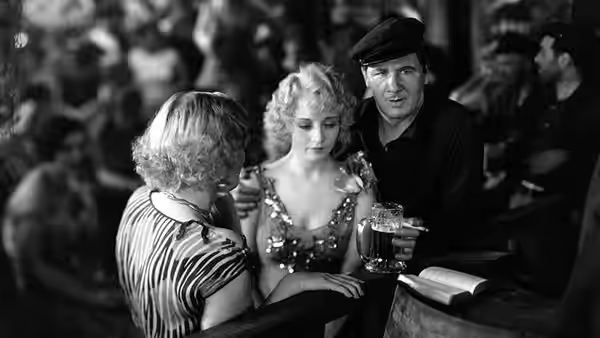
Harold Rosson’s cinematography gives the billowing smoke a practical purpose as well as a decorative one. It makes us look through the image, picking out people and gestures instead of taking in the setting at a glance. The waterfront has weight and depth, and the Sandbar tavern supplies a busy human centre. There is pleasure in simply looking, though the prettiness can occasionally distract from the harder feelings. The director is usually alert enough to bring our attention back to an actor.
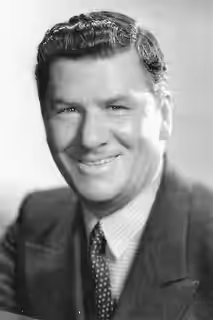
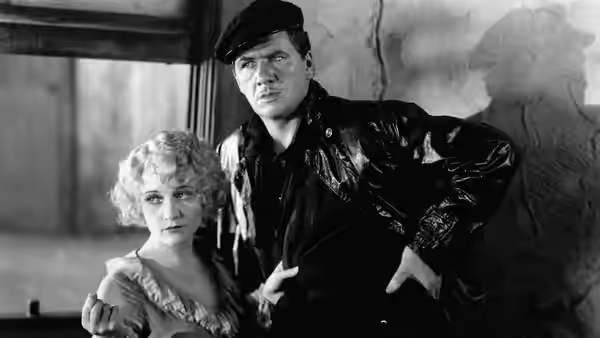
George Bancroft gives Bill Roberts the presence the male lead needs, though we found Betty Compson’s Mae and Olga Baclanova’s Lou more compelling. Both suggest enough pride and hurt to make the simpler emotions around them look a little thin. We were moved by the communal scenes at the Sandbar tavern, where individual faces keep catching our attention within the gathering. The crowd feels like people whose troubles continue when we stop looking at them. The women are central to that effect.
Helen Lewis’s editing keeps the crowded material readable without making the film feel hurried. We have time to notice a gesture and still keep track of the larger scene, which matters when the setting offers so much to inspect. Jules Furthman’s screenplay is less persuasive when it leans hardest on familiar romantic melodrama. We sometimes recognise the sort of scene we are watching before the actors have had a chance to make it particular. The writing occasionally pushes for a feeling the performances have already made clear.
The film makes a good case for silent romance by trusting us to notice small gestures. Its stronger passages allow a face to hold our attention without demanding that every emotion be equally large. When the acting becomes more emphatic, we miss that trust. The moments that linger are smaller, especially within the tavern’s communal life. We would not trade that company for a tidier or more restrained film.
There is no need to approach it as homework in early cinema. The waterfront is inviting enough, and the people have sufficient life to make its conventions matter. It does ask for undivided attention, since a small movement can carry as much as a whole scene of romantic insistence. Watch it when you can give the people at the back of the tavern as much attention as the leads.